PROOF OF CONCEPT/PILOTS/METHODOLOGIES
Implementing Store-And-Forward Telehealth in a Remote Patient Monitoring-Home Telehealth Program
Rebecca D. Green, DNS, RN, CMGT-BC, BCPA1 ; Ludmilla G. Samson, MSN, RN2
1Lead Care Coordinator Remote Patient Monitoring-Home Telehealth Program, Joseph Maxwell Cleland Atlanta Veterans Administration Healthcare System, Atlanta, Georgia, USA; 2Care Coordinator Remote Patient Monitoring-Home Telehealth Program, Joseph Maxwell Cleland Atlanta Veterans Administration Healthcare System, Atlanta, Georgia, USA.
Keywords: home telehealth; Joseph Maxwell Cleland, Atlanta, VA Healthcare System; PDSA, Plan-Do-Study-Act; remote patient monitoring.
Abstract
Background: Store-and-forward telehealth (SFT) is the asynchronous sharing of photo images or short video clips from patients to providers, with patients using their own digital devices.
Objective: We aimed to enhance patient assessment and increase the use of SFT among providers within a remote patient monitoring-home telehealth (RPM-HT) program.
Methods: The design for this pilot project was descriptive. It was a 3-month pilot project conducted within a local RPM-HT program that provides nursing care to patients with chronic health conditions in a large regional healthcare facility in the Southeastern United States. We conducted the pilot using the Plan-Do-Study-Act process improvement framework.
Twenty registered nurse (RN) care coordinators were asked to identify two clinical opportunities for using SFT. Patients uploaded the images or videos via the virtual care management system. The goal was for the patient to upload 40 to 50 high-quality clinically significant video clips or images and use the image for a clinical encounter. An RN care coordinator survey solicited insight about the provider experience.
Results: Of the 81 patients who agreed to submit an image or a video, 30% submitted at least one image or video, for a total of 42 useable images. The RN care coordinators were generally positive about the use of SFT in RPM-HT, citing better opportunities for physical assessment and improved patient access to care.
Discussion: Integrating the use of SFT into RPM-HT provides opportunities for improved care coordination and enhanced clinical assessment, plus a new opportunity for patient access. Wider implementation of SFT into similar programs may improve patient outcomes. The outcome was the creation of a user-friendly process for integrating SFT into the RPM-HT program. Challenges included patient and provider participation and patient use of technology.
Plain Language Summary
This pilot project used store-and-forward telehealth (SFT) within a remote patient monitoring-home telehealth program designed to provide case management to patients with chronic conditions. The SFT allows patients to send photos or short videos to healthcare providers using their devices to improve care.
Among the 81 patients invited to submit images or videos, 30% did so, resulting in 42 usable submissions. The registered nurse care coordinators reported positive experiences with SFT, noting it improved physical assessment and access to patient care. Challenges included ensuring provider and patient participation, as well as patients’ technical skills, with age also affecting submission success.
As a result, there are plans to incorporate SFT into the RPM-HT program, making some adjustments to address participation challenges. This integration offers potential for enhanced patient care.
Citation: Telehealth and Medicine Today © 2025, 10: 547.
DOI: https://doi.org/10.30953/thmt.v10.547
Copyright: © 2025 The Authors. This is an open-access article distributed in accordance with the Creative Commons Attribution Non-Commercial (CC BY-NC 4.0) license, which permits others to distribute, adapt, enhance this work non-commercially, and license their derivative works on different terms, provided the original work is properly cited and the use is non-commercial. See: http://creativecommons.org/licenses/by-nc/4.0. The authors of this article own the copyright.
Received: December 11, 2024; Accepted: February 1, 2025; Published: April 4, 2025
Competing interests and funding: The views expressed in this article are those of the authors and do not necessarily reflect the position or policy of the Department of Veterans Affairs or the United States government.
This material is the result of work supported with resources and the use of facilities at the Joseph Maxwell Cleland Atlanta VA Healthcare System.
Corresponding Author: Rebecca D. Green; Email: Rebecca.Green3@va.gov
The Veterans Health Administration (VHA) has had a robust telehealth infrastructure in place for many years, which was leveraged during the recent pandemic. Successful expansion of telehealth services during the pandemic allowed Veterans to receive care remotely, thus reducing risk and ensuring access to care. Since then, telehealth services at the VHA continue to focus on expanding access and availability and improving the experience of care for Veterans. The VHA has provided over 27.9 million telehealth episodes of care.1
The VHA’s Remote Patient Monitoring-Home Telehealth (RPM-HT) program provides registered nurse (RN) care coordinators services along with remote health data collection to manage chronic conditions among high-risk patient populations. The program serves more than 130,000 Veterans each year.2 The RPM-HT is uniquely positioned to introduce new technology to Veterans due to the technology expertise of the RPM-HT staff and the well-established relationships RMP-HT staff develop with Veterans over time.
One medium available for telehealth service delivery is asynchronous store-and-forward technology (SFT), which has long included review of bioscans, such as X-rays, computed tomography (CT) and magnetic resonance imaging (MRI). More recently, it has been implemented for video-recorded patient intake interviews and health histories.3,4 The National Office of Telehealth Services describes SFT offered through the VHA: “The Office of Connected Care’s My VA Images app is a Veteran-facing Asynchronous Store and Forward Telehealth (SFT) solution. The My VA Images app expands the ability of telehealth from home, allowing Veterans to send images or short video clips directly to providers upon the provider’s request.”5 The SFT is being used widely in several ways by specialty providers. At the Veterans Administration, its use is highest in teleEye care, sleep medicine, teleDerm, and teleWound care. These programs store data transmitted remotely from the patient’s home or a remote clinic for review later by a specialty provider.6,7 Remote Data Monitoring programs at the Veterans Administration and in the wider community also include some targeted asynchronous technology for identifying foot problems among patients with diabetes and cardiac status of patients with heart failure.8,9
Secure messaging systems used by healthcare systems often have options for patients to upload images independently for medical provider review; this option is available through the VHA, but it is not widely used by patients or non-specialty providers. Though available through VHA Telehealth services for several years, the implementation of SFT has been slow10 despite the following well-documented benefits to both provider and patient11,12:
- Streamlined patient workflows
- Time savings
- Flexibility
- Efficiency
- Improved care coordination
- Increased access to providers and specialty care
- Bridged language and cultural barriers
The benefits of SFT are obvious, so why has it not been adopted more widely? The greatest challenge, reluctance to implement new technology, includes provider barriers to adoption of telehealth, such as concerns about technical competency, privacy, increased hassle, potential for technical issues, quality, or the perception that telehealth is impersonal, and perceived additional workload burden and training.13,14 Another factor is the lack of patient accessibility to smart devices. Within the VHA, efforts have been made to optimize patient use of and access to smart devices; therefore, the primary barriers that could be readily addressed in this case were to reduce provider-specific barriers.
In the VHA, target goals for overall SFT use (i.e. percentage of Veterans who received store and forward services) are as follows: greater than 6.21% considered “successful” and greater than 8% considered “exceptional.” At the end of fiscal year 23, the regional Veterans Integrated Services Network (VISN), which includes this Veterans Administration local facility, was at 10%. At the start of this pilot project at the end of Quarter 1, the cumulative number for local facility SFT episodes for fiscal year 2024 reached ~3.5%.15 The National RPM-HT Program office provided for inclusion of SFT within the RPM-HT program in its updated guidance: “This clinic is to be used when care coordinators request images from Veterans to be sent via MyVA Images App. These images could include pictures of wounds, medications, or other use cases as needed.”16
Despite the increased use of SFT worldwide, little research is available on the use and effectiveness of nurse-led interventions employing the specific modality of SFT. However, nurse-led telehealth interventions have great potential to improve outcomes, enhance patient engagement, and optimize resource utilization.17 We believed that integrating SFT into RPM-HT programs was ideal for increasing the use of SFT at the VHA, since these programs had been early adopters and pioneers in the implementation and increased use of VA Video Connect (VVC) before and during the pandemic. In addition, we believed that having increased availability to visual patient assessment data would enhance and support patient care. Though increasing SFT to measurably address the strategic goal of the VHA is beyond the scope of a single local program-level initiative. We determined that we could establish program-level process outcomes that measure the increase in use within the local program, with the idea that successful implementation across a regional VISN and nationally would measurably contribute to the VISN level and even the national strategic goal.
Methods
The lead RN care coordinator for the program developed a proposal to conduct a pilot for integrating SFT into the local facility RPM-HT program. The proposal received approval from the program Nurse Manager and the VISN Level Telehealth Director. The lead RN care coordinator solicited a volunteer SFT clinical champion to assist in the development of goal setting and project design.
The Plan Do Study Act (PDSA) framework was used as a theoretical framework to develop and implement this quality improvement pilot project. The PDSA provides a framework for change based on the scientific method, with a planned approach to small-scale, evidence-based change that is safer and less disruptive for patients and staff.18,19 Descriptors of the PDSA framework have been integrated into the following report of the pilot.
Our objective was to implement the use of SFT into the RPM-HT program to increase the use of supportive technology among providers to improve patient assessment. After initial approval was secured, the planning for this project included several steps:
- Request that the local information technology staff build a clinic encounter location dedicated to SFT with the appropriate stop code. 0 is stated here but 40–50.
- Recruit an RN RPM-HT Program Clinical Champion to help implement the pilot.
- Review available training materials on the Institutional Learning Site.
Our pilot goal was for each of the 20 RN care coordinators to identify at least two potential home telehealth-enrolled patients for a total of 40 to 50 transmitted short, high-quality, clinically significant videos or images during the 3-month pilot. We recommended possible clinical images to evaluate:
- Image request to evaluate swelling of feet or ankles.
- Image request to evaluate average meal plate.
- Video request to evaluate gait or balance.
- Video request to evaluate blood pressure technique.
- Other, as clinically appropriate to the situation.
We anticipated that each image or video submission using the My VA Images app Clinical Pathway (Figure 1)20 would provide an opportunity for “Do” and “Study” elements of the PDSA model, evaluating the process outcome based on the questions: Describe what actually happened when you ran the test, and describe the measured results, how they compared to the predictions, and what you learned from the cycle. Thus, at the end of the project, a viable and streamlined process for using SFT in RPM-HT will be established for implementation across the team.
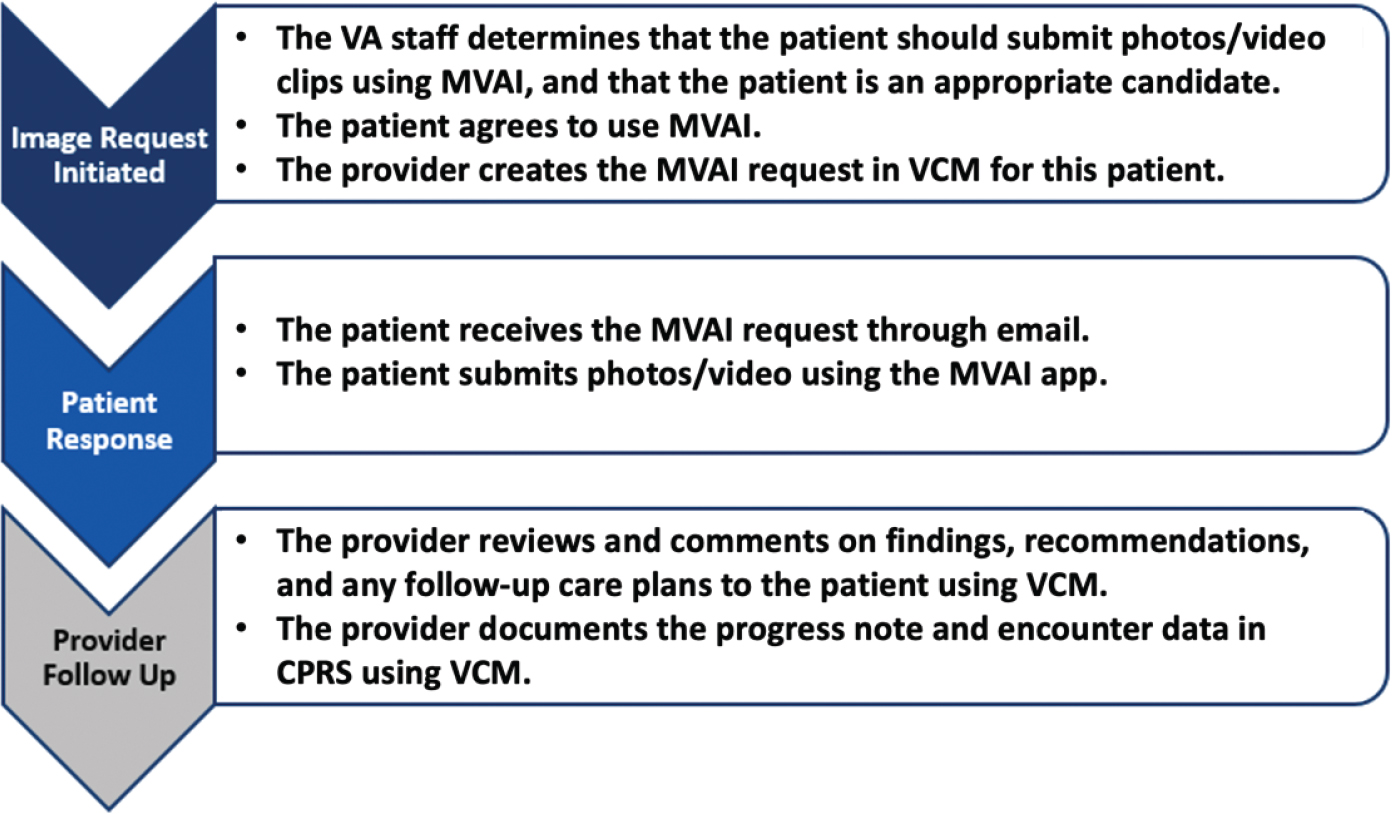
Fig. 1. My VA images clinical pathway. CPRS: computerized patient record system; MVAI: My VA Images; VA: Veterans Administration; VCM: virtual care manager. (Source: VHA, My VA Images, 2023)
For inclusion in our pilot, the images needed to be from a Veteran who was enrolled in the RPM-HT program, had a personal smart device such as a tablet or phone, and had an active Premium MyHealtheVet account to opt in to a secure method of transmission, such as Premium My HealtheVet account, DS logon, ID.me account, or login.gov (VHA, My VA Images, 2023).21,22
For the purposes of this study, a clinically significant video or image was defined as a video or image used to support the visual assessment of a patient’s clinical concern or evaluate a patient’s proficiency in a health-supportive activity.
1. Plan: How will we know that a change is an improvement?
Our goal was for a successful upload of at least 40 to 50 high-quality clinically significant video clips or images by patients in the RPM-HT program and use of the image by a provider for a clinical encounter, as evidenced by an assessment note in the patient’s chart reflecting the visual data from the submitted image. In addition, we solicited RN care coordinator feedback in the form of a twelve-question survey at the end of the pilot to gain insight about the provider experience.
2. Do: Implement your action plan and describe what actually happened
Each RN care coordinator in our local program was asked to identify at least two Veterans who agreed to submit a picture or a video and to then alert the clinical champions in the EMR, confirming the Veteran’s consent, demographic details in the medical record, and specifying what images were requested. RN care coordinators also provided information to the Veteran about using their device to take a picture or short video and how to submit the image or video using the secure link that would come to them via email. To ease the workload for the RN care coordinators and to ensure a seamless process, the SFT clinical champions entered the image requests into the Virtual Care Manager system: the clinical champions then alerted the RN care coordinator in the EMR when an image was uploaded and available for viewing and assessment.
Results
Measured Results Compared to Predictions and What Was Learned From the Cycle
The target goal of 40 to 50 images submitted during the 3-month pilot period was met. A total of 81 Veterans agreed to submit an image or a video. Thirty percent of those Veterans submitted at least one image or video, for a total of 44 images submitted, of which 42 were usable. One image and one video were not usable due to quality or error during submission.
Therefore, 95% of the submitted images and videos met our criteria as clinically significant. Examples of images submitted by Veterans included images of meal plates, skin rashes, bruising, and edema. Submitted videos covered blood pressure technique, tremors, and ambulation.
Reminders about participating were sent via the home telehealth platform to several Veterans who had initially agreed to participate. The platform reminder did not increase the participation rate among those who received it.
Barriers and Facilitators
The main provider challenge encountered in the pilot was the participation by RN care coordinators. Adding a new technology to the menu of services was not easy or automatic for already-busy nurses. During the pilot, weekly reminders were sent out to RN care coordinators via email and instant messaging. After the first month of the pilot, targeted individual reminders were sent to those RN care coordinators who had not yet participated.
After the pilot, we released a survey to evaluate perceptions and readiness of RN care coordinators to use SFT. Surveys were completed by 17 of 20 RN care coordinators in the local RPM-HT program. Eleven responders had a neutral or positive attitude toward the adoption of SFT into RPM-HT. The staff reported that the SFT program enhanced their clinical assessment, and that the program would be beneficial to Veterans and providers. Most of the RN care coordinators were willing to use it in the future (Figure 2).
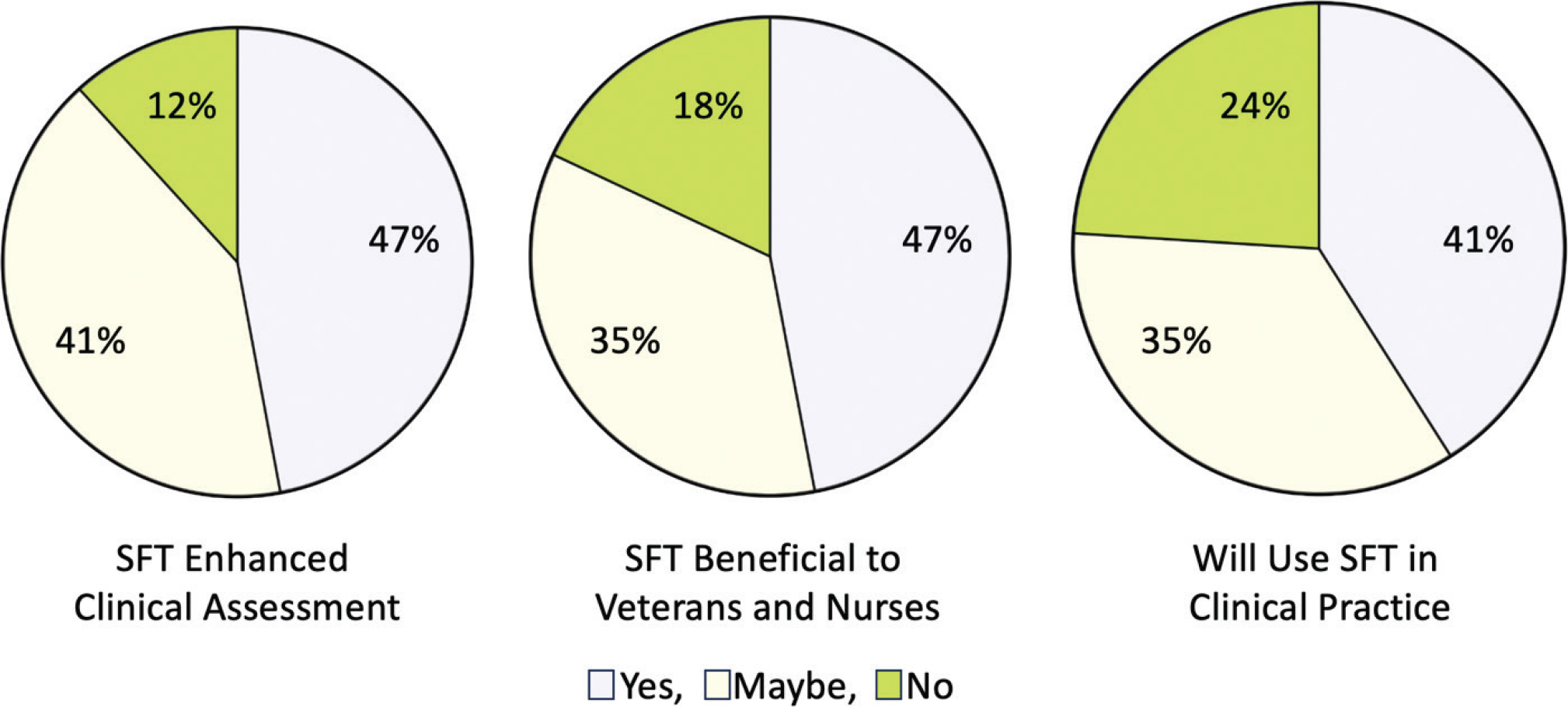
Fig. 2. Results from a survey to evaluate perceptions and readiness of RN care coordinators to use SFT. Surveys were completed by 17 of 20 registered nurse care coordinators in the local remote patient monitoring-home telehealth. RN: registered nurse; SFT: store-and-forward telehealth.
Some issues reported included RN care coordinator time and workload and difficulty finding Veterans who were interested in participating. About 18% of RN care coordinators stated that Veterans reported problems to them when submitting images.
Per the RN care coordinator survey, Veterans declined participation for two main reasons: 1) limited knowledge of technology operation, such as taking a picture or recording a video using their phones, and 2) lack of support systems, such as family or friends who could assist them with taking images. In addition to those Veterans who declined participation, a larger number of Veterans who consented to submit images failed to follow through.
Evidence suggests that the age of the Veteran was a potential factor influencing telehealth participation.23,24 The age range of Veterans who agreed to participate ranged from 33 to 84 years. The mean age among those who agreed to participate was 64 years but dropped to 60 years for those Veterans who submitted data—supporting prior findings on patient age as an influencing factor in telehealth participation. Although the difference in the age for our pilot was not significant, due to limited size, this finding should be considered in future research.
This study has limitations, including a sample that may not be representative of the larger population. Additionally, data on race and ethnicity were not collected as it fell beyond the scope and purpose of this pilot study.
Conclusion
3. Act: If your team determined the plan resulted in success, standardize the improvement, and begin to use it regularly
The final step of the PDSA cycle is to act or to decide whether the change can or should be implemented, based on the information gained and conclusions drawn during the prior cycles. As a result of this pilot, local facility program leadership has implemented SFT as part of standard practice in the local RPM-HT program. In addition, several other VISNs and local RPM-HT programs are taking active steps to integrate SFT.
Evidence from scientific literature and quality improvement efforts demonstrates that some changes are most likely to result in improvement (NHS 2023). We therefore determined that adopting this additional technology in the RPM-HT Program should be easy and voluntary for new users. Based on the results of this pilot study, the essential ongoing components of the local RPM-HT SFT program will be:
- Dedicated SFT clinical champions for the ease of use for RPM-HT RN care coordinators
- Regular staff reminders about using SFT for routine enrollments into the program, periodic evaluation visits, and when Veterans report a new or unusual symptom that might benefit from remote visual assessment
Several minor process changes were identified based on the pilot process, which have been integrated into SFT in the local RPM-HT program, including the use of text messaging reminders, routine telephone reminders, and providing a support phone number for Veterans experiencing problems with image submission.
Integrating the use of SFT into RPM-HT provides opportunities for improved care coordination and enhanced clinical assessment of patients, and it increases access among high-risk populations. A one-page user guide was developed for other VHA RPM-HT programs considering implementing the SFT in their program.
Contributors
Both authors of this article meet the criteria found in the “Role of Authors and Contributors” as outlined by ICMJE. <https://www.icmje.org/recommendations/browse/roles-and-responsibilities/defining-the-roleof-authors-and-contributors.html#:~:text=The%20ICMJE%20recommends%20that%20authorship,-for%20important%20intellectual%20content%3B%20AND>.
Data Availability Statement (DAS), Data Sharing, Reproducibility, and Data Repositories
Contact the author.
Application of AI-Generated Text or Related Technology
No work was performed by a Chatbot in the development of this manuscript. No Generative AI image creation was utilized in the development of this manuscript.
Acknowledgments
This material is the result of work supported with resources and the use of facilities at the Joseph Maxwell Cleland Atlanta VA Healthcare System.
We wish to acknowledge the administrative support of the National VHA RPM-HT Program Office; Eulanda Armstrong, VISN 7 Telehealth Program Director; and Brandis Hall, Atlanta RPM-HT Nurse Manager.
References
- Nyczepir D. Q&A: the VA is focused on its telehealth experience beyond the pandemic [Internet]. Technology Solutions That Drive Government; 2023 [cited 2025 Jan 15]. Available from: https://fedtechmagazine.com/article/2023/04/qa-va-focused-its-telehealth-experience-beyond-pandemic
- Telehealth expands access to quality care for Veterans—VA News [Internet]. 2023 [cited 2024 Dec 01]. Available from: https://news.va.gov/123731/telehealth-expands-access-to-care-for-veterans/
- Maheu M. See examples of four different types of telehealth. TBHI Blog [Internet]. Telebehavioral Health Institute | Professional Training & Consultation; 2020 [cited 2024 Dec 01]. Available from: https://telehealth.org/four-types-of-telehealth/
- Culmer N, Todd Brenton Smith, Stager C, Wright A, Fickel A, Tan J, et al. Asynchronous telemedicine: a systematic literature review. Telemed Rep. 2023;4(1):366–86. https://doi.org/10.1089/tmr.2023.0052
- My VA Images Community. 2023 [Blackboard]. VHA Connected Care Academy; 2023 [cited 2024 Dec 01]. https://mobile.va.gov/app/my-va-images
- Sage D. Telehealth and virtual tools deliver high-quality care to rural Veterans [Internet]. VA News; 2024 [cited 2024 Dec 01]. Available from: https://news.va.gov/130255/telehealth-virtual-tools-deliver-rural-veterans/
- Heyworth L, Shah N, Galpin K. 20 years of telehealth in the Veterans Health Administration: taking stock of our past and charting our future. J Gen Intern Med. 2024;39(Suppl 1):5–8. https://doi.org/10.1007/s11606-024-08617-w
- Diffusion Marketplace [Internet]. marketplace.va.gov. [cited 2024 Dec 01]. Available from: https://marketplace.va.gov/innovations/reducing-hospital-admissions-and-amputation-prevention-remote-temperature-monitoring
- Health C for D and R. CardioMEMS HF System—P100045/S056. FDA [Internet]. 2022 May 11 [cited 2024 Dec 01]. Available from: https://www.fda.gov/medical-devices/recently-approved-devices/cardiomems-hf-system-p100045s056
- National Planning Strategy Telehealth [Internet]. 2021 [cited 2024 Dec 01]. Available from: https://www.va.gov/AIRCOMMISSIONREPORT/docs/Telehealth-National-Planning-Strategy.pdf
- Asynchronous direct-to-consumer telehealth | Telehealth.HHS.gov [Internet]. telehealth.hhs.gov. 2022 [cited 2024 Dec 01]. Available from: https://telehealth.hhs.gov/providers/best-practice-guides/direct-to-consumer/asynchronous-direct-to-consumer-telehealth
- What is telehealth? [Internet]. CCHP [cited 2024 Dec 01]. Available from: https://www.cchpca.org/what-is-telehealth/?category=store-and-forward
- Sherrill AM, Wiese CW, Abdullah S, Arriaga RI. Overcoming clinician technophobia: what we learned from our mass exposure to telehealth during the COVID-19 pandemic. J Technol Behav Sci. 2022;7(4):547–53. https://doi.org/10.1007/s41347-022-00273-3
- Zhang T, Mosier J, Subbian V. Identifying barriers and opportunities for telehealth implementation amidst the COVID-19 pandemic using a human factors approach: a leap into the future of healthcare delivery? (Preprint). JMIR Hum Fact. 2020;8(2):e24860. https://doi.org/10.2196/24860
- SFT Workload. 2024 [Data set]. VHA; 2024 [cited 2024 Dec 01]. Available from: CVT SFT Telehealth Workload (VISTA) | Pyramid Analytics (va.gov). https://pyramid.cdw.va.gov/direct/?id=803a6444-dcc1-484b-9954-c6299d2d0b17
- CPRS RPM-HT clinics, note titles, and stop codes crosswalk. 2023 [Blackboard]. VHA Connected Care Academy RPM-HT Program, March 30, 2023 [cited 2024 Dec 01]. https://vaots.blackboard.com/webapps/blackboard/execute/modulepage/view?course_id=_2686_1&cmp_tab_id=_3628_1&mode=view
- Bulto LN. The role of nurse-led telehealth interventions in bridging healthcare gaps and expanding access. Nurs Open. 2024;11(1):1–3. https://doi.org/10.1002/nop2.2092
- The improvement guide: a practical approach to enhancing organizational performance. Institute for Healthcare Improvement [Internet]. www.ihi.org. [cited 2024 Dec 01]. Available from: https://www.ihi.org/resources/publications/improvement-guide-practical-approach-enhancing-organizational-performance
- NHS England. Plan, Do, Study, Act (PDSA) cycles and the model for improvement online library of quality, service improvement and redesign tools NHS England and NHS Improvement [Internet]. London: NHS England, 2022 [cited 2024 Dec 01]; p. 1–8. Available from: https://www.england.nhs.uk/wp-content/uploads/2022/01/qsir-pdsa-cycles-model-for-improvement.pdf
- My VA Images Clinical Pathway. Asynchronous store and forward telehealth from Home My VA Images with Virtual Care Manager Supplement March 2023, [Blackboard] VHA Connected Care Academy, March 2023, p. 7 [cited 2024 Dec 01]. https://vaots.blackboard.com/bbcswebdav/xid-693040_1
- My VA Images Veteran Fact Sheet. My VA Images. VA Mobile [Internet]. mobile.va.gov. [cited 2024 Dec 01]. Available from: https://mobile.va.gov/app/my-va-images
- My VA Images Photo Instructions for Veterans Guide [Internet]. VHA Office of Connected Care; 2023 [cited 2024 Dec 01]. Available from: https://mobile.va.gov/app/my-va-images
- Chang E, Penfold RB, Berkman ND. Patient characteristics and telemedicine use in the US, 2022. JAMA Netw Open. 2024;7(3):e243354. https://doi.org/10.1001/jamanetworkopen.2024.3354
- Haleem A, Javaid M, Singh RP, Suman R. Telemedicine for healthcare: capabilities, features, barriers, and applications. Sens Int. 2021;2(2):100–17. https://doi.org/10.1016/j.sintl.2021.100117