USE CASES/PILOTS/METHODOLOGIES
Integrating Image-Based Artificial Intelligence in the Operating Room: Enhancing Safety and Efficiency While Navigating Legal and Ethical Considerations
Ngoc-Anh A. Nguyen, MD1,2,3  ; Brendan Holderread, MD1,2 ; Grace Lee, BA1,2 ; Divya Reddy, JD4 ; and Roberta Schwartz, PhD, MHS5
1Chief Physician Investigator, Center for Innovation, Houston Methodist Hospital, Houston, Texas, USA; 2Clinical Research Fellow, Houston Methodist Academic Institute, Houston Methodist, Houston, Texas, USA; 3Clinical Research Specialist, Department of Medicine, Houston Methodist Hospital, Houston, Texas, USA; 4Senior Director of Legal Services, Houston Methodist Legal Services, Houston Methodist Hospital, Houston, Texas, USA; 5Executive Vice President and Chief Innovation Officer, Department: Center for Innovation, Houston Methodist Hospital, Houston, Texas, USA; Houston Methodist Academic Institute, Houston Methodist, Houston, Texas, USA
Keywords: artificial intelligence, image-based artificial intelligence, implementation, operating room
Abstract
Background: Image-based artificial intelligence (IBAI) platforms offer the potential to improve operating room (OR) safety and efficiency through real-time monitoring of clinical workflows. However, implementing these platforms poses complex challenges related to data privacy, ethical oversight, legal compliance, and the need for robust governance structures.
Objective: This study aimed to describe the implementation of IBAI across a multihospital health system in the United States, the legal and ethical challenges encountered, and the strategies used to support safe and compliant integration.
Methods: An IBAI platform was deployed across more than 50 ORs across the health system. The platform uses artificial intelligence-driven audio-video analysis to support performance metrics such as first case on-time starts and turnover time. A governance framework addressing recording access, retention, and consent was developed. Key stakeholders, including department chairs, quality officers, and OR committees, were granted review authority under a structured policy.
Results: Initial skepticism among surgical staff centered on data security, liability risk, and consent. Policy refinement, transparent communication, and updated consent language led to increased support of platform use. Video retention was set at a maximum of 30 days (audio at 7 days), with access limited to designated leaders. These parameters are provisional and may be modified in response to evolving legal and ethical guidelines. Early qualitative feedback suggests improved confidence in the system, with further quantitative evaluations underway.
Conclusions: This use case highlights the importance of ethical policy development, stakeholder engagement, and transparent communication to successfully implement IBAI in surgical settings. Ongoing refinements are being made based on stakeholder feedback as the health system evaluates expansion to other clinical applications.
Plain Language Abstract
Image-based artificial intelligence (IBAI) has the potential to enhance surgical workflows and patient care. Its benefits include improving safety event reporting, managing daily case volumes and room availability, and automating tasks previously performed manually by operating room staff with greater accuracy. However, implementing IBAI in a hospital system with a culture not accustomed to recording technologies can present significant challenges. In this article, we share an account of our challenges, thought processes, and some of the systematic approaches we employed to address these issues. We discuss how we navigate ethical and legal considerations to ensure the protection of staff and patient privacy. As with all technological advances and interventions, continuous evaluation and iterations are necessary to develop a robust health system policy that ensures safe, high-quality patient care, supports and respects clinical teams, and meets legal and regulatory compliance requirements.
Citation: Telehealth and Medicine Today © 2025, 10: 578
DOI: https://doi.org/10.30953/thmt.v10.578
Copyright: © 2025 The Authors. This is an open-access article distributed in accordance with the Creative Commons Attribution Non-Commercial (CC BY-NC 4.0) license, which permits others to distribute, adapt, enhance this work non-commercially, and license their derivative works on different terms, provided the original work is properly cited and the use is non-commercial. See: http://creativecommons.org/licenses/by-nc/4.0. The authors of this article own the copyright.
Submitted: April 23, 2025; Accepted: May 30, 2025; Published: June 23, 2025
Funding Statement: None.
Financial and non-Financial Relationships and Activities: None.
Corresponding Author: Ngoc-Anh A. Nguyen, Email: nanguyen@houstonmethodist.org
The operating room (OR) is a central hub of patient care and hospital activity, where safety and efficiency are paramount. Key metrics for evaluating OR performance include achieving on-time first case starts, optimizing turnaround times, perfection in patient safety, and excellence in patient satisfaction.1 To enhance these metrics and improve patient safety, our health system implemented image-based artificial intelligence (IBAI) utilizing audio and video recordings in our ORs.
During the implementation process, we identified a lack of consensus on best practices regarding the accessibility and security of recordings, the capacity of both physicians and patients to fully comprehend and provide informed consent for the use of IBAI, and the broader cultural implications for the privacy, comfort, and safety of healthcare staff and providers.2–8
A review of the literature reveals a significant gap in research on these legal and ethical issues. Existing literature primarily focuses on institutions such as the University of Texas Southwestern, Dallas, Texas, USA and Duke University, Durham, North Carolina, USA, which use IBAI for safety checklists, efficiency assessments, and quality improvement initiatives, as well as for tracking personnel and documenting intraoperative events.
This study aims to examine these considerations within our healthcare system, contributing to the existing body of literature and informing future policy and practice. We address the following key questions: (1) Who should have access to the recorded data, and what are the appropriate use cases for its utilization? (2) What is the appropriate retention period for these recordings? and (3) How do we obtain informed consent from both staff and patients regarding the implementation of this technology? We examine the challenges, strategic considerations, and cultural adaptations required within our healthcare system to facilitate a successful and ethical deployment of this technology.
Setting
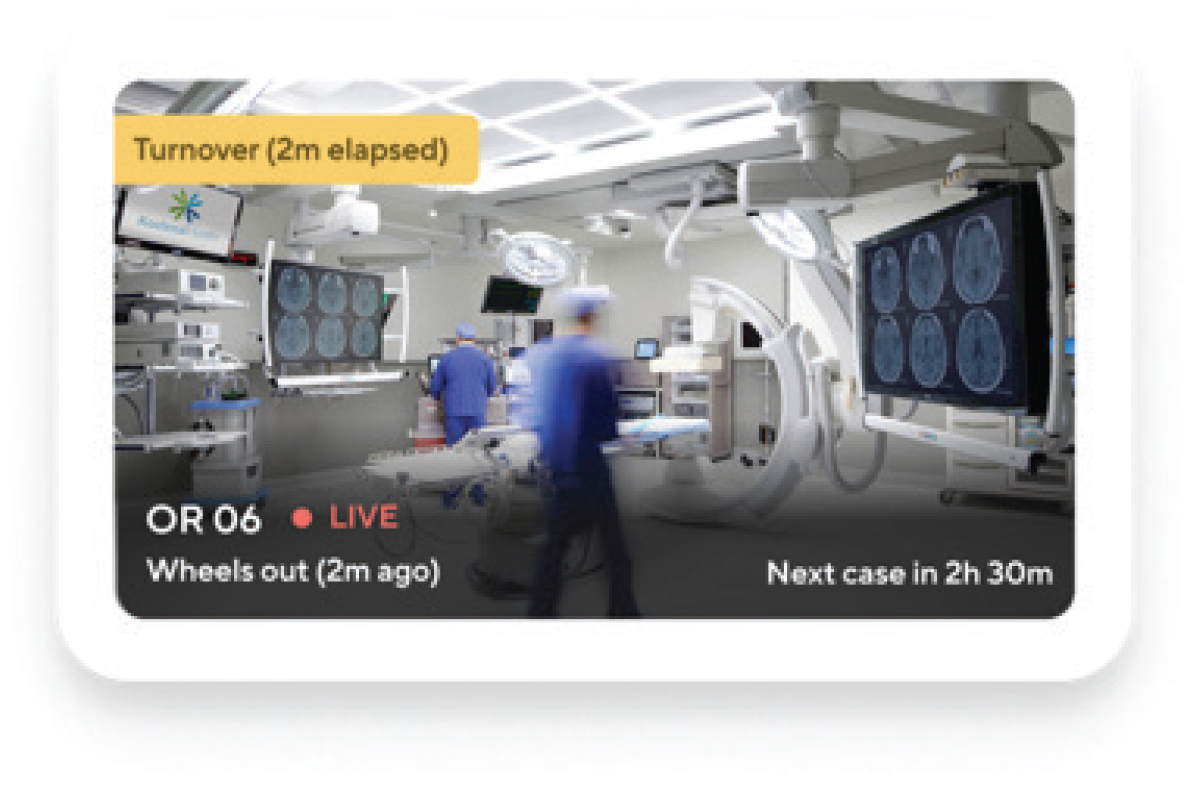
The IBAI technology uses a mix of artificial intelligence (AI) and machine learning to identify aspects of the operating theater as well as each step in the operation to provide information in a summary fashion. Our health system utilizes IBAI in hospital ORs through a combination of video and audio feed to obtain information about safety events, turnover time, sterility, and surgeon-to-surgeon variability in performance. These metrics assist with logistical challenges and improve patient care based on data and timestamps to inform operative teams, anesthesia, surgeons, pre-operative staff, and post-acute care unit staff about precise events (Appendix A).
The goal of our health system is to leverage this insight to improve workflow, increase case volume in prime-time surgical hours, improve staff and surgeon experience, and improve patient safety in ORs. In October 2022, our flagship academic hospital partnered with Apella® (Apella Technology; San Francisco, California, USA), a provider of real-time OR management platforms, to implement the technology in operative suites for orthopedic, cardiothoracic, and vascular surgery.
To date, the platform has been integrated into eight separate specialty operative suites in greater than 50 ORs at our flagship academic hospital and at four of seven of our community hospitals.
The IBAI platform is compliant with the Health Insurance Portability and Accountability Act (HIPAA) and hospital-specific policies to ensure the protection of patient and staff confidentiality. The suite of functionality available on the IBAI platform, along with an explanation, can be found in Table 1, as provided by the vendor.
Legal and Ethical Policy Considerations: Who Should Have Access to the Recorded Data, and What Are the Appropriate Use Cases for Its Utilization?
During the initial implementation efforts, OR staff expressed concerns regarding privacy, ethical considerations, and potential legal implications. Apprehensions included the risk of patient videos being exposed in public forums, the use of IBAI-generated images in malpractice litigation against physicians, the possibility of recorded audio and video footage being utilized in human resources investigations involving OR events and personnel, and physicians and staff being more guarded in honest feedback with trainees.
Controlling the video and audio recording security is paramount for physicians, staff, and patients. While it is incumbent upon the hospital and the business partners who hold the recordings to ensure that they are secure from cyber-events, it is also vital that governance is in place to decide who can access the audio and video and for what reason. Developing an equitable policy requires careful consideration of multiple stakeholders, including various departments and interdisciplinary teams with differing priorities. For example, the legal team may prioritize compliance with applicable laws and regulatory requirements, while the human resources department may focus on policies that protect and support employees when behavioral concerns arise. Balancing these diverse interests is particularly complex within a multi-hospital health system, where governance must align with institutional priorities while ensuring ethical and legal integrity.
After a robust discussion, our initial policy framework specifies that access to intraoperative recordings—from the moment of incision to skin closure—would be restricted to three designated individuals: the Chief Quality Officer, the Chair of the Department, and the Head of the OR Committee. In all instances where this portion of the recording is reviewed, the surgeon would be informed. For recordings of the setup and cleanup phases, hospital management retains discretion over access. During the first full year of implementation, intraoperative recordings were accessed fewer than 10 times. Our health system’s policy is on par with other policies in locations such as Sunnybrook Health Sciences Centre, Toronto, Ontario, Canada.9
Our healthcare system is discussing these potential use cases for the recordings (Table 2).
The medical staff, governing committees, and administration recognize that the technology and use cases will grow and evolve, and it is likely that individuals accessing the audio and video as well as safety and efficiency use cases can possibly grow over time. The ability to approve new users and use cases lies with the OR and medical executive committees.
Legal and Ethical Policy Considerations: What is the Appropriate Retention Period for These Recordings?
Physicians have expressed skepticism about whether video feeds used to generate IBAI insights will be employed solely for quality and safety improvement (Table 3, Exhibit 1). This skepticism has led to legal concerns being the primary factor driving physician uncertainty regarding IBAI implementation. Physicians and OR staff have expressed apprehension over potential liability, both from patients and colleagues, as well as the risk of human resources actions based on recorded footage.
To address these concerns, some IBAI companies have adopted policies in which recorded footage is reviewed exclusively by company-appointed analysts before being permanently deleted. Others defer video retention decisions to individual hospitals, whose policies vary widely—ranging from retention periods of 30 days to as long as 12 months.10 These discrepancies in data management further contribute to uncertainty surrounding the implementation and governance of IBAI technology in healthcare settings.
The existing body of literature demonstrates that video recordings could potentially be protective for the healthcare professional. Complications from common surgical procedures have historically had the potential to result in an unfavorable legal resolution for hospitals.10 For example, a lawsuit against a surgeon in Louisiana, USA, alleged the surgeon did not practice the standard of care when performing a laparoscopic cholecystectomy that resulted in an iatrogenic common bile duct injury. The patient’s injury presented symptomatically on the 11th post-operative day (average: 10 days) and required additional hospital care and a procedure to repair the injury.10 The patient alleged that the intra-operative complication and the negative outcome was a result of poor surgical technique, which fell below the standard of care. A video recording reviewed in this legal proceeding helped prove the standard of care was not breached, and the case was dismissed.10
Discussions at our health system are ongoing to determine if the final policy will be a uniform set of rules throughout the hospital system or whether each campus will set its own rules, as each hospital has separate medical staff structures. Ultimately, some key decisions were made and are listed in Table 4.
Legal and Ethical Policy Considerations: How Do We Obtain Informed Consent From Staff and Patients Regarding the Implementation of This Technology?
The issue of informed consent for intraoperative IBAI remains a subject of debate. Despite the presence of preexisting audio and video recording systems within the OR, there was concern that this technology would not be adequately covered by existing consent protocols. It was determined that the language within our consent documentation, refreshed in 2022 to incorporate a broad range of digital health innovation technologies as part of our care, was sufficiently comprehensive to authorize the capture of video feeds. In addition, signage was posted to inform and remind all OR staff of IBAI utilization. Table 3, Exhibit 2, shows an excerpt of our consent language.
This consent language ensures that patients and staff are adequately informed about the use, security, and confidentiality of these electronic recordings. Table 3, Exhibit 3 presents feedback from the same Chief of Otolaryngology featured in Table 3, Exhibit 1, shared 3 years after the initial implementation and following the establishment of the consent framework.
Conclusion
The IBAI is now implemented at all our health system hospitals. Our experience highlights the necessity of well-defined governance policies, stringent access controls, and clear consent frameworks to ensure that IBAI serves as a tool for quality improvement for both patients and staff rather than liability exposure and punitive actions. While integrating IBAI posed challenges in a culture unaccustomed to continuous video and audio recording, its value has been recognized in optimizing OR efficiency, improving the accuracy of operative documentation, and increasing case volumes.2,11 Hospital administration remains committed to ensuring that video and audio recordings are not used punitively, reinforcing their role in enhancing patient safety and workflow efficiency rather than disciplinary action.
The complex nature of IBAI—encompassing surgical recordings and multiple forms of AI—requires ongoing review of governance policies to stay aligned with evolving regulations and ethical guidelines. Although HIPAA does not currently mandate specific requirements for the retention and storage of surgical recordings, future policy developments will likely influence how these data are handled.12 Furthermore, the expanding use of IBAI for additional purposes—such as education and research to enhance hardware and data-driven algorithms—will necessitate modifications to consent frameworks and adherence to the principles of “Good Machine Learning Practice,” issued by the U.S. Food and Drug Administration, Health Canada, and the United Kingdom’s Medicines and Healthcare products Regulatory Agency.12,13
The United Kingdom (UK) highlights the need for a more systemic approach to AI governance in the U.S. Unlike the U.S., where oversight is distributed across multiple federal agencies (e.g., the FDA and the Department of Health and Human Services), the UK has centralized AI governance through the National Health Service (NHS). The NHS has centralized data infrastructures, such as the AI Knowledge Repository, that offer best practices, case studies, and examples of local frameworks (OneLondon: supporting the London Health Data Strategy) that hospitals can reference for the safe integration of AI into patient care.14 The existence of such centralized databases facilitates access to information and helps identify heterogeneity in technology adoption and practice, highlighting areas in need of standardized reform.15 While there are active efforts to align key stakeholders in the U.S., continuous collaboration among the public, developers, health systems, and the federal government is essential to building a coordinated, transparent AI governance model that promotes patient safety and public trust.16 Equally important is the open sharing of real-world experiences and outcomes to support collective learning. We hope this use case report contributes to that goal.
Limitations and Future Work
Future research will focus on assessing the long-term impact of IBAI on patient outcomes, physician performance, and overall healthcare efficiency in the OR. While the technology has been fully deployed at our primary academic medical center, implementation at affiliated satellite hospitals remains forthcoming. For these future rollouts, we have developed a pre-implementation and post-implementation staff survey for physicians and nurses. This survey study will also assess patients’ perceptions of the technology in cases where their surgical procedure took place and IBAI was utilized. To examine long-term impacts, our team has begun evaluating the accuracy of manual timestamps for critical OR events (i.e., patient in room, drapes up, incision) compared to the IBAI timestamps, as well as a separate study on the overall impact of case volumes.
In the UK, IBAI has begun to assist surgeons in the OR in cataract surgery through imaging evaluation, workflow analysis, surgical instrument detection, video evaluation of surgeon skill, and intraoperative warnings to alert surgeons to potential surgical risks.17 In both the UK and US, the technology can rapidly assimilate data, analyze the data, and then display the data in a usable manner by OR staff to improve their awareness of each patient’s unique situation. Regulatory considerations exist in the UK, Germany, and Japan, which largely revolve around AI autonomy and patient safety in terms of both ethics and legality.13,16,18,19
While there is potential for similar IBAI technologies to enhance patient monitoring and staff adherence to best practices in settings such as intensive care units and ambulatory clinics, the current IBAI system used in our ORs has not yet been adapted or approved for use outside the OR environment.
Additional limiting factors might include differences in legal jurisdictions, as well as previously mentioned regulatory or financial constraints—particularly for smaller health systems. There is also a need to establish standardized policies for data retention and legal protections to guide broader implementation. Further studies are needed to evaluate patient and staff perceptions of IBAI to foster transparency, trust, and ethical integration of this evolving technology into clinical practice.
Contributors
Dr. Nguyen conceived the topic and structure of the manuscript, as well as drafting, revising, and finalizing the manuscript. Dr. Holderread drafted and revised the manuscript and prepared the final manuscript for submission. Dr. Reddy led the development of consent frameworks and oversaw legal and regulatory considerations related to the IBAI program. Ms. Lee drafted and revised the manuscript and managed revisions to incorporate feedback from reviewers. Dr. Schwartz drafted the manuscript and led the design and implementation of the IBAI program across the health system. All authors reviewed and approved the final version of the manuscript.
Data Availability Statement (DAS), Data Sharing, Reproducibility, and Data Repositories
This study was reviewed and designated as a quality improvement initiative and classified as “Not Human Research” by the Institutional Review Board of the health system. The data utilized in this manuscript were obtained either from the vendor or extracted from the institution’s legal and operations departments. Due to privacy considerations and institutional policies, these data are not publicly available.
Application of AI-Generated Text or Related Technology
The authors affirm that no generative AI tools or related technology were used in the writing, editing, and table generation of this manuscript.
Acknowledgments
The authors would like to thank Jessica Roberts, JD, for her critical review and editing of the manuscript.
References
- Bellini V, Russo M, Domenichetti T, Panizzi M, Allai S, Bignami EG. Artificial intelligence in operating room management. J Med Syst. 2024;48(1):19. https://doi.org/10.1007/s10916-024-02038-2
- Peregrin T. Black box technology shines light on improving OR safety, efficiency. Am Coll Surg Bull. 2023;108(7). Available from: https://www.facs.org/for-medical-professionals/news-publications/news-and-articles/bulletin/2023/july-2023-volume-108-issue-7/black-box-technology-shines-light-on-improving-or-safety-efficiency/
- Chen Y, Esmaeilzadeh P. Generative AI in medical practice: in-depth exploration of privacy and security challenges. J Med Internet Res. 2024;26:e53008. https://doi.org/10.2196/53008
- Gordon L, Reed C, Sorensen JL, Schulthess P, Strandbygaard J, McLoone M, et al. Perceptions of safety culture and recording in the operating room: understanding barriers to video data capture. Surg Endosc. 2022;36(6):3789–97. https://doi.org/10.1007/s00464-021-08695-5
- Osztrogonacz P, Chinnadurai P, Lumsden AB. Emerging applications for computer vision and artificial intelligence in management of the cardiovascular patient. Methodist Debakey Cardiovasc J. 2023;19(4):17–23. https://doi.org/10.14797/mdcvj.1263
- Smith TG, Norasi H, Herbst KM, Kendrick ML, Curry TB, Grantcharov TP, et al. Creating a practical transformational change management model for novel artificial intelligence-enabled technology implementation in the operating room. Mayo Clin Proc Innov Qual Outcomes. 2022;6(6):584–96. https://doi.org/10.1016/j.mayocpiqo.2022.09.004
- Wang C, Zhang J, Lassi N, Zhang X. Privacy protection in using artificial intelligence for healthcare: Chinese regulation in comparative perspective. Healthcare (Basel). 2022;10(10). https://doi.org/10.3390/healthcare10101878
- van Dalen A, Legemaate J, Schlack WS, Legemate DA, Schijven MP. Legal perspectives on black box recording devices in the operating environment. Br J Surg. 2019;106(11):1433–41. https://doi.org/10.1002/bjs.11198
- Ontario Hospital Association. [Internet]. [cited 2025 Apr 21]. Available from: https://www.oha.com/news/a-%E2%80%98black-box%E2%80%99-to-assess-and-train-expert-surgical-teams
- Carroll BJ, Birth M, Phillips EH. Common bile duct injuries during laparoscopic cholecystectomy that result in litigation. Surg Endosc. 1998;12(4):310–13; discussion 4. https://doi.org/10.1007/s004649900660
- Siwicki B. AI computer vision enables big OR efficiency gains for Houston Methodist Hospital: Healthcare IT News [Internet]. 2025 [cited 2025 Apr 21]. Available from: https://www.healthcareitnews.com/news/ai-computer-vision-enables-big-or-efficiency-gains-houston-methodist-hospital
- Quach WT, Vittetoe KL, Langerman A. Ethical and legal considerations for recording in the operating room: a systematic review. J Surg Res. 2023;288:118–33. https://doi.org/10.1016/j.jss.2023.02.017
- U.S. Food and Drug Administration. Transparency for machine learning-enabled medical devices: guiding principles. United States Food & Drug Administration, Health Canada, and Medicines & Healthcare Products Regulatory Agency; 2024. Available from: https://www.fda.gov/medical-devices/software-medical-device-samd/transparency-machine-learning-enabled-medical-devices-guiding-principles
- AI knowledge repository: NHS England- NHS Digital [Internet]. [cited 2025 Apr 21; updated 2 May 2025]. Available from: https://digital.nhs.uk/services/ai-knowledge-repository
- Yiu A, Lam K, Simister C, Clarke J, Kinross J. Adoption of routine surgical video recording: a nationwide freedom of information act request across England and Wales. EClinicalMedicine. 2024;70:102545. https://doi.org/10.1016/j.eclinm.2024.102545
- Healthcare AI commitments: coalition for health AI [Internet]. [cited 2025 Apr 21]. Available from: https://www.healthcareaicommitments.com/
- Lindegger DJ, Wawrzynski J, Saleh GM. Evolution and applications of artificial intelligence to cataract surgery. Ophthalmol Sci. 2022;2(3):100164. https://doi.org/10.1016/j.xops.2022.100164
- Feubner H, Ostler D, Kohn N, Vogel T, Willhelm D, Koller S, et al. Comprehensive system integration and networking in the operating room. Surgeon. 2016;87:1002–7. https://doi.org/10.1007/s00104-016-0324-9
- Arora A, Lawton T. Artificial intelligence in the NHS: moving from ideation to implementation. Fut Healthc J. 2024;11(3):100183. https://doi.org/10.1016/j.fhj.2024.100183
Copyright Ownership: This is an open-access article distributed in accordance with the Creative Commons Attribution Non-Commercial (CC BY-NC 4.0) license, which permits others to distribute, adapt, enhance this work non-commercially, and license their derivative works on different terms, provided the original work is properly cited and the use is non-commercial. See: http://creativecommons.org/licenses/by-nc/4.0. The authors of this article own the copyright.
Appendix A
Image-based artificial intelligence video monitoring case example from an operating room.