ORIGINAL RESEARCH
Telemedicine in Urology Practice in India During the COVID-19 Pandemic
Anbumathi Suriyamoorthy, MBBS1, , Sunil Shroff, MS, FRCS (UK) D UROL (LONDON)2, Ciba Vaitheeshwari Baskaran, MBBS1 and Sanaa Bhadwal, BDS, MBA1
1Multi Organ Harvesting Aid Network, Chennai, India; 2Senior Consultant Urologist and Transplant Surgeon, Madras Medical Mission, Chennai, India
Keywords: Barriers, COVID-19, India, telemedicine, training, urinary tract infection, urologist
Abstract
Objective: To assess the patterns of usage, perceptions, and barriers related to telemedicine among urologists in India during the COVID-19 pandemic and explore the level of awareness and need for training regarding telemedicine among practicing urologists.
Methodology: In this cross-sectional descriptive study, an online structured questionnaire was developed and distributed electronically to a cohort of urologists across India. This nationwide survey was conducted through professional mailing lists and urological societies in India. The questionnaire collected information on demographics, telemedicine utilization, awareness of national guidelines, barriers to adoption, and preferred training formats. No clinical interventions were involved. Data were collected through a voluntary, anonymous online survey. Main outcome measures were rates of telemedicine adoption, levels of awareness regarding telemedicine guidelines, perceived barriers to telemedicine adoption, and preferences regarding training methods for telemedicine practice.
Results: A total of 132 practicing urologists responded out of approximately 2,000 who were invited. Among the respondents, 53% reported not currently using telemedicine in their practice. The principal barriers to adoption were fear of medico-legal liability, uncertainty regarding remuneration, and increased time commitment. Approximately 74% of respondents were aware of the Government of India’s telemedicine guidelines. Telemedicine was perceived as most suitable for counseling and patient education, as well as for post-treatment follow-up, but not for the management of post-treatment complications. A significant proportion of urologists indicated a lack of formal training in telemedicine and expressed a preference for structured learning platforms and live online sessions with experts.
Conclusions: There is good awareness among Indian urologists regarding the benefits of telemedicine. However, adoption remains limited due to medico-legal concerns and financial uncertainties. Addressing these barriers through appropriate legal frameworks, structured training programs, and financial models could facilitate wider integration of telemedicine into routine urology practice in India.
Plain Language Summary
The COVID-19 pandemic highlighted the critical role of telemedicine in maintaining healthcare access when in-person consultations were limited. Recognizing this, the Government of India introduced national guidelines to regulate and promote telemedicine practice. However, the adoption of telemedicine across medical specialties, including urology, varied widely.
This study explored the extent of telemedicine use among urologists in India, assessed their perceptions of its benefits and limitations, and identified key barriers to its wider adoption. A national cross-sectional survey conducted in 2021 gathered responses from 132 practicing urologists. While approximately half of the respondents reported incorporating telemedicine into their clinical practice, many significant concerns were raised. Fear of medico-legal liability, uncertainty regarding remuneration, and lack of formal training were major obstacles cited by respondents. Telemedicine was viewed mostly as appropriate for counseling, education, and routine follow-up but less suitable for managing complications or complex clinical decision-making.
These findings suggest that although awareness of telemedicine guidelines is high, further efforts are needed to address barriers to adoption. Enhancing training opportunities, developing secure and interoperable telemedicine platforms, and clarifying medico-legal protections could support more consistent and confident use of telemedicine in urology and beyond. Strengthening telemedicine infrastructure could ultimately improve access to specialist care, particularly for patients in remote or underserved areas.
Citation: Telehealth and Medicine Today © 2025, 10: 580
DOI: https://doi.org/10.30953/thmt.v10.580
Copyright: © 2025 The Authors. This is an open-access article distributed in accordance with the Creative Commons Attribution Non-Commercial (CC BY-NC 4.0) license, which permits others to distribute, adapt, enhance this work non-commercially, and license their derivative works on different terms, provided the original work is properly cited and the use is non-commercial. See http://creativecommons.org/licenses/by-nc/4.0. The authors of this article own the copyright.
Submitted: April 26, 2025; Accepted: May 25, 2025; Published: July 4, 2025
Corresponding Author: Anbumathi Suriyamoorthy, Email: ashwinraj50@gmail.com
Note: Acronyms are defined at the end of this article.
As described by the World Health Organization, telehealth is “The delivery of healthcare services—where distance is a critical factor—by all healthcare professionals using information and communication technologies for the exchange of valid information for diagnosis, treatment, and prevention of disease and injuries, research and evaluation, and for the continuing education of healthcare providers, all in the interests of advancing the health of individuals and their communities.”1
One of the earliest and most famous cases of hospital-based telemedicine occurred in the late 1950s and early 1960s when a closed-circuit television link was installed in the USA between the Nebraska Psychiatric Institute, Omaha, Nebraska, and Norfolk State Hospital, Norfolk, Virginia, for the purpose of psychiatric consultations, a distance of 1,300 miles (ca. 2,100 km).2
In India, early efforts in telemedicine were pioneered by organizations like the ISRO, which launched a satellite-based telemedicine network linking Chennai’s Apollo Hospital, Tamil Nadu, India, with the Apollo Rural Hospital at Aragonda village in the Chittoor district of Andhra Pradesh, a distance of 170 km (ca. 106 miles).3 The Planning Commission approved a dedicated budget for e-health under the 11th Five-Year Plan, laying the groundwork for structured implementation. In 2006, the School of Telemedicine and Biomedical Informatics (STBI) was established at Sanjay Gandhi Post Graduate Institute of Medical Sciences (SGPGIMS), Lucknow, as India’s first formal academic initiative to build capacity in telemedicine.4 The State Bank of India supported training, research, and state-level telemedicine networks in collaboration with Indian Space Research Organization (ISRO), Centre for Development of Advanced Computing (CDAC), and National Informatics Center (NIC). In addition, the SGPGIMS led real-time tele-education and follow-up services for doctors and patients in underserved regions, including during mass gatherings and disaster relief.
Despite these advancements, limited interoperability, and lack of standardized policy slowed large-scale adoption until the Telemedicine Practice Guidelines were introduced in 2020.5 The Telemedicine Practice Guidelines 2020, introduced by the Medical Council of India (MCI) and National Institution for Transforming India (NITI) Aayog during the COVID-19 pandemic, provided a legal framework for remote consultations.6 These guidelines established the protocols for several aspects of telemedicine, including the type of technology used, liabilities for doctors and third-party platforms in teleconsultations, patient identification and consent, responsibilities of registered medical practitioners and patients, liabilities of the registered medical practitioners, and more. In many instances, teleconsultations were not possible due to operational inefficiencies, a fixed mindset of doctors or patients, and sometimes low internet bandwidth, particularly in remote areas.7
Telemedicine adoption in visual medical specialties has been straightforward, including radiology, dermatology, and ophthalmology. In other medical specialties, the adoption of telemedicine has been slow. In the field of urology, certain conditions require less physical intervention, and treatment is more dependent on the patient’s perception and more on quality of life. Common urological conditions such as benign prostatic hyperplasia, kidney stone disease, urinary tract infections, and sexual health concerns are often well suited to remote management, especially in the context of ongoing monitoring and patient education.8
The objective of this research was to understand the utilization pattern of telemedicine in urology practice across India. It also explored the state of information regarding telemedicine among urologists and the need for training for these specialists.
Methodology
Study Design and Participants
This cross-sectional descriptive study aimed to assess the present status and utilization of telemedicine among urologists in India. This study was conducted in 2021 during and just after the second wave of the COVID-19 pandemic. All practicing urologists in India, irrespective of the type of practice or institutional affiliation, were considered eligible for inclusion in the study. No exclusion criteria were applied beyond non-response.
Recruitment and Data Collection
The survey was distributed electronically to approximately 2,000 urologists through professional mailing lists and urological society networks. Participation was voluntary and anonymized. A total of 132 urologists responded, yielding a response rate of 6.6%. Completion of the online questionnaire implied consent to participate. No incentives were offered, although respondents were provided access to a downloadable reference book on telemedicine practice upon survey completion.
Data Collection Instrument
Data were collected using a structured, self-administered online questionnaire designed specifically for the study. The questionnaire was developed following a review of relevant literature and consultation with domain experts. Future research should aim to validate a standardized instrument for assessing telemedicine practices and perceptions in urological care to improve measurement consistency and reliability. It comprised closed- and open-ended items structured into three primary domains: (1) demographic and professional characteristics; (2) awareness, attitudes, and training related to telemedicine; and (3) patterns of telemedicine use in clinical urology practice. Topics included preferred modes of teleconsultation (e.g. WhatsApp and third-party platforms), awareness of national telemedicine guidelines, training history, and perceived barriers and facilitators to adoption.
Outcome Measures
The primary outcome of this study was the reported utilization of telemedicine in clinical urological practice among Indian urologists. This included the frequency and mode of teleconsultations, preferred platforms, and patterns of adoption.
Secondary outcomes encompassed a range of variables related to knowledge, attitudes, and perceived barriers to the telemedicine use. These included awareness of national telemedicine guidelines issued by the Government of India (GoI), previous participation in telemedicine-related training or educational activities, and respondents’ views on the need for formal practice guidelines and training formats. Additional outcomes assessed included perceptions regarding the clinical appropriateness of telemedicine across various urological scenarios (such as counseling, diagnosis, postoperative follow-up, and complication management), the perceived level of effort involved in teleconsultations compared to in-person consultations, and views on appropriate remuneration for telemedicine services. Respondents were also asked to identify the most significant anticipated impact of telemedicine on urological care, perceived challenges to adoption (e.g. technological, institutional, and medico-legal), and the degree of patient acceptance observed over the preceding year. Qualitative responses were captured through an open-ended item to allow for elaboration on individual experiences and future intentions regarding telemedicine use.
Statistical Analysis
Data were exported from the online platform into Microsoft Excel for analysis. Descriptive analysis included frequencies and proportions. No inferential statistics were performed in this study. The analysis was restricted to descriptive statistics (frequencies and proportions), as the study was exploratory in nature and based on non-probability sampling. Given the low overall response rate, the absence of a predefined hypothesis, small cell sizes in several subgroups, and inferential statistical tests were considered inappropriate. The objective was to understand patterns of telemedicine use and related perceptions, rather than to establish statistical associations.
Ethical Considerations
This study did not involve patients or clinical interventions and posed minimal risk to participants. Ethical approval was therefore not required in accordance with the institutional guidelines. Participation was anonymous and voluntary. No personal identifiers were collected, and all data were securely stored and accessible only to the study authors.
Results
Demographic Characteristics of Study Participants and Use of Telemedicine
Out of the total 132 study participants, nearly 98% were male, and the largest number of participants ranged from 31 to 40 years. Almost 70% of the respondents described their primary work setting as a public teaching hospital and private non-teaching hospital. Most of the remaining respondents described their primary work setting as a private teaching hospital. Among the urologists, 55% participating in the survey practiced multi-subspecialty urology (high-end work in multiple subspecialty areas with or without general urology), and 32% of the respondent urologists practiced general urology. A total of 53% of respondents reported actively utilizing telemedicine in their clinical practice, while the remaining 47% indicated no current engagement with telemedicine services (Table 1).
Trends in Telemedicine Practice (For Urologists Practicing Telemedicine [n = 70])
Among the respondents practicing telemedicine in their urology practice, 63% stated that remuneration in telemedicine should be the same as those for in-person consultation, while 33% of the urologists stated that the remuneration involved in telemedicine should be more than in-person consultation. The most preferred mode of teleconsultation used by urologists in the survey was WhatsApp (56%), followed by third-party telemedicine platforms (16%). Some additional platforms recorded were telegram, Jitsi, self-made Google Forms, mobile phone calls, and hospital video consultation (Figure 1).
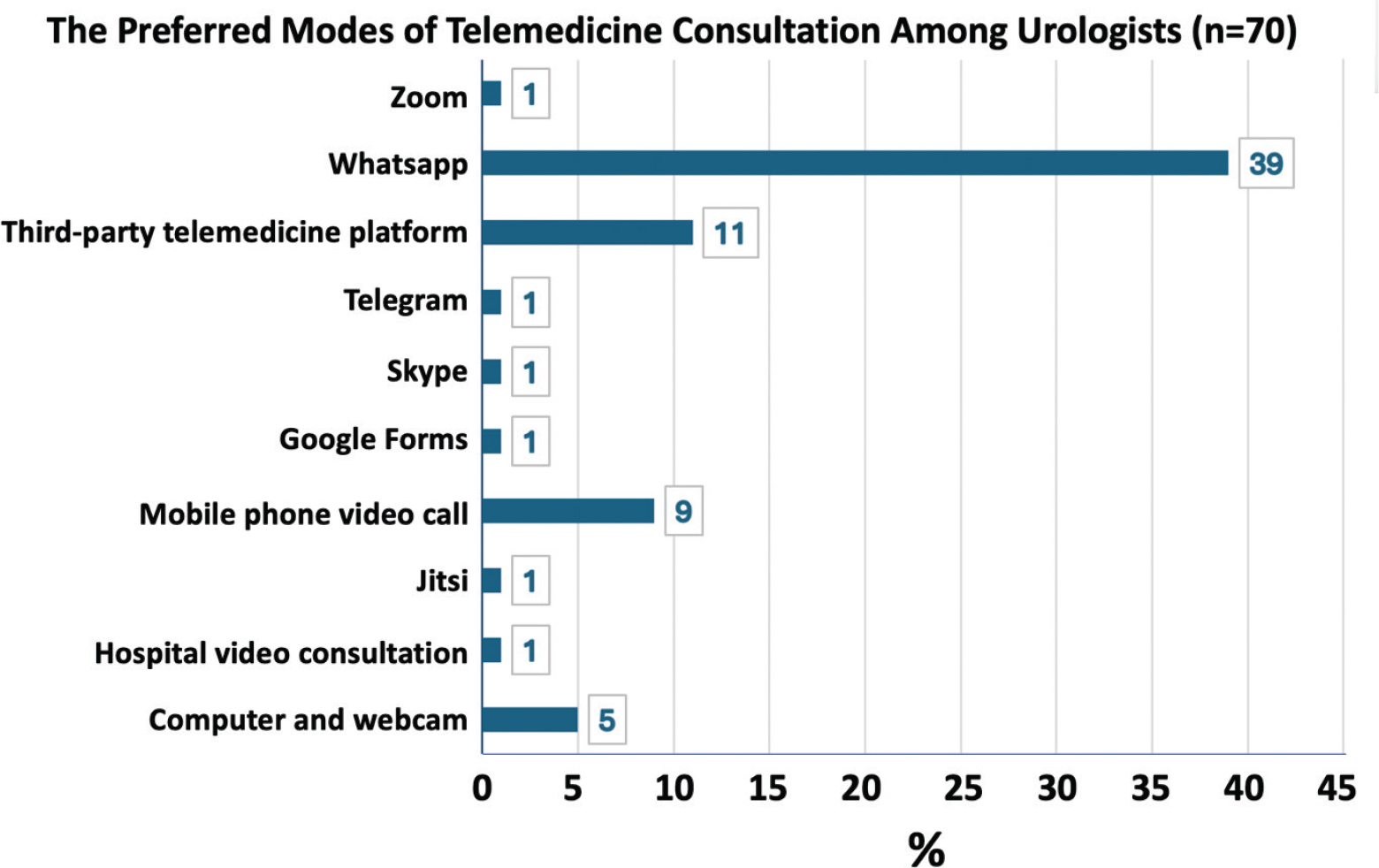
Fig. 1. The percentage distribution of respondents’ preferred mode of telemedicine consultation (n = 70). WhatsApp was the most selected platform, followed by third-party telemedicine platforms and mobile phone video calls. Other platforms, including Zoom, Skype, Jitsi, and hospital video consultation systems, were selected by a small proportion of respondents.
Regarding the use of telemedicine in aspects of office urology, most respondents stated that counseling and patient education were the most feasible aspects of office urology that could be carried out via telemedicine consultation. This was followed by post-treatment follow-up. On the other hand, most respondents believed that post-treatment complication management in office urology was not feasible using telemedicine consultation.
Similarly for surgical urology, most respondents felt that counseling and patient education were the most feasible aspects of surgical urology that could be carried out via telemedicine consultation, followed by post-treatment follow-up. On the other hand, most respondents believed that post-treatment complication management in surgical urology was not feasible to carry out using telemedicine consultation. Almost 66% of the respondents practicing telemedicine in their urology practice stated that the amount of effort involved in telemedicine was more than in-person consultation, whereas 19% of the urologists reported that the effort involved in telemedicine was like the effort involved in in-person consultation (Table 2).
| Variables | Frequency (n) | Percentage |
| Effort compared to in-person consultations | ||
| • More effort | 46 | 65.71 |
| • Same effort | 13 | 18.57 |
| • Less effort | 11 | 15.71 |
| Remuneration view (compensation) | ||
| • Same as in-person | 44 | 62.86 |
| • More than in-person | 23 | 32.86 |
| • Less than in-person | 3 | 4.29 |
| Feasibility in Office Urology via Telemedicine* | ||
| • Counseling and education | 69 | 98.57 |
| • Post-treatment follow-up | 67 | 95.71 |
| • Post-treatment complication management | 17 | 24.29 |
| Feasibility in Surgical Urology via Telemedicine* | ||
| • Counseling and education | 66 | 94.29 |
| • Post-operative follow-up | 59 | 84.29 |
| • Post-operative complication management | 12 | 17.14 |
| *More than one response was allowed. | ||
Barriers to Implementation
The respondents practicing telemedicine were asked to choose multiple options from a list of possible barriers to the implementation of telemedicine. Around 43% of the respondents rated the fear of not getting paid for consultation as the biggest barrier in the widespread implementation and adoption of telemedicine in their daily practice. This was followed by the increased time commitment that might be associated with telemedicine (Table 3).
| Barriers to implementation* | Frequency (n) | Percentage |
| Fear of malpractice and legal responsibility | 51 | 72.86 |
| Time required for teleconsultation | 38 | 54.29 |
| Fear of not getting paid for the consultation | 30 | 42.86 |
| Reimbursement from insurance companies | 19 | 27.14 |
| Existing evidence does not support adoption yet | 9 | 12.86 |
| Lack of infrastructure in hospital/practice | 7 | 10.00 |
| Belief that telemedicine is not appropriate for practice | 6 | 8.57 |
| Lack of institutional interest | 5 | 7.14 |
| Lack of time to engage in telemedicine | 3 | 4.29 |
| Limited understanding of telemedicine | 2 | 2.86 |
| High setup cost | 1 | 1.43 |
| *Multiple responses were allowed. | ||
Knowledge and Training for Telemedicine
Among the 132 urologists who participated in the survey, 74% were aware that the GoI has brought out a framework to practice telemedicine in India, and 26% were not aware of any such guidelines. A maximum of the study participants (70%) reported having never undergone any training workshop/read/attended any webinar related to the telemedicine practice. Almost 44% of the respondents believed that the best format to teach the safe and efficient practice of telemedicine is through a structured learning platform, while 36% of them believed that live online sessions with thought leaders in the field were the best way to learn the practice of telemedicine (Table 4).
Qualitative Response From Study Participants
A total of 132 respondents provided open-ended feedback. The thematic review revealed several recurring views. Many urologists expressed optimism and indicated plans to adopt telemedicine soon, particularly recognizing its role during the COVID-19 pandemic. Others highlighted challenges such as time constraints, technological limitations, and difficulty integrating teleconsultation into public hospital settings. Concerns around patient preference for in-person care, legal implications, and the lack of secure platforms for practicing telemedicine were also noted. While a formal qualitative analysis was beyond the scope of this study, these reflections help contextualize the quantitative findings and underscore the diversity of experiences with telemedicine in urology practice.
Discussion
Telemedicine has experienced exponential growth over the past few decades, with evolving healthcare demands and technological advancements further accelerating its adoption.
The reported benefits of telemedicine include reductions in both direct and indirect healthcare expenditures, decreased travel time and distance for patients, comparable levels of patient satisfaction to in-person visits, and high overall satisfaction among telemedicine users.9,10
Resource allocation is a critical component of healthcare systems, all of which operate within the constraints of limited resources. A cost analysis review from Australia confirmed that telehealth significantly reduces travel and associated costs by enabling remote consultations in place of in-person visits, a benefit applicable across different health system contexts. Additionally, telehealth was shown to decrease reliance on costly procedures and specialist follow-up by facilitating the delivery of competent care through more efficient and accessible means.11
The COVID-19 pandemic helped with the rapid adoption of telemedicine for consultation. During the start of the pandemic, Practo, a leading online telemedicine platform, reported a 500% surge in online doctor consultations in India between March 1, 2020, and May 31, 2020.12 Medindia.net, another platform, saw an increase in uptake of self-care wellness packages.13
The Government of India’s flagship telemedicine platform, eSanjeevani, made progress, currently serving over 342 million patients through 131,365 health and wellness centers (HWCs) and 16,982 hubs. The platform operates in two modes: eSanjeevani Ayushman Bharat - Health and Wellness Centres (AB-HWC), a doctor-to-doctor telemedicine system for rural patients, and eSanjeevani OPD, a patient-to-doctor system enabling remote outpatient consultations.14 A few other notable examples of telemedicine adoption in the private sector include Aravind Eye Care and Apollo Telemedicine.15,16 Following the release of official telemedicine guidelines, the use of various private mobile health applications saw a significant increase.17
After the GoI issued guidelines regarding the practice of telemedicine, many socially responsible private entities like the Telemedicine Society of India are educating registered medical practitioners about telemedicine.18 However, it is evident that only a few institutions and programs offered curricula and resources for telemedicine training, as 70.45% of respondents in our study reported never having undergone any training in telemedicine practice (Table 4). Medical educators must adjust to this new form of care delivery and take a proactive approach to educate trainees on patient-centered telemedicine practices and integrate them for new, thoughtful, and deliberate workflow. To use telemedicine technologies effectively for raising the standard of care, expanding patient access, and lowering healthcare costs, medical schools must teach telemedicine skills to undergraduate medical students, which has shown positive outcomes.19 In our study, almost 44% of the respondents believed the best format to teach safe and efficient practice of telemedicine is through a structured learning platform, and 36.36% of them believed that live online sessions with thought leaders in the field are the best ways to learn the practice of telemedicine (Table 4). Furthermore, to educate medical practitioners regarding telemedicine, social media can be utilized to its full potential. An “X,” formerly a Twitter-based journal club, can be a free and efficient way to disseminate information.20 Is this correct?
The COVID-19 pandemic accelerated the adoption of telemedicine, but the absence of a unified and standardized platform continues to present challenges. Currently, different institutions rely on a range of platforms, with no universally agreed-upon system in place. In our study, WhatsApp emerged as the commonly preferred medium for teleconsultation, underscoring the critical gap in purpose-built, secure, and regulated telemedicine infrastructure (Figure 1).
This horizontal bar chart in Figure 1 illustrates the number of urologists who identified each platform as their most preferred mode of telemedicine consultation. Whatsapp was most frequently preferred (n = 39), followed by third-party telemedicine platforms (n = 11) and mobile phone video calls (n = 9). Other platforms, including Zoom, Telegram, Skype, Google Forms, Jitsi, hospital video consultations, and computer-based webcam consultations, were selected by a small number of respondents (n = 1–5). Data were derived from a cross-sectional survey conducted in 2021 across India. Responses reflect preferences based on ease of use, familiarity, and perceived accessibility for both providers and patients.
Although the GoI launched the eSanjeevani platform to facilitate teleconsultations, it remains inaccessible to private practitioners. Even among public hospital urologists, the use of eSanjeevani appears limited. This might be due to differences in institutional readiness, preference for familiar tools like WhatsApp, or perceived inefficiencies in the platform. These factors were not directly explored in this study and require further investigation. Establishing a government-endorsed, unified telemedicine platform that integrates public and private healthcare providers and facilitates seamless interoperability with electronic health records (EHRs), enabling secure, longitudinal patient data access and continuity of care, could address several key barriers identified by our respondents. These barriers include concerns about medico-legal liability, reimbursement mechanisms, and the lack of institutional support for telemedicine. A standardized platform integrated with EHRs could streamline delivery of services, ensure regulatory compliance, and foster greater trust among clinicians by providing clarity on legal and financial frameworks. Integration with EHRs would allow for real-time documentation of consultations within the patient’s existing medical record, reducing duplication of work and ensuring a legally traceable audit trail. This could help to mitigate medico-legal concerns by formalizing consent, clinical notes, and follow-up plans within secure systems. Furthermore, EHR-linked teleconsultations could enable automated billing workflows and validation of service delivery, facilitating smoother reimbursement processes.
From a clinical perspective, access to a patient’s longitudinal record during a remote consultation might enhance decision-making and reduce the risk of medical errors, thereby improving clinician confidence in telemedicine practice.21 In a related study, Dublin et al.22 identified similar concerns, with urologists citing patients’ limited access to and understanding of technology, along with reimbursement issues, as major barriers to telemedicine use. In our study, additional barriers included fear of not being paid for services, the time commitment involved in teleconsultation, and apprehensions about legal responsibility (Table 3). Collectively, these findings suggest that strategic investment in a centralized, accessible telemedicine platform integrated with EHRs could substantially improve adoption and service equity across healthcare settings.
In developed nations, telemedicine combined with traditional healthcare has been shown to offer outstanding results in the management of a variety of urological illnesses. Telehealth has been implemented successfully in selected patients with prostate cancer, urinary incontinence, pelvic organ prolapses, uncomplicated urinary stones, and urinary tract infections.23 Asklund et al.24 tested the efficacy of a mobile app named Tat. The app focused on pelvic floor muscle training exercises and contained information that described stress urinary incontinence, pelvic floor, and lifestyle factors related to incontinence. The app group reduced the use of incontinence aids significantly, and patient satisfaction with the app was “good” or “very good” in 96.7% of the app group.24 Concerning treatment selection and the decision-making process in localized prostate cancer, Schaffert et al.25 tested the effectiveness of an online tutorial on different treatment options, which was in 56 patients with newly diagnosed prostate cancer. Several validated questions were used to assess patient satisfaction and the tutorial’s effectiveness. Patients indicated they were well-prepared for the decision-making process, experienced little decisional conflict, and nearly no decisional regret 3 months following the choice. Overall, patients expressed extremely high levels of satisfaction with the tutorial.
Likewise, respondents from our study considered counseling and patient education to be the most feasible telemedicine procedures in both office urology and surgical urology. Many respondents thought that telemedicine could be used to effectively follow-up on urological procedures post-operatively (Table 2). A study involving men with a history of prostate cancer found that, among those who had undergone radical prostatectomy, remote video consultations demonstrated comparable timing efficiency and patient satisfaction to traditional office visits while significantly reducing costs. These findings suggest that video consultations might serve as a viable alternative to conventional healthcare delivery models by improving access to care, enhancing service quality, and supporting cost containment.26 Similarly, Segura-Sampedro et al.27 reported high levels of satisfaction with surgical wound remote follow-up by smartphone after appendectomy.27
Despite the push from the pandemic, approximately 48% of urologists participating in the survey recorded no current usage of telemedicine, and they listed their reasons for the same in an open text box at the end of the survey. As per the responses to this open-ended question, it was observed that most of the respondents were hesitant to adopt telemedicine for fear of malpractice, while several could not accept virtual consultation as an alternative to in-person consults, which, according to them, played a big role in developing doctor-patient relationships and developing correct diagnoses. However, because of the global pandemic, several respondents not currently practicing telemedicine in our survey showed a willingness to learn about telemedicine and believed the use of telemedicine in urology practice could increase in the future.
Study Limitations
A key limitation of this study is the low response rate of 6.6%, which may affect the representativeness of the findings. While online surveys are often used to reach a geographically dispersed professional group, response rates in such contexts vary widely. The timing of the survey, which coincided with the second wave of the COVID-19 pandemic in India, might have contributed to limited participation, as many urologists were managing increased clinical responsibilities and disruptions to routine practice. Furthermore, it is plausible that those who were more engaged with or interested in telemedicine were more likely to respond, introducing potential self-selection bias. As a result, the findings may disproportionately reflect the views and experiences of early adopters or those more digitally inclined. This limits the generalizability of the results to the broader urology workforce in India. Future studies could benefit from employing mixed-methods designs, purposive sampling, or follow-up recruitment strategies to improve participation rates and minimize bias.
Conclusion
Of the approximately 2,000 urologists invited to participate, 132 responded to the survey, indicating a response rate of 6.6%. Notably, 46.97% of respondents reported no utilization of telemedicine, even during the COVID-19 pandemic. These findings suggest a limited level of engagement with telemedicine among urologists and highlight the need to enhance awareness regarding its clinical and operational benefits.
Targeted efforts are required to improve understanding of telemedicine’s potential within the medical community. In this context, government-led initiatives play a critical role. Addressing key barriers such as concerns about medico-legal liability and inadequate remuneration mechanisms is essential to facilitate wider adoption. The establishment of a common government or a public-private partnership-endorsed telemedicine platform that integrates both public and private healthcare sectors might offer a practical solution. Such a platform could standardize service delivery, clarify regulatory frameworks, and increase physician confidence.
Given the expanding reach of digital technologies and the integration of advanced tools such as artificial intelligence and machine learning, the transition toward telemedicine is becoming increasingly inevitable. Collaborative efforts among policymakers, healthcare professionals, and the public are therefore essential to realize the full potential of telemedicine in the Indian healthcare system.
Funding
There was no specific research grant received for the project.
Conflicts of Interest
The authors declare no conflicts of interest.
Contributors
Dr. Sana Bhadwal, Dr. Anbumathi Suriyamoorthy, and Dr. Ciba Baskaran were involved in the conceptualization, data collection, data analysis, and drafting manuscript. Dr. Sunil Shroff provided overall supervision in all aspects of this research and edited the final copy of the manuscript.
Data Availability Statement (DAS), Data Sharing, Reproducibility, and Data Repositories
The data that support the findings of this study are available within the article and its supplementary file.
Application of AI-Generated Text or Related Technology
Acknowledgments
References
- WHO. Telemedicine: opportunities and developments in member state [Internet]. WHO | Regional Office for Africa; 2010 [cited 2025 Apr 25]. Available from: https://www.afro.who.int/publications/telemedicine-opportunities-and-developments-member-state
- Nesbitt TS. The evolution of Telehealth: where have we been and where are we going? [Internet]. National Academies Press (US); 2012 [cited 2025 Apr 25]. Available from: https://www.ncbi.nlm.nih.gov/books/NBK207141/
- Enabling specialty healthcare to the rural and remote population of telemedicine healing touch through space [Internet]. [cited 2025 Apr 25]. Available from: https://www.televital.com/downloads/ISRO-Telemedicine-Initiative.pdf
- MOHFW. Telemedicine division, MOHFW, Govt. of India [Internet]. [cited 2025 Apr 25]. Available from: chrome-extension://efaidnbmnnnibpcajpcglclefindmkaj/https://www.nhm.gov.in/images/pdf/Telemedicine/Telemedicine.pdf
- Kapoor L, Mishra SK, Singh K. Telemedicine: experience at SGPGIMS, Lucknow. J Postgrad Med [Internet]. 2005;51(4):312–5. Available from: https://pubmed.ncbi.nlm.nih.gov/16388175/
- Damodharan D, Narayana M, Channaveerachari N, Math S. Telemedicine practice guidelines of India, 2020: implications and challenges. Indian J Psychiatry. 2021;63(1):97. https://doi.org/10.4103/psychiatry.IndianJPsychiatry_476_20
- Dastidar BG, Jani AR, Suri S, Nagaraja VH. Reimagining India’s National Telemedicine Service to improve access to care. Lancet Reg Health Southeast Asia. 2024;30:100480. https://doi.org/10.1016/j.lansea.2024.100480
- Naik N, Hameed BMZ, Nayak SG, Gera A, Nandyal SR, Shetty DK, et al. Telemedicine and telehealth in urology—What do the “patients” think about it?. Front Surg. 2022;9. https://doi.org/10.3389/fsurg.2022.863576
- Brecthel L, Gainey J, Penwell A, Nathaniel TI. Predictors of thrombolysis in the telestroke and non telestroke settings for hypertensive acute ischemic stroke patients. BMC Neurol. 2018;18(1). https://doi.org/10.1186/s12883-018-1204-3
- Sinha N, Cornell M, Wheatley B, Munley N, Seeley M. Looking through a different lens: patient satisfaction with telemedicine in delivering pediatric fracture care. J Am Acad Orthop Surg Glob Res Rev. 2019;3(9):e100. https://doi.org/10.5435/JAAOSGlobal-D-19-00100
- Snoswell CL, Taylor ML, Comans TA, Smith AC, Gray LC, Caffery LJ. Determining if telehealth can reduce health system costs: scoping review. J Med Internet Res. 2020;22(10):e17298. https://doi.org/10.2196/17298
- Reinventing healthcare delivery with telemedicine a report by Telemedicine Society of India (TSI) and Practo [Internet]. 2020 [cited 2025 Apr 25]. Available from: https://www.practo.com/company/insights/practo_tsi_telemedicine_report.pdf
- Medindia—trusted information on health & wellness [Internet]. [cited 2025 Apr 25]. Available from: https://www.medindia.net
- eSanjeevani [Internet]. [cited 2025 Apr 25]. Available from: https://esanjeevani.mohfw.gov.in/
- Ganapathy K. Telehealth in India: the Apollo contribution and an overview. Apollo Med. 2014;11(3):201–7. https://doi.org/10.1016/j.apme.2014.07.014
- Tele-ophthalmology [Internet]. Aravind Eye Care System. Available from: https://aravind.org/tele-opthalmology/
- Agarwal N, Biswas B. Doctor consultation through mobile applications in India: an overview, challenges and the way forward. Healthc Inform Res. 2020;26(2):153–8. https://doi.org/10.4258/hir.2020.26.2.153
- Telemedicine Society of India [Internet]. [cited 2025 Apr 25]. Available from: https://tsi.org.in/
- Waseh S, Dicker AP. Telemedicine training in undergraduate medical education: mixed-methods review. JMIR Med Educ. 2019;5(1):e12515. https://doi.org/10.2196/12515
- Roberts MJ, Perera M, Lawrentschuk N, Romanic D, Papa N, Bolton D. Globalization of continuing professional development by journal clubs via microblogging: a systematic review. J Med Internet Res. 2015;17(4):e103. https://doi.org/10.2196/jmir.4194
- Zhang X, Saltman R. Impact of electronic health records interoperability on Telehealth service outcomes. JMIR Med Inform. 2021;10(1):e31837. https://doi.org/10.2196/31837
- Dubin JM, Wyant WA, Balaji NC, Ong WL, Kettache RH, Haffaf M, et al. Telemedicine usage among urologists during the COVID-19 pandemic: cross-sectional study. J Med Internet Res. 2020;22(11):e21875. https://doi.org/10.2196/21875
- Novara G, Checcucci E, Crestani A, Abrate A, Esperto F, Pavan N, et al. Telehealth in urology: a systematic review of the literature. How much can telemedicine be useful during and after the COVID-19 pandemic? Eur Urol. 2020;78(6): 434–8. https://doi.org/10.1016/j.eururo.2020.06.025
- Asklund I, Nyström E, Sjöström M, Umefjord G, Stenlund H, Samuelsson E. Mobile app for treatment of stress urinary incontinence: a randomized controlled trial. Neurourol Urodyn. 2016;36(5):1369–76. https://doi.org/10.1002/nau.23116
- Schaffert R, Dahinden U, Hess T, Bänziger A, Kuntschik P, Odoni F, et al. Evaluation of a prostate cancer E-health tutorial : development and testing of the website prostata-information.ch. Der Urologe Ausg A. 2018;57(2):164–71. https://doi.org/10.1007/s00120-017-0552-8
- Viers BR, Lightner DJ, Rivera ME, Tollefson MK, Boorjian SA, Karnes RJ, et al. Efficiency, satisfaction, and costs for remote video visits following radical prostatectomy: a randomized controlled trial. Eur Urol. 2015;68(4):729–35. https://doi.org/10.1016/j.eururo.2015.04.002
- Segura-Sampedro JJ, Rivero-Belenchón I, Pino-Díaz V, Rodríguez Sánchez MC, Pareja-Ciuró F, Padillo-Ruiz J, et al. Feasibility and safety of surgical wound remote follow-up by smart phone in appendectomy: a pilot study. Ann Med Surg. 2017;21:58–62. https://doi.org/10.1016/j.amsu.2017.07.040
Copyright Ownership: This is an open-access article distributed in accordance with the Creative Commons Attribution Non-Commercial (CC BY-NC 4.0) license, which permits others to distribute, adapt, enhance this work non-commercially, and license their derivative works on different terms, provided the original work is properly cited and the use is non-commercial. See: http://creativecommons.org/licenses/by-nc/4.0. The authors of this article own the copyright.
Addendum
AB-HWC: Ayushman Bharat — Health and Wellness Centre
CDAC: Centre for Development of Advanced Computing
EHRs: electronic health records
eSanje-evani OPD
HWCs: health and wellness centers
ISRO: Indian Space Research Organization
MCI: Medical Council of India
NIC: National Informatics Center
NITI: National Institution for Transforming India
OPD: OPD
SGPGIMS: Sanjay Gandhi Post Graduate Institute of Medical Sciences