ORIGINAL RESEARCH
Health Professionals’ Preference and Use of Electronic Health Records in a Tertiary Care Hospital in Ghana: A Cross-Sectional Study
Michael Mensah, MSc1  , Sampson Opoku, PhD2 , Annabel A. Anum, MA2 , Theophilius Brocke, MPH3 , Tabitha Quaidoo, FGCNM4 , Mahama R. Nafisa, MD5 and Mercy A. Nuamah, MD, PhD2
1Department of Research, Family Health University, Accra, Ghana; 2Department of Community Health, Family Health University, Accra, Ghana; 3Department of Medicine, Korle Bu Teaching Hospital, Accra, Ghana; 4Department of Palliative Care, Ghana College of Nurses and Midwives, Accra, Ghana; 5Department of Ophthalmology, Korle Bu Teaching Hospital, Accra, Ghana.
Keywords: Electronic health records, healthcare, healthcare workers, communication preference, technology
Abstract
Introduction: There have been major transformations in the health sector through innovation and digital development in the last decade and especially after the COVID-19 pandemic. With the emergence of health technologies (e.g., telemedicine, computer-based patient records, and electronic health systems), healthcare professionals must adjust to the digital era to provide quality, timely, and ethical care. The researchers assessed health professionals’ preferences and use of electronic health records (EHRs) in a tertiary hospital in Ghana.
Methods: A cross-sectional study using a quantitative approach was conducted from September 1, 2021, to May 1, 2022. Data were collected electronically from 233 health professionals (doctors and nurses) at the Korle Bu Teaching Hospital using a structured questionnaire after obtaining consent from the participants to use EHRs in patient management. Data were analyzed using Stata 16 with summary statistics, chi-square, and logistic regression. The performance of the model was determined using a Receiver Operating Characteristic curve.
Results: A total of 172 (73.8%) females and 61 (26.2%) males responded to the questionnaire. Among the participants, 154 (57.6%) preferred EHR. Some factors associated with EHR preference included age group, sex, department, qualification, knowledge of the use of Information and Communication Technology (ICT) and ICT tools, as well as years of experience in the profession.
Conclusion: Nurses showed greater preference to use EHR than doctors. The authors concluded that educating, training, and consistent use of ICT tools and EHR systems will increase the use of EHR among healthcare professionals.
Plain Language Summary
This study assessed the preferences and usage of Electronic Health Records (EHR) among health professionals at Korle Bu Teaching Hospital in Ghana. Conducted from September 2021 to May 2022, a cross-sectional quantitative approach was employed, collecting data from 233 participants, including doctors and nurses. A structured questionnaire was used to gauge preferences for EHR in patient management. The analysis revealed that 57.6% of respondents preferred EHR, with significant associations found between EHR preference and factors such as age, gender, department, qualifications, ICT knowledge, and professional experience. Results indicated that nurses exhibited a stronger preference for EHR than doctors. The study concluded that enhancing education and training in ICT tools and EHR systems could improve usage rates among healthcare professionals, ultimately benefiting patient care.
Citation: Telehealth and Medicine Today © 2025, 10: 593
DOI: https://doi.org/10.30953/thmt.v10.593
Copyright: © 2025 The Authors. This is an open-access article distributed in accordance with the Creative Commons Attribution Non-Commercial (CC BY-NC 4.0) license, which permits others to distribute, adapt, enhance this work non-commercially, and license their derivative works on different terms, provided the original work is properly cited and the use is non-commercial. See: http://creativecommons.org/licenses/by-nc/4.0. The authors of this article own the copyright.
Submitted: May 21, 2025; Accepted: June 29, 2025; Published: August 11, 2025
Funding Statement: Not applicable.
Financial and non-Financial Relationships and Activities: Authors declare no conflict of interest.
Corresponding Author: Michael Mensah, Email: Mikdickson.26@gmail.com
*statistically significant.
Currently, healthcare transformation through technology is a core objective of healthcare reform, with electronic health records (EHRs) being a major example.1 Organizations and businesses are experiencing rapid fundamental changes due to digital transformation,1,2 defined as the use of technology to reach or enhance the mission of enterprises.1,3,4
EHRs significantly improve healthcare services, reduce costs, improve healthcare quality and overall efficiency, and contribute to the strategic management decisions of countries.4 With the introduction of a cloud database, patient records are kept in secure facilities rather than locally.
For example, a survey in Turkey revealed an overall positive attitude toward EHRs among healthcare professionals.4 However, there are significant differences among these groups.1,5,6 And one study conducted in Benghazi reported the importance of intensive training of healthcare staff before implementing an EHR system, as several of the study participants had misconceptions about EHR.7
Employee resistance is also associated with technical challenges and adapting to procedural changes. In addition, some healthcare policymakers and stakeholders, as well as staff, are unwilling to adapt to new technology. Because the primary users of EHR systems are healthcare professionals, their preference for and use of EHR will influence its successful implementation in healthcare delivery.
Reduction in medical errors is a major benefit of EHRs.8–10 Paper-based systems require manual data input and considerable time searching and retrieving patient records. The EHRs, on the other hand, do not suffer from this drawback.
Health professionals recognize their responsibility to maintain confidential health records, and this is facilitated using EHRs.11 Yet, despite the significant contribution of EHRs to enhance quality and efficient healthcare delivery, it is difficult to ignore the challenges associated with the implementation of the EHR system.12,13 Using an EHR system can be quite technical; hence, users need training to use it efficiently.1,14,15,16 Privacy concerns, high cost of acquisition, maintenance cost, and system disruptions are also major issues that affect the movement of EHR systems.16–18
This study seeks to assess the factors that contribute to the preferences and use of EHR among healthcare professionals at the Korle Bu Teaching Hospital (KBTH), a tertiary hospital in Ghana.
Methods
Using a cross-sectional design, this study was conducted from September 1, 2021, to May 1, 2022. The goal was to assess health professionals’ perception and usage of EHRs at KBTH in the Greater Accra Region of Ghana. The KBTH is the largest hospital in Ghana and one of the largest healthcare facilities in West Africa. The Greater Accra Region presently has an estimated population of 3.9 million people. With steady growth from a 192-bed facility to a 2,000-bed facility, KBTH is now the principal national referral center, serving a country of an estimated 30 million people.19
The KBTH started migrating to using EHRs in 2019 after a successful pretest at the Korle Bu Polyclinic that same year. The study targeted surgery, family medicine, obstetrics, and ophthalmology departments, which migrated to the EHR system during the study. The study population included nurses and doctors in these departments.
Using a stratified random sampling technique, 233 participants were included in the study after consenting to participate. From sampling frames of the target population in each stratum, participants were selected randomly. Using Google Forms, data were collected electronically from all participants via their WhatsApp platform.
Questions to evaluate a preference for the use of EHR among the participants were grouped in three main categories. First was the demographics and personal characteristics of participants. The second category was based on each participant’s general knowledge of digitalization and Information and Communication Technology (ICT) tools. Third, information to help assess perception and usage of EHR was collected. Data access was limited to investigators using a password-protected computer.
The data were transferred from Google Forms to Excel on Microsoft Office 365 to remove duplicate or irrelevant observations. The Statistical Package for Social Sciences (SPSS) version 26 software was used to analyze the data. Descriptive statistics were performed using frequency proportion, mean, and standard deviation to describe data sociodemographics and apply knowledge of EHR and other ICT tools. Associations between variables were evaluated using the chi-square test of independence. The relationship between independent variables and preference of EHR was determined. Lasso Logistic regression was performed with the best predictors automatically chosen to fit the model, and Receiver Operating Characteristic (ROC) curves were plotted to fit the model. The acceptance error level was set at a p-value of 0.05. Administrative approval was obtained from The Korle Bu Scientific and Technical Committee and Institutional Review Board (Protocol Identification number: KBH-ADM/01242/2021).
Results
Sociodemographic of Study Participants
Two hundred and thirty-three healthcare professionals took part in the study. The mean age of participants was 33 years. The majority, 92/233 (39.9%), were between the ages of 31 and 40. The least age group was participants greater than 50 years 12/233 (5.1%). Out of the total sample, 172/233 (73.8%) were females. The majority, 154 (57.6%), of the participants preferred EHR, and sex was significantly associated with preference for EHR (Table 1). More than half 124 (72.1%) of females preferred to use EHR. There were 167 nurses and 66 doctors in the study.
| Variable | Group | Did not prefer EHR n (%) |
Preferred EHR n (%) | Total n (%) | p |
| Age (years) | Mean: 33.6 | SD: 7.8 | Min: 24 | Max: 60 | |
| Age group | 24–30 | 24 (24.2) | 75 (75.8) | 99 | 0.005* |
| 31–40 | 42 (45.7) | 50 (54.3) | 92 | ||
| 41–50 | 7 (23.3) | 23 (76.7) | 30 | ||
| > 50 | 6 (50.0) | 6 (50.0) | 12 | ||
| Gender | Female | 48 (27.9) | 124 (72.1) | 172 | 0.001* |
| Male | 31 (50.8) | 30 (49.2) | 61 | ||
| Qualification | Bachelors | 13 (16.7) | 65 (83.3) | 78 | 0.000* |
| Certificate | 4 (30.8) | 9 (69.2) | 13 | ||
| Diploma/HND | 12 (15.2) | 67 (84.8) | 79 | ||
| Doctorate | 43 (87.8) | 6 (12.2) | 49 | ||
| Masters | 7 (50.0) | 7 (50.0) | 14 | ||
| Profession | Doctor | 47 (71.2) | 19 (28.8) | 66 | 0.000* |
| Nurse | 32 (19.2) | 135 (80.8) | 167 | ||
| Department | Pediatrics | 6 (20.7) | 23 (79.3) | 29 | 0.000* |
| Eye | 4 (23.5) | 13 (76.5) | 17 | ||
| Medicine | 49 (79.0) | 13 (21.0) | 62 | ||
| OB/GYN | 10 (13.9) | 62 (86.1) | 72 | ||
| Family Medicine | 1 (11.1) | 8 (88.9) | 9 | ||
| Surgery | 9 (205) | 35 (79.5) | 44 | ||
| Work experience (years) | 1–2 | 11 (19.6) | 45 (80.4) | 56 | 0.003* |
| 3–5 | 43 (45) | 51 (54.3) | 94 | ||
| > 5 | 25 (40.1) | 58 (9.9) | 83 | ||
| Experience with EHR (years) | 1–2 | 20 (24.1) | 63 (75.9) | 83 | 0.005* |
| 3–5 | 38 (47.8) | 42 (52.5) | 80 | ||
| > 5 | 21 (30.0) | 49 (70.0) | 70 | ||
| *: denotes statistical significance; EHR: electronic health records; HND: High National Diploma; n: number; min: minimum; max: Maximum; SD: standard deviation; OBS/GYN: obstetrics and gynecology. | |||||
The results showed a significant (p = 0.00) association between preference for EHR and profession. Most nurses preferred using EHR (80.8%) compared to (28.8%) of doctors. There was also a significant association between qualification and EHR preference (p = 0.000*) and statistically significant association between departments and preference for her (p = 0.000*). Professionals in the department of medicine have poor favorability to the EHR. While most of the participants had three to five years of work experience, their experience with EHR was less than two years.
There is a statistically significant association between practical insight on Information Technology (IT) and preference for EHR (p = 0.004) (Table 2). The 145 (62.2%) participants who had a form of IT training prior to its introduction at work preferred to use EHR. Workers who had some experience in using EHR were over 10% more likely to use EHR than those who had not. Knowledge on the use of IT tools was significantly associated with preference and use of IT tools (p = 0.000*). Workers who had good knowledge in IT were 59 (25.3%). Personal use of digital tools was significantly associated with the use of EHR at work (p = 0.00*). Eighty percent of participants who had laptops and other digital tools preferred to use EHR (Table 2). There was no association between shopping online and preference of use of EHR. There was statistically significant difference between preference to keep personal files digitally and preference to use EHR (p = 0.00*) (Table 2). Also, there is significant association between good perception toward EHR and its preference (p = 0.000*).
| Characteristics | EHR | Total | p | |
| Not prefer | Prefer | |||
| Practical insight on IT from school when pursuing your studies | ||||
| • Yes | 69 (35.8) | 124 (64.2) | 193 | |
| • No | 2 (7.4) | 25 (92.66) | 27 | |
| • Maybe | 6 (66.7) | 3 (33.3) | 9 | |
| • No response | 2 (50) | 2 (50) | 4 | 0.004* |
| Experience in using EHR | ||||
| • Yes | 6 (21.4) | 22 (78.6) | 28 | 0.137 |
| • No | 73 (35.6) | 132 (64.4) | 205 | |
| Training on IT personally/by the institution since you started working to increase your IT skills | ||||
| • Yes | 59 (40) | 86 (59.3) | 145 | |
| • No | 12 (17.6) | 56 (82.4) | 68 | |
| • Maybe | 7 (41.2) | 10 (58.8) | 17 | |
| • No response | 1 (33.3) | 2 (66.7) | 3 | 0.0010* |
| High level of knowledge and good perception on IT (digital tools) | ||||
| • Yes | 8 (13.6) | 51 (86.4) | 59 | |
| • No | 11 (17.2) | 53 (92.8) | 64 | |
| • Maybe | 57 (54.8) | 47 (45.2) | 104 | |
| • No response | 3 (50) | 3 (50) | 6 | 0.000* |
| High proficiency in IT (digital tools) | ||||
| • Yes | 6 (10.5) | 51 (89.5) | 57 | |
| • No | 11 (18.6) | 48 (81.4) | 59 | |
| • Maybe | 58 (53.7) | 50 (46.3) | 108 | |
| • No response | 4 (44.4) | 5 (55.6) | 9 | 0.000* |
| Prefer to keep personal files digitally | ||||
| • Yes | 21 (14.7) | 122 (85.3) | 143 | 0.000* |
| • No | 5 (19.2) | 21 (80.8) | 26 | |
| • Maybe | 47 (82.5) | 10 (17.5) | 57 | |
| • No response | 6 (85.7) | 1 (14.3) | 7 | |
| Frequent use of PC/laptop at home | ||||
| • Yes | 28 (20.0) | 112 (80.0) | 140 | |
| • No | 39 (60.0) | 26 (40.0) | 65 | |
| • Maybe | 8 (34.8) | 15 (65.2) | 23 | |
| • No response | 4 (80.0) | 1 (20.0) | 5 | 0.000* |
| Online shopping | ||||
| • Yes | 62 (39.2) | 96 (60.8) | 158 | |
| • No | 9 (19.1) | 38 (80.9) | 47 | |
| • Maybe | 5 (23.8) | 16 (76.2) | 21 | |
| • No response | 3 (42.9) | 4 (57.1) | 7 | 0.051 |
| *: denotes statistical significance; ICT: information communication technology; min: minimum; max: maximum; significance; EHR: electronic health records; IT: information technology; PC; personal computer. | ||||
The findings of this study provide valuable insights into the factors that influence the adoption of EHRs among health professionals in Ghana. Female health professionals were 2.66 times more likely to prefer EHRs compared to male health professionals. However, after adjusting for other factors, this association was not statistically significant (Adjusted Odds Ratio [AOR] = 1.28, p = 0.64). Health professionals with certificates were five times more likely to prefer EHRs versus those with a master’s degree (AOR = 0.04, p = 0.00). Health professionals who had practical insight into EHRs were 1.89 times more likely to prefer EHRs compared to those who did not (AOR = 1.89, p = 0.67). In addition, health professionals who did not use a laptop at home were 0.37 times less likely to prefer EHRs. The ROC had 85% sensitivity (Table 3 and Figure 1).
| Factors | COR (95% CI) | p | AOR (95% CI) | p |
| Sex | ||||
| • Female | 2.66 (1.46–4.87) | 0.01* | 1.28 (0.45–3.69) | 0.64 |
| Age group (years) | ||||
| • 31–40 | 3.12 (0.92–10.6) | 0.67 | 0.88 (0.08–8.98) | 0.90 |
| • 41–50 | 1.19 (3.57–3.96) | 0.77 | 0.73 (0.08–6.25) | 0.77 |
| • > 50 | 3.28 (0.80–13.4) | 0.99 | 3.88 (30.39–38.0) | 0.244 |
| Qualification | ||||
| • Certificate | 5.00 (1.49–16.66) | 0.00* | 3.66 (0.72–18.5) | 0.11 |
| • Diploma/HND | 2.25 (0.46–10.88) | 0.31 | 0.96 (0.08–11.82) | 0.99 |
| • Doctorate | 5.58 (1/65–18.8)) | 0.00* | 3.92 (0.63–24.0)) | 0.14 |
| • Masters | 0.14 (0.03–0.53) | 0.00* | 0.04 (0.004–0.44) | 0.00* |
| Occupation | ||||
| • Nurse | 0.09 (0.05–0.18) | 0.00* | 1.39 (0.27–7.03) | 0.68 |
| Years of working | ||||
| • 3–5 | 1.95 (1.05–3.63) | 0.03* | 0.55 (0.10–2.90) | 0.48 |
| • > 5 | 3.44 (1.59–7.48)) | 0.00* | 4.18 (0.96–18.0) | 0.05 |
| Work in KBTH (years) | 0.27 | |||
| • 3–5 | 2.11 (1.07–4.14) | 0.03* | 2.66 (0.46–15.33) | 0.36 |
| • > 5 | 2.85 (1.46–5.56) | 0.00* | 0.55 (0.15–2.01) | |
| Practical insight | ||||
| • Yes | 6.95 (1.59–30.2) | 0.00* | 2.40 (2.4–1.24–4.8) | 0.00* |
| • Maybe | 0.27 (0.06–1.14) | 0.07 | 0.18 (0.024–1.35) | 0.09 |
| • No response | 0.55 (0.07–4.03) | 0.56 | 1.89 (1.00–3.53) | 0.67 |
| “I often use Laptop at home.” | ||||
| • Yes | 0.16 (0.08–0.31) | 0.00* | 0.37 (0.12–1.11) | 0.07 |
| • Maybe | 0.46 (0.18–1.21) | 0.11 | 0.14 (0.03–0.59) | 0.00* |
| • No response | 0.06 (0.007–0.58) | 0.01* | 0.05 (0.002–1.64) | 0.095 |
| *: denotes statistical significance; EHR: electronic health record; COR: crude odds ratio; AOR: adjusted odds ratio; HND: high national diploma; KBTH: Korle-Bu Teaching Hospital. | ||||
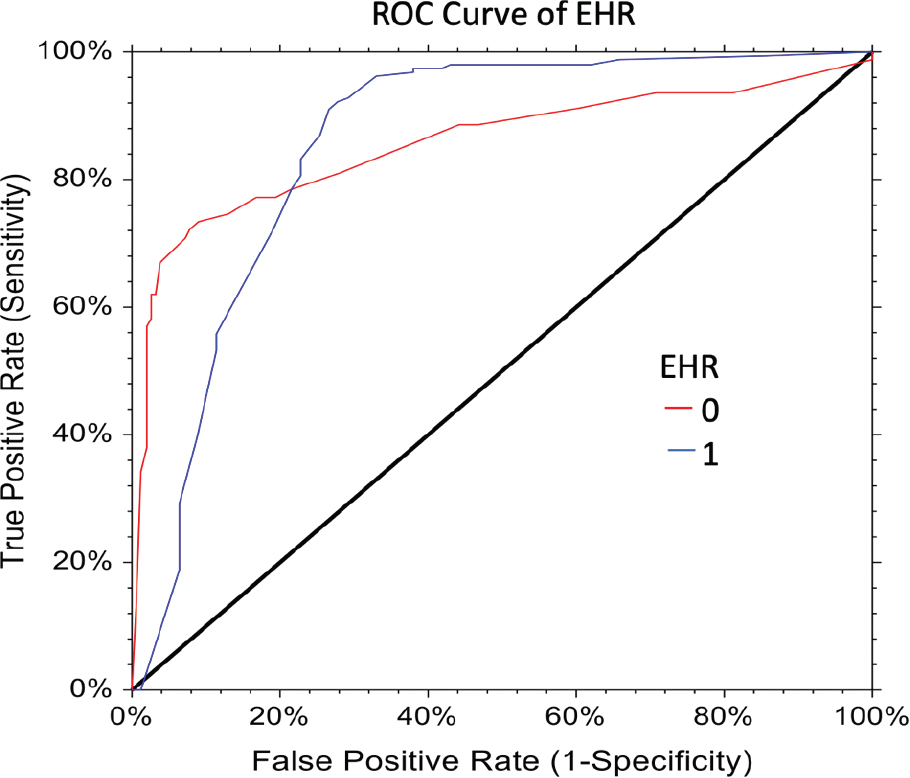
Fig. 1. Predictive model using ROC curve. ROC: receiver operative characteristic curve; EHR: electronic health record.
Discussion
The current study sought to examine the preference and use of EHR among nurses and physicians in Ghana. From the study, predictors of EHR preference included gender, age, qualification, profession, years of experience, knowledge on ICT tools and proficiency, and previous lessons in ICT. These findings are similar to the study by Adam and Abdulai, which reported variables such as sex and ICT literacy as factors influencing health professionals’ readiness for EHR adoption.20 In relation to gender, significant number of females preferred EHR. This finding supports the study by Al-Otaibi et al., which reported high preference for EHR among female Kuwait physicians.21 The finding however contradicts a secondary analysis performed to determine sex impact and physicians’ navigational strategies while using EHRs, which revealed more preference and use of EHR among male physicians than females.22
This study also showed a significant association between age group of health professionals and preference for EHRs. Younger professionals between the ages of 24 and 30 years showed more preference for EHR than the other age groups. This finding corresponds with an Austrian study, which reported a significant difference between ages and use or preference for EHR.3 In a study conducted in Kuwait, younger health professionals were reported to have better readiness and preference for electronic medical record (EMR) system utilization.2 Younger people’s preference for EHR may be as a result of their natural tendency to possess readiness and interest for accepting new trends in technology as compared to older people.2,14,23 Another study in Ethiopia showed that as compared to younger health professionals, older health professionals are 52% less likely to show readiness for EMR system.6 In this study, however, although younger professionals showed more preference for EHR, a number of the older professionals also showed preference for EHR, which may be due to the fact that most of the participant personally use computers at home. Most newly recruited health professionals also showed preference for EHR in this study. This could be because most new health workers are often young and are more conversant with modern technologies, hence increasing their affinity for the use of EHR.3,13
Knowledge in ICT was associated with preference for EHR in this study. Participants who had sufficient knowledge on ICT preferred to use EHR. Health professionals who were highly proficient in IT digital tools and often used these tools showed a high preference for EHR usage. Results from the study also revealed that people who often used digital tools like a laptop at home were more prone to prefer the use of EHR. This confirms the result of Biruk et al., which reported good knowledge in ICT and positive attitude for EMRs among majority of their study participants.2,6 Computer literacy had a positive correlation with the readiness for EHR system.2 A study in Saudi Arabia revealed that obstructing EHR implementation was lack of knowledge and experience using EHR systems. Another study in Saudi Arabia reported significant positive relationship between computer literacy, English language proficiency level, and EHR literacy levels. Additionally, that finding indicated a statistically significant relationship between educational level, and computer and EHR literacy levels.24 This may imply the role of socio-economic factors such as educational level and computer literacy in EHR preference and use.16,23,25,26 It was evident from the study that ICT training or recruiting staff with the required knowledge and skills in ICT will be one of the main facilitators of EHR implementation.
A study conducted in Canada reported among other factors perceived ease of use as one of the strongest factors associated with physicians’ intention to use EHR.10 Factors that predicted perceived preference were professional rank, sex, experience with EHR, and computer skills.13,27 Other studies also reported sociodemographic characteristics of health professional, EHR experience, and computers skills as influencing perceptions on ease-of-use.23,28,29 Most health workers from the study had good knowledge and perception on the use of EHR. This study agrees with a national exploratory study from 15 randomly selected hospitals in Jordan, which reported positive perceptions of nurses in relation to EHR usefulness and ease-of-use and acceptance of EHR.22,30
The study’s strength lies in its in-depth examination of health professional’s characteristics that influence their preference for EHR. A limitation of this study is that it did not explore health professional knowledge on implications of EHR mismanagement. Also, there was little information on the drawbacks and benefits of EHR in Ghana. Hence, further studies can be conducted to have a clear understanding of its benefits and drawbacks.
In conclusion, this study highlights the growing importance of EHR in healthcare, especially post-COVID-19. Nurses exhibited a stronger preference for EHR compared to doctors. Key influencing factors include age, gender, qualifications, ICT knowledge, and professional experience. To encourage broader EHR adoption, ongoing education, training, and consistent ICT tool usage among healthcare professionals are essential.
Author Contributions
Data Availability Statement (DAS), Data Sharing, Reproducibility, and Data Repositories.
The datasets generated and/or analyzed during the current study are available from the corresponding author upon reasonable request.
Application of AI-Generated Text or Related Technology
Acknowledgment
The authors are grateful to Mr. Charles Yeboah for his assistance with the collection of data.
References
- Khan S. Leadership in the digital age—A study on the effects of digitalisation on top management leadership [Internet]. 2016. Available from: https://urn.kb.se/resolve?urn=urn:nbn:se:su:diva-133809
- Biruk S, Yilma T, Andualem M, Tilahun B. Health Professional’s readiness to implement electronic medical record system at three hospitals in Ethiopia: a cross sectional study. 2014, p. 1–8.
- Fortuin JB, Molefi M. Telemedicine and E-Health; 1993.
- Kose I, Rayner J, Birinci S, Ulgu MM, Yilmaz I, Guner S, et al. Adoption rates of electronic health records in Turkish Hospitals and the relation with hospital sizes. BMC Health Serv Res. 2020;20(1):1–16. https://doi.org/10.1186/s12913-020-05767-5
- Aacharya RP, Shakya YL. Knowledge, attitude and practice of medical ethics among medical intern students in a Medical College in Kathmandu. Bangladesh J Bioeth. 2016;6(3):1–9. https://doi.org/10.3329/bioethics.v6i3.27613
- Bisrat A, Minda D, Assamnew B, Abebe B, Abegaz T. Implementation challenges and perception of care providers on Electronic Medical Records at St. Paul’s and Ayder Hospitals, Ethiopia. BMC Med Inform Decis Mak. 2021;21(1):1–12. https://doi.org/10.1186/s12911-021-01670-z
- Abdulmalek LJ. Doctors knowledge, attitude and practice towards electronic medical records in the general hospitals. 2nd scientific Conference of Faculty of Medicine; 2007 Feb 16–18; Benghazi: University of Benghazi; 2007. Available from: https://www.researchgate.net/publication/322448086_Doctors_Knowledge_Attitude_and_Practice_Towards_Electronic_Medical_Records_In_The_General_Hospitals_In_Benghazi
- Love JS, Wright A, Simon SR, Jenter CA, Soran CS, Volk LA, et al. Are physicians’ perceptions of healthcare quality and practice satisfaction affected by errors associated with electronic health record use? J Am Med Informatics Assoc. 2012;19(4):610–4. https://doi.org/10.1136/amiajnl-2011-000544
- Sufyan MB, Ahmed HT, Olasinde AA, Joshua IA. Knowledge, attitude and perception of healthcare workers on use of electronic medical records in Ahmadu Bello University Teaching Hospital, Zaria, Kaduna State Northwest Nigeria. J Med Basic Sci Res. 2021;2(1):1–12.
- Gagnon MP, Ghandour EK, Talla PK, et al. Electronic health record acceptance by physicians: testing an integrated theoretical model. J Biomed Inform. 2014;48:17–27. https://doi.org/10.1016/j.jbi.2013.10.010
- Kruse CS, Smith B, Vanderlinden H, Nealand A. Security techniques for the electronic health records. J Med Syst. 2017;41(8):127. https://doi.org/10.1007/s10916-017-0778-4
- Sadoughi F, Hemmat M, Valinejadi A, Mohammadi A, Majdabadi HA. Assessment of health information technology knowledge, attitude, and practice among healthcare activists in Tehran Hospitals. Int J Comput Sci Netw Secur. 2017;17(1):155.
- Tubaishat A. Perceived usefulness and perceived ease of use of electronic health records among nurses: application of technology acceptance model. Inform Health Soc Care. 2018;43(4):379–89. https://doi.org/10.1080/17538157.2017.1363761
- Ebrahem R, El-Din S, Habib N, El Kheir SA. Nurses’ knowledge, attitude and practices of nursing informatics system in outpatient clinics of children’s cancer hospital (57357) at Cairo. J Educ Pract. 2014;5(32):88–96.
- Attafuah PYA, Abor PA, Abuosi AA, Nketiah-Amponsah E, Tenza IS. Satisfied or not satisfied? Electronic health records system implementation in Ghana: health leaders’ perspective. BMC Med Inform Decis Mak. 2022;22(1):1–9. https://doi.org/10.1186/s12911-022-01998-0
- Yusif S, Hafeez-Baig A, Soar J. e-Health readiness assessment factors and measuring tools: a systematic review. Int J Med Inform. 2017;107:56–64. https://doi.org/10.1016/j.ijmedinf.2017.08.006
- Daniels AA, Abuosi A. Improving emergency obstetric referral systems in low and middle income countries: a qualitative study in a tertiary health facility in Ghana. BMC Health Serv Res. 2020;20(1):1–10. https://doi.org/10.1186/s12913-020-4886-3
- Aldayri A, Altohami K, Alhuwayshan K, Sheikh HA, Almutari S, Sami W. Knowledge attitude and practice of health care worker on electronic medical record system in King Khalid Hospital Majmaah (Ksa), in 2015. World J Pharm Res. 2018;7(4):225–30. https://doi.org/10.20959/wjpr20184-11197
- 2021 population and housing census—Ghana statistical service [Internet]. [cited 15 February 2023]. Available from: https://census2021.statsghana.gov.gh/presspage.php?readmorenews=MTY4OTA1MDkwNC4wOTY=&Presentation - on - the - General - Report - Volumes - 3A - 3B - and - 3C
- Abdulai AF, Adam F. Health providers’ readiness for electronic health records adoption: a cross-sectional study of two hospitals in northern Ghana. PLoS One. 2020;15(6):1–11. https://doi.org/10.1371/journal.pone.0231569
- Al-Otaibi J, Tolma E, Alali W, Alhuwail D, Mohamed Aljunid S. The factors contributing to physicians’ current use of and satisfaction with electronic health records in Kuwait’s public health care: cross-sectional questionnaire study. JMIR Med Inform. 2022;10(10):e36313. https://doi.org/10.2196/36313
- Seifer DR, McGrath K, Scholl G, Mohan V, Gold JA. Sex differences in electronic health record navigation strategies: secondary data analysis. JMIR Hum Factors. 2021;8(2):1–10. https://doi.org/10.2196/25957
- O’Mahony D, Wright G, Yogeswaran P, Govere F. Knowledge and attitudes of nurses in community health centres about electronic medical records. Curationis. 2014;37(1):1150. https://doi.org/10.4102/curationis.v37i1.1150
- Hasanain RA, Vallmuur K, Clark M. Electronic medical record systems in Saudi Arabia: knowledge and preferences of healthcare professionals. J Health Inform Dev Ctries. 2015;9(1):23–31.
- Senafekesh B, Tesfahun Y, Andualem Mulusew, Binyam T. Health Professionals readiness to implement electronic medical record system at three hospitals in Ethiopia: a cross sectional study. BMC Med Inform Decis Mak. 2014;14(115):1–8. https://doi.org/10.1186/s12911-014-0115-5
- Castillo VH, Martínez-García AI, Pulido JRG. A knowledge-based taxonomy of critical factors for adopting electronic health record systems by physicians: a systematic literature review. BMC Med Inform Decis Mak. 2010;10:60. https://doi.org/10.1186/1472-6947-10-60
- Yusif S, Hafeez-Baig A, Soar J. An exploratory study of the readiness of public healthcare facilities in developing countries to adopt health information technology (HIT)/e-health: the case of Ghana. J Healthc Inform Res. 2020;4(2):189–214. https://doi.org/10.1007/s41666-020-00070-8
- Lakbala P, Dindarloo K. Physicians’ perception and attitude toward electronic medical record. Springerplus. 2014;3(1):1–8. https://doi.org/10.1186/2193-1801-3-63
- Parvin R, Shahjahan M. Knowledge, attitude, and practice of e-health among doctors working at selected private hospitals in Dhaka, Bangladesh. J Int Soc Telemed eHealth. 2016;4:e15. https://link.springer.com/article/10.1007/s41666-020-00070-8
- Adebara O, Adebara I, Olaide R, Emmanuel G, Olanrewaju O. Knowledge, attitude and willingness to use mHealth technology among soctors at a semi urban Tertiary Hospital in Nigeria. J Adv Med Med Res. 2017;22(8):1–10. https://doi.org/10.9734/JAMMR/2017/33232
Copyright Ownership: This is an open-access article distributed in accordance with the Creative Commons Attribution Non-Commercial (CC BY-NC 4.0) license, which permits others to distribute, adapt, enhance this work non-commercially, and license their derivative works on different terms, provided the original work is properly cited and the use is non-commercial. See: http://creativecommons.org/licenses/by-nc/4.0. The authors of this article own the copyright.