PROOF OF CONCEPT/PILOTS/METHODOLOGIES
Cost-Effective IoT-Based Real-Time Vital Sign Monitoring: an Affordable Telehealth Solution
Krishnapriya G, PhD1  and Prema S, ME2,3
1Assistant Professor, Department of Computer Science, School of Engineering and Technology, Pondicherry University, Puducherry, India; 2Department of Computer Science, School of Engineering and Technology, Pondicherry University, Puducherry, India; 3School of Computing, Vel Tech Rangarajan Dr. Sagunthala R&D Institute of Science and Technology, Chennai, India
Keywords: Blood oxygen levels, ESP32 Devkit V1, MAX30102 sensor, heart rate, remote healthcare, remote patient monitoring, telemedicine, telehealth
Abstract
Objective: This article proposes a new cost-effective patient monitoring system using ESP32 Devkit V1 and the MAX30102 sensors for remote, non-invasive monitoring of clinical signs for patient monitoring using telemedicine to improve personalized delivery of care.
Methods: This functional system combines the ESP32 Devkit V1 and the MAX30102 to monitor the heart rate (HR) and for peripheral oxygen saturation (SpO2) non-invasively and transfer real-time data to the Blynk Internet of Things (IoT) platform. The volunteers in the pilot study were tested, and the results were compared to a medical-grade pulse oximeter to ensure accuracy. The reliability was tested by collecting data on several occasions under controlled situations.
Results: The new system successfully measured vital parameters (e.g, HR and SO2). The system incorporated hardware and software in remote healthcare applications. Pilot validation of test cases gives the accuracy of HR and SpO2 at 99.88% and 99.38%, respectively.
Discussion: Integration of IoT technology could facilitate continuous, affordable, and personalized monitoring. The system proposed is cost-effective in that it utilizes inexpensive hardware while maintaining accurate measurement of vital parameters. The findings confirmed that it is convenient and easy to use, with the possibility of home-based monitoring. Nevertheless, large-scale clinical implementation must be preceded by broader clinical validation in a wider population. Further development of the system will focus on the introduction of more sensors, enhanced data security, and predictive analytics of telemedicine applications in the future.
Plain Language Summary
In the traditional healthcare system there is a failure to monitor patients continuously. It is also challenging to provide timely care to patients. If patients need treatment, they must wait for the availability of a doctor to check their medical condition. Prolonged waiting sometimes results in dissatisfaction, or if timely treatment is not given, patients run the risk of progressing to a high-risk medical condition. The proposed telehealth remote patient monitoring system monitors the patient over 24 h using sensors that track real-time health-related vital parameters, thereby enhancing a patient’s healthcare through the integrated technology with Internet of Things sensors and ESP32 Devkit V1.
Citation: Telehealth and Medicine Today © 2025, 10: 611
DOI: https://doi.org/10.30953/thmt.v10.611
Copyright: © 2025 The Authors. This is an open-access article distributed in accordance with the Creative Commons Attribution Non-Commercial (CC BY-NC 4.0) license, which permits others to distribute, adapt, and enhance this work non-commercially and license their derivative works on different terms, provided the original work is properly cited and the use is non-commercial. See http://creativecommons.org/licenses/by-nc/4.0.
Received: July 23, 2025; Accepted: September 29, 2025; Published: January 20, 2026
Corresponding Author: Krishnapriya G, Email: krishnapriya@pondiuni.ac.in
Competing interests and funding: The views expressed in this article are those of the authors and do not necessarily reflect the position or policy of the Department of Veterans Affairs or the United States government.
No finding was used in the preparation of this article.
The advent of embedded systems and the Internet of Things (IoT) makes it feasible to devise progressive solutions, especially in applications requiring remote monitoring. It transforms patient care and monitoring systems, making it imperative to meet the expectations of healthcare in the contemporary era. Here, the authors look into designing a patient monitoring system based on the ESP32 Devkit V1 Microcontroller with MAX30102 sensor, buzzer, and display.
The objective is to create a small, affordable system for real-time monitoring of vital signs, especially heart rate (HR) and peripheral oxygen saturation (SpO2), for application in remote locations, including at home. This system will meet the need for telemedicine among the increasingly elderly population who are unable to travel for healthcare check-ups to manage chronic diseases.
The focus presented here is on those living in rural areas who require ongoing monitoring outside a healthcare facility. The challenge is to develop an easy-to-carry, simple yet effective solution for real-time health monitoring using embedded systems and sensors.
As the heart of the system, ESP32 Devkit V1 supports data acquisition from the MAX30102 sensor for the non-invasive monitoring of vital signs, such as HR and SpO2. In addition, a display is incorporated for visual feedback, which enables the users to observe current data and trends, as well as abnormal or critical tripped performances of the device, while a buzzer offers audible alarms. Integrating these components into a single system makes possible the ongoing monitoring of these indices while allowing people to identify any signs that might warrant identifying the healthcare professional.
The goal of this article is to illustrate that it is possible and efficient to use embedded systems in live health monitoring applications. Through real-time data collection and analysis, this system (patient monitoring system based on the ESP32 Devkit V1 microcontroller with MAX30102) can enhance patient status, early intercession, and generally healthcare delivery in remote settings. In addition, the authors include system architecture, implementation, testing, and, moreover, the future enhancements of the innovative patient monitoring system in the remote healthcare technology. Table 1 shows the comparison of the proposed system with current advanced remote patient monitoring systems that use digital devices to collect health data and transmit it to healthcare providers for ongoing management of acute and chronic conditions.
Literature Review
Researchers and their contributions to relevant aspects of this study are presented in Appendix A.
Design and Analysis of Patient Monitoring System
Existing System
Regarding the state of health monitoring, existing systems are dissimilar in terms of the technologies used, capabilities, and deployment areas. More conventional techniques cover intermittent physical check-ups at healthcare facilities for the measurement of biological parameters and are sometimes inconvenient and restrict frequent assessments. However, over time, technology has evolved. Many remote patient monitoring systems have been designed with the express purpose of overcoming these limitations. One applies wearable technology with sensors to monitor vital signs continuously and includes such indices as blood pressure, HR, and PsO2 concentrations. Examples include smartwatches, smart bands, and others. They enable data capture of a person’s health status conveniently through real-time data capture. Furthermore, many such apparatus have a connectivity option, which allows the data to be shared with smartphones or other online databases for analysis.
Telemedicine is another form of existing system that entails distant monitoring and consulting of the health status of a patient. It uses communication technology to let physicians communicate with their patients through online meetings for face-to-face discussions or consultations. Examples of how patients can benefit from telemedicine include access to medical consultations from the healthcare practitioners, prescriptions, and recommended treatment from the doctors without making physical appointments.
In addition, there are subcategories for specific healthcare applications, including cardiac, sleep, and diabetes. Some of these systems employ advanced sensors and algorithms as well as interfaces specifically designed for the particular health condition for which a system is being developed to offer an individual level of surveillance and management. Though there is a promising solution available to health monitoring with the help of existing systems, they may have restrictions with respect to accuracy, usability, and accessibility issues.
Proposed System
The proposed patient monitoring system presented here is a highly effective and flexible system that will meet the patient’s needs in the sphere of remote care. The integration of the ESP32 Devkit V1 microcontroller, the MAX30102 sensor,1 buzzer, and display makes the system a holistic health monitoring system in real-time. Integration of the hardware components enables interconnecting between them to acquire data uninterrupted to support the monitoring of vital signs among individuals. Due to the simplicity of the display, the overall health status can be easily monitored, and the user has all the tools to maintain a good health status.
Aside from its intended application, many customers—regardless of their geographical location and purchasing power—can use the system due to its affordability and mobility. The data presented for the indicated solution meet present healthcare needs. It is changeable and scalable, which provides the basis for future developments in the field of remote healthcare delivery.
Aside from a technical perspective, the proposed patient monitoring system may have the potential to transform the healthcare system, as it would encourage people to monitor their health more closely and take better care of themselves. It continuously checks monitoring parameters in real time and continuously alerts doctors in case there is an onset or worsening of an illness. This ensures people take preventive measures, and when symptoms appear, they do not self-medicate but rather seek medical attention.
In addition, it is compatible with telemedicine services and cloud-based healthcare systems that enable patients to consult remotely with their healthcare providers or share health records with them to enhance care coordination and patients’ outcomes. The proposed system is a notable progression toward the creation of an enhanced remote healthcare system characterized by novel features and a more human-centered approach that will in the future bestow upon people a new generation of healthcare that is unique and easily accessible.
Figure 1 illustrates the prototype of the telehealth monitoring system, where MAX30102 is used to collect real-time data such as HR and SpO2. ESP32 DEVKIT V1 facilitates wireless data transmission to a local server/cloud. This system requires a proper power supply through support of batteries or outside power to continuously monitor the health condition of the patient. As a whole, these components constitute an integrated system for real-time health assessment and rendering timely alerts/information to users for appropriate action/management of their health.
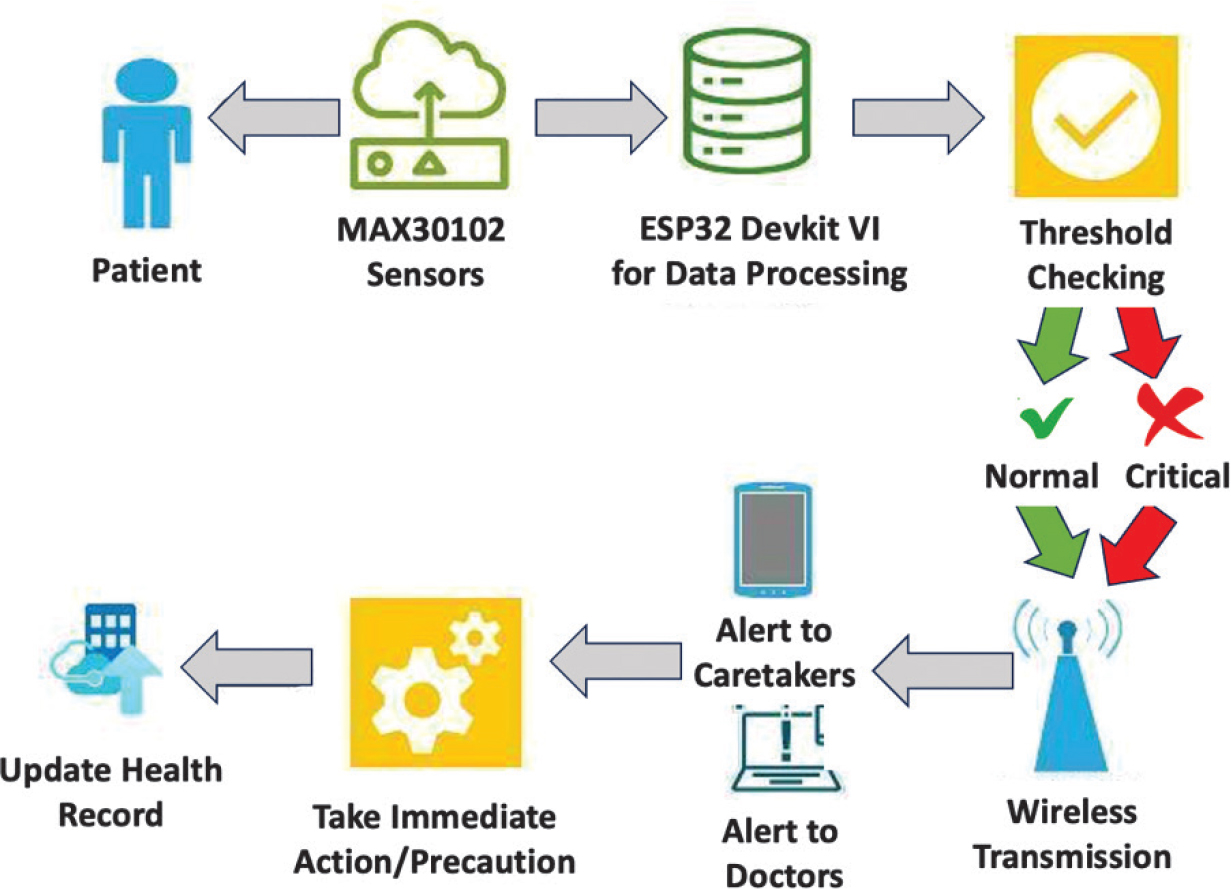
Fig. 1. Prototype setup of the telehealth monitoring system using the MAX30102 Sensor for real-time data collection and ESP32 DEVKIT V1 for wireless data transmission to a local server or cloud.
Algorithm
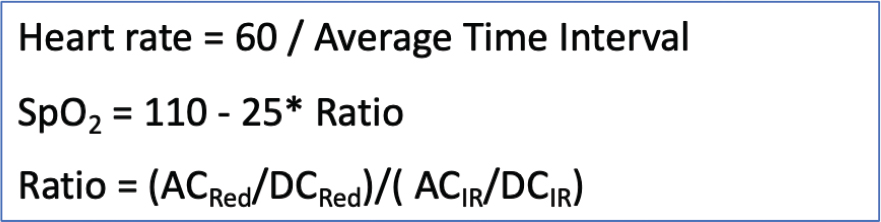
Heart rate and SpO2 extraction
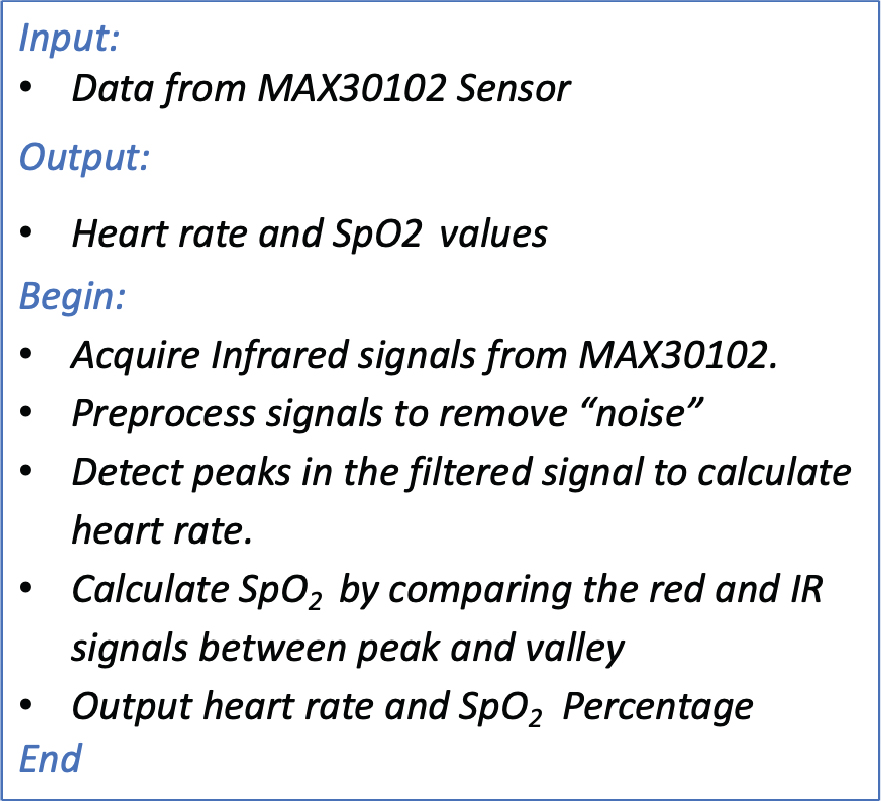
Data transmission algorithm
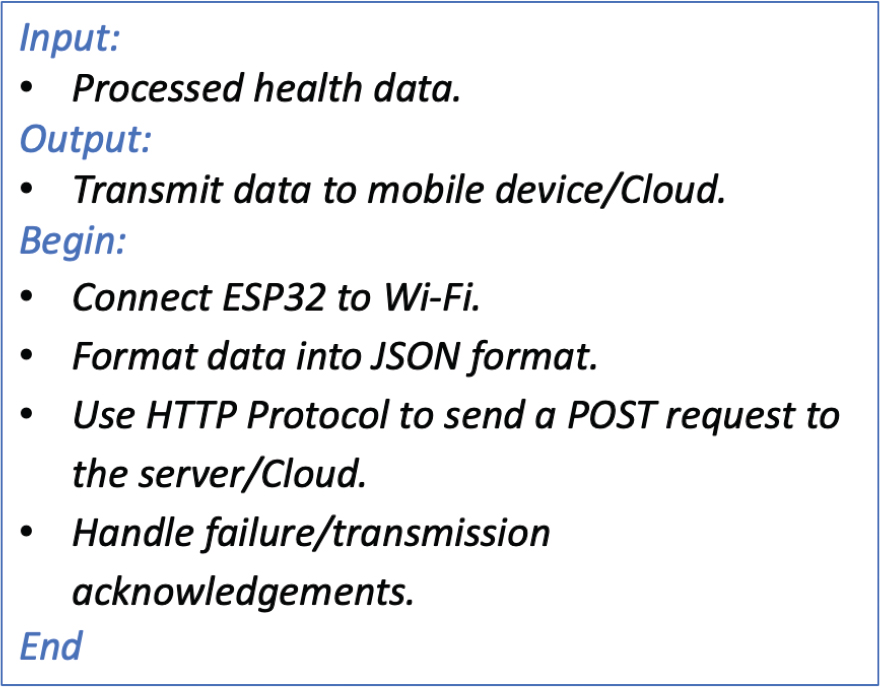
The MAX30102 sensor records and calculates HR and SpO2 using the formula (* denotes multiplication)
MAX30102 Sensor
The MAX30102 sensor is a single pulse oximeter with Light-Emitting Diodes (LEDs) and a single HR monitor sensor module. It employs red and infrared light beams to determine and estimate SpO2 and HR non-invasively across the skin. It displays raw data of infrared and red light that are adjusted to the rate of heartbeat and SpO2, respectively, which is connected to the microcontroller employing inter-integrated circuit (I2C) to obtain the data from the sensors for subsequent steps of data processing. The data from the Inter-Integrated Circuit HR and SpO2 are shared on the small OLED screen in a way that is easily comprehended by the user.
Buzzer
The buzzer module’s primary function is to emit tones that notify the user of unwanted physiological values or incidents.
Wi-Fi Module (Esp32)
The ESP32 is an accommodating microcontroller module in the IoT. It is equipped with Wi-Fi and Bluetooth. The ESP32 allows connectivity to the internet as well as other devices and platforms, including the Blynk IoT platform. It is designed to connect with local networks and communicate with the Blynk IoT to send sensor readings for control and monitoring purposes.
Blynk Iot Platform
The Blynk IoT platform is a cloud-based solution that interfaces with IoT clients, where they can make custom dashboards and control interfaces. It allows a user to have convenient access to real-time health monitoring data. For example, the HR or SpO2 on a smartphone or a web browser is connected with ESP32 microcontroller to transmit the data from the sensors to Blynk cloud server for further viewing by specially authorized people.
Implementation
Figure 2 lists steps to set up the MAX30102 sensor. Once this setup is complete, click the “Upload” button on the Arduino IDE to compile and upload the code to the ESP32. Then, open the Serial Monitor in the Arduino IDE to confirm the output of sensor data and debug messages. Ensure that the ESP32 successfully connects to the Wi-Fi network and the Blynk IoT platform.
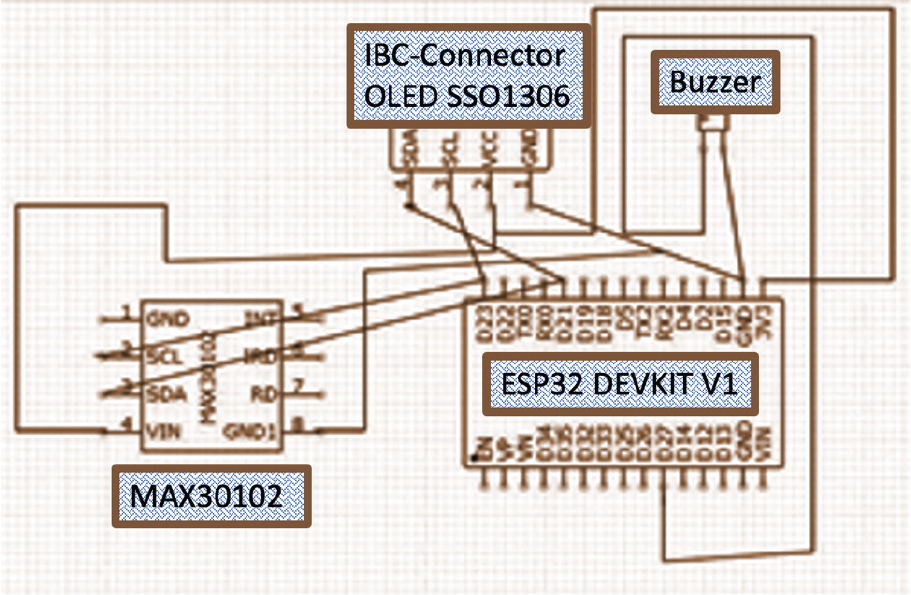
Fig. 2. Input design of the patient monitoring system using MAX30102 for vital health parameter measurement and ESP32 for input processing.
Download and install the Blynk app on your smartphone (available for iOS and Android). Create a new Blynk project and obtain the authentication token. Add widgets to the Blynk project dashboard to visualize HR and SpO2 data (e.g, value display widgets). Then, switch on the ESP32 microcontroller.
The ESP32 will connect to the Wi-Fi network and start sending sensor data to the Blynk IoT platform. Open the Blynk app on your smartphone and monitor the real-time HR and SpO2 readings on the dashboard. Verify that the OLED display shows accurate sensor data and alerts for abnormal readings. Test the buzzer functionality by simulating abnormal health conditions or manually triggering alerts. If you encounter any issues, refer to the debug messages in the Serial Monitor for troubleshooting. Check the wiring connections and ensure they match the specifications. Verify that the Wi-Fi network credentials and Blynk authentication token are correct.
Once successfully tested and verified, deploy the patient monitoring system in the desired environment (e.g, home and healthcare facility). Ensure that the system is securely mounted and accessible for monitoring.
Input and Output
Input Design
Figure 3 reveals that an input design (otherwise referred to as an input-process-output (IPO) diagram) depicts data and information flow into a system, the operation that is done on such data, and the output generated by the system.
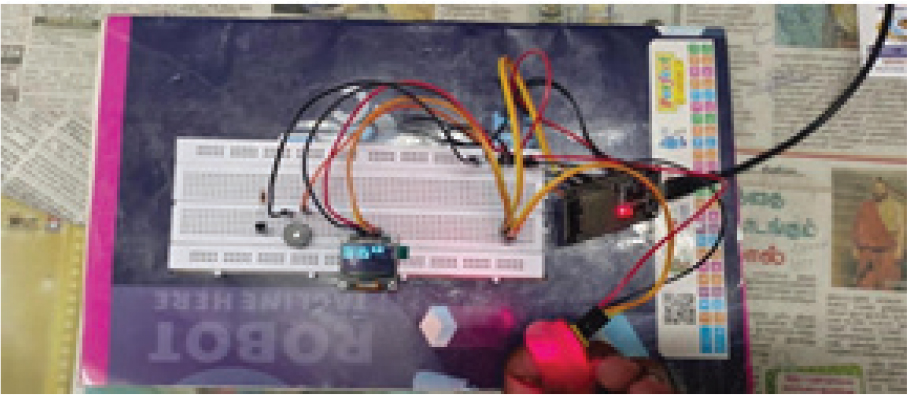
Fig. 3. Output design of the patient monitoring system shows how the health data, such as SpO2 and HR, are monitored during the system testing phase, enabling the evaluation of output accuracy and system performance. HR: heart rate; SpO2: peripheral oxygen saturation.
In the understanding of the live health monitoring system for the ESP32, the input diagram illustrates the various input sources that can be incorporated into the system. These include the MAX30102 sensor module physiological data and the user input from the system interface. These are depicted as arrows pointing into the system.
The activities done on the input data are sometimes referred to as processes or operations and comprise activities such as data processing, data analysis, and data presentation, which are represented in the diagram by boxes or circles. Finally, the outputs of the system may include real-time health metrics that may be shown on the user interface or alerts for any abnormality as shown by arrows coming out of the system. It is a sketch of the way information enters the system, how it is processed, and how the resultant information exits the system, making it easier to understand the operations of the system.
Output Design
Figure 4 defines output design as the process of communicating explanations or things produced by a system to the audience efficiently. When it comes to the live health monitoring system designed with the help of ESP32, the component of output design is also extremely important, as it allows sharing the data on health and other parameters, as well as on the functioning of the system, with users. This is further extending to matters of designing the user interfaces that are displays or applications that display key metrics such as HR and SpO2.
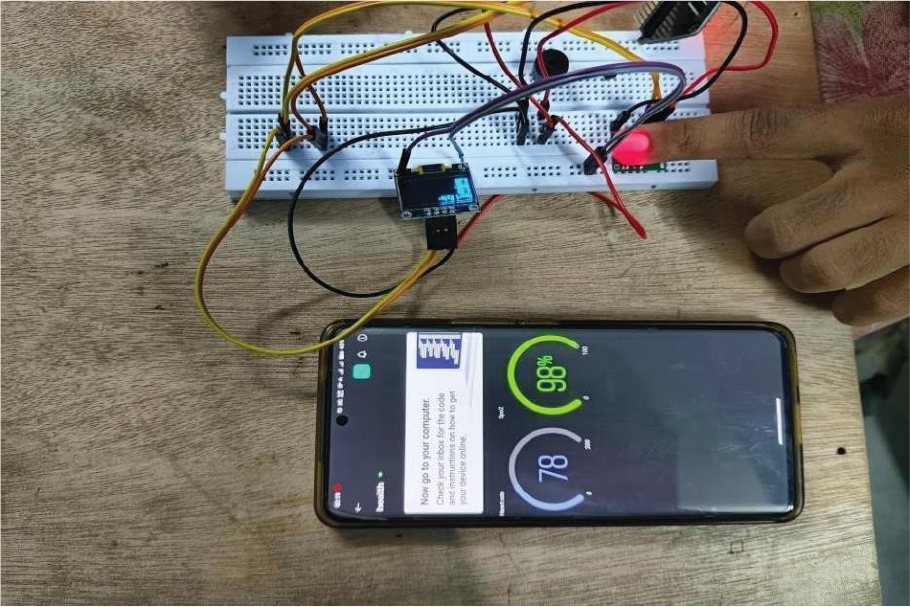
Fig. 4. System testing results of the patient monitoring system, including performance observation of the patient’s health.
Furthermore, within the scope of the output design, creating signals that notify the user of certain events or conditions is included in the form of visual and/or sound outputs in case of abnormally high values or a defective part of the system. Many concepts of user-centered designing in output design are addressed, for instance, readability, accessibility, and preferences; this guarantees that users can, without difficulty, understand and use the data the system offers to them.
Testing is a critical process in the development of software and systems because it confirms that a system meets the expected requirements and functions competently and stably under different conditions. This involves different activities within the live health monitoring system, which is based on the ESP32 board and involves system integration and unit testing. System testing results are described in Figure 4. Moreover, usability testing may be employed to assess the quality of the user interface and stress testing, as well as the system’s performance under high-load conditions.
By using an extensive testing process throughout the system development cycle, developers can eliminate the issues in the early stage and create a robust, reliable health monitoring system that meets the users’ needs and expectations. The proposed system is used to monitor SpO2 and HR. The ESP32 microcontroller acts as a central processing unit for data acquisition, control, and processing. The system is useful for monitoring chronic diseases (e.g, chronic obstructive pulmonary disease and congestive heart failure), permitting remote observation after discharge from hospitals, including sleep disturbance during. Thus, the system is helpful for early warnings and subsequent intervention.
Comparison of Existing and Proposed System
The current classification for wellness and live monitoring may involve conventional methods and hardware devices that are not keeping up with modern technologies and the development of advanced solutions. It might be a set of different sensors detecting physical vital signs of the patient and receiving and processing the obtained data simply, such as displaying the recorded data. Nevertheless, there are several issues present in the system itself, such as inaccuracy, limited scalability, costly maintenance, and less developed user-friendliness of the system. Table 2 compares the performance of the current approaches in reference to the parameters of evaluation that have been chosen.
| Parameter | ESP32 | Andreas Faulhaber Project | Pallab Kumar Nandi Project |
| Accuracy and precision | High | High | High |
| User-interface | Raw data can be interpreted whenever user wants | User-friendly | GUI/monitor |
| Application | As wearable devices | Clinics and hospitals | Clinics and hospitals |
| Power consumption | Low powered due to its ability to be integrated with microcontrollers | High-powered for hospital usage | High power consumption |
| Microcontroller/microprocessor | ESP32-microcontroller | Arduino mega-microcontroller | ARM (microprocessor) |
| Connectivity | User/caretaker choice | Bluetooth smartphones | Built-in Ethernet, and Wi-Fi |
| Display | Yes (OLED + Web Browser + Arduino IDE) | Yes (OLED + Arduino) | Yes (OLED + Web Browser + Python/C++) |
| Power supply | Battery and 5V USB-B input | Battery and 5V USB-B input | Battery and 5V USB-B input |
| 5V USB-B input; setting in the external menu to one of the USB Display options; ARM: Advanced RISC Machines; BLE: Bluetooth Low Energy; ESP32: Espressif’s official software; GUI: graphical user interface; IDE: integrated development environment; OLED: organic light-emitting diode; 5V USB-B input; Wi Fi: Wireless Fidelity. | |||
For instance, security and remote access might not be enough or might not be sufficiently secure. As a result, privacy of data and behavioral access may be at risk. From a general perspective, the existing system might be able to cover the rudimentary needs of a monitoring system; however, it would lag in providing a collective representation, active intervention options, or an experiential environment that is on the cutting edge of modern solutions.
Proposed System
The system of remote patient monitoring defined in this proposal is the first method being pursued and is anticipated to change the paradigm where information technology is developed in the healthcare sector. Table 3 outlines the preliminary steps towards the configuration of the sensor of MAX30102.
From the standpoint of prevention, medical personnel can rapidly address patient needs and achieve greater treatment efficacy, avoiding expensive and unnecessary hospital readmissions. This proposed technology exceeds others in the classification of patients’ health status, the provision of timely alerts, and exhibition of its latent capability to bring about transformative changes in patient care delivery.
Furthermore, through the application of the latest technologies, the system ensures better monitoring of patients and thus increases the quality of medical care and outcomes in return. The profile of the proposed ESP32 + MAX30102 is listed in Table 4. Pilot validation is presented in Table 5.
Data Security Protocols, Privacy, and Healthcare Regulations
All communication from the proposed system is secured using TLS/SSL (Transport/Layer/Secure Sockets Layer) protocols, which ensures end-to-end encryption and prevents unauthorized interception. The TLS encryption and privacy have been implemented at the prototype level. These mechanisms have not undergone external security audits or certifications, which have yet to be performed. Two-factor authentication mechanisms were used for password protection, which employs the access exclusively to authorized users. Patient’s identifiable information, like name and IDs, were kept separate from health data. Role-based access control can ensure data confidentiality. The system is designed in compliance with healthcare data protection and regulations. Proper technical measures including access-based controls and activity logs ensure healthcare regulations. While the proposed system relies on Wi-Fi for data transmission, it is acknowledged that Wi-Fi networks can be unreliable especially in rural or low-connectivity areas. To overcome this challenge, the system can incorporate emerging communication technologies such as 5G-enabled ESP32 compatible modules that offer improved reliability and lower latency, thereby ensuring uninterrupted real-time data acquisition and continuous operation using remote patient monitoring systems.
Conclusion
In conclusion, ESP32-powered “innovative patient monitoring systems” have moved toward a very special vision in the field of healthcare technology. Implementing the latest cutting-edge chips and the most complex patterns in the software applications, the IoT device brings hassle-free medical exams for the user, and thus, this system is the first of its kind in the real-time monitoring of the body functions. The user interface that is concentrated on the user while still keeping strong security will lead to a pleasant experience for both the doctors and patients. With its flexibility and customization, the device is a strong base for adaptation and innovation in home monitoring.
The current prototype requires technical expertise for setup and troubleshooting. Achieving full plug-and-play functionality is a goal for future development to enhance usability and accessibility.
Future Enhancement
The future for the ESP32-based patient monitoring system is encouraging, as it has vast potential for further improvements and enhancements. One of the ways this might be accomplished is the addition of sensors beyond monitors of vital signs. Sensors that have the capability of detecting and recording parameters like an electrocardiogram (ECG) report, blood pressure, or the level of glucose may be added to the system, which gains strength as a more holistic health testing tool. Furthermore, environmental sensors can be deployed to measure parameters such as air quality, temperature, and humidity, thus leading to understanding of the effect of environmental conditions on health.
In addition, the deployment of machine learning algorithms for predictive analytics and anomaly detection might lead to the increased potentiality of the system. The data readily available can also be used for a wide range of applications, such as the detection of atmospheric conditions that can cause health hazards like allergic reactions. These algorithms can spot the warning signs of chronic diseases, predict the occurrences of adverse health incidents, or provide individual recommendations for preventive or life modifications.
The people involved must be proactively informed about the possible health issues they could be facing or changes. Some of the major strategies for preventing problems and ensuring a healthy lifestyle are probably creating people’s awareness of the problem. At the same time, optimizing the connectivity and interoperability options that the system enables can be thought of as another way to make it even more valuable in practical terms.
The round-the-clock access to healthcare providers is being made possible, thanks to this interoperability that provides not only an easy-to-navigate procedure to access and upload data but also the freedom to choose a healthcare provider who suits their needs and even be at home when they are seeing the provider.
The idea of trust and confidence between users and doctors can be considered for future enhancement. Similar IoT-based systems that can be used are Arduino and Bluetooth modules for shorter range and limited scalability. Raspberry Pi + MAX30102 sensor can be used, but it consumes more power and is also expensive. Advanced digital filtering techniques like Butterworth or FIR filters can be used to enhance signal quality. Together, these advancements in the sphere of ESP32 will make the patient monitoring system more available and secure, thus giving a stimulus to the healthcare management systems.
Contributors
Both authors meet the criteria found in the “Role of Authors and Contributors” as outlined by ICMJE.
Data Availability Statement (DAS), Data Sharing, Reproducibility, and Data Repositories
Contact the author.
Application of AI-Generated Text or Related Technology
This study did not use Chatbot in the development of this manuscript. No Generative AI image creation was utilized in the development of this manuscript.
Acknowledgments
The primary author extends his heartfelt gratitude to all individuals who contributed to the successful completion of this paper. First and foremost, I am deeply indebted to my supervisor, Dr G. Krishnapriya, for her invaluable guidance, encouragement, and expert advice throughout this journey. Her mentorship played a pivotal role in shaping this paper. Finally, I would like to express my sincere appreciation to my family for their unwavering love, support, and understanding during the most challenging phases of this endeavor. Their selfless encouragement served as a constant source of motivation.
References
- Uddin R, Koo I. Real-time remote patient monitoring: a review of biosensors integrated with multi-hop IoT systems via cloud connectivity. Appl Sci. 2024;14(5):1876. https://doi.org/10.3390/app14051876
- Amirrudin NA, Nazreen M, Syafiq MA, Irwan MH, Bolang FA, Putra A, et al. Heart rate sensor with IoT features. E3S Web Conferences. 2024;516:05002–2. https://doi.org/10.1051/e3sconf/202451605002
- Pechrkool T, Kumkhet B, Sangmahamad P, Rakluea P, Wongsin N, Wangwijit T. Telehealth monitoring system based on LPWAN. 2022 37th International Technical Conference on Circuits/Systems, Computers and Communications (ITC-CSCC), Phuket, Thailand, 2022;978–981. https://doi.org/10.1109/ITC-CSCC55581.2022.9895013
- Kumar Reddy VM, Achyuth KS, Babu S. Patient health monitoring system using IOT. 2022 8th International Conference on Smart Structures and Systems (ICSSS). Chennai, India, 2022; 1–4. https://doi.org/10.1109/ICSSS54381.2022.9782193
- Rahman MKK, Nasor MM, Zidan R, Alsarraj I, Hasan B. IOT-based wireless patient monitor using ESP32 microcontroller. 2023 24th International Arab Conference on Information Technology (ACIT). Ajman, United Arab Emirates, 2023;1–6. https://doi.org/10.1109/ACIT58888.2023.10453847
- Contardi UA, Morikawa M, Brunelli B, Thomaz DV. MAX30102 photometric biosensor coupled to ESP32-webserver capabilities for continuous point of care oxygen saturation and heartrate monitoring. Engineering Proceedings. 2022;16(1):9. https://doi.org/10.3390/IECB2022-1111
- Janik P, Janik MA, Pielka M. Monitoring breathing and heart rate using episodic broadcast data transmission. Sensors. 2022;22(16):6019. https://doi.org/10.3390/s22166019
- Hughes A, Shandhi MMH, Master H, Dunn J, Brittain E. Wearable devices in cardiovascular medicine. Circ Res. 2023;132(5):652–70. https://doi.org/10.1161/CIRCRESAHA.122.322389
- Takahashi S, Nakazawa E, Ichinohe S, Akabayashi A, Akabayashi A. Wearable technology for monitoring respiratory rate and SpO2 of COVID-19 patients: a systematic review. Diagnostics. 2022;12(10):2563. https://doi.org/10.3390/diagnostics12102563
- Qadir Z, Le KN, Saeed N, Munawar HS. Towards 6G internet of things: recent advances, use cases, and open challenges. ICT Express. 2022;9(3):296–312. https://doi.org/10.1016/j.icte.2022.06.006
- Aledhari M, Razzak R, Qolomany B, Al-Fuqaha A, Saeed F. Biomedical IoT: enabling technologies, architectural elements, challenges, and future directions. IEEE Access. 2022;10:31306–39. https://doi.org/10.1109/ACCESS.2022.3159235
- Williams GJ, Al-Baraikan A, Rademakers FE, Ciravegna F, van de Vosse FN, Lawrie A, et al. Wearable technology and the cardiovascular system: the future of patient assessment. Lancet Digital Health. 2023;5(7):e467–76. https://doi.org/10.1016/S2589-7500(23)00087-0
- Nandi PK, Tabassum T, Ahmad M. Development of an IoT-based automatic remote health monitoring system. J Eng Sci. 2024;14(2):21–30. https://doi.org/10.3329/jes.v14i2.71212
Copyright Ownership: This is an open-access article distributed in accordance with the Creative Commons Attribution Non-Commercial (CC BY-NC 4.0) license, which permits others to distribute, adapt, and enhance this work non-commercially and license their derivative works on different terms, provided the original work is properly cited and the use is non-commercial. See http://creativecommons.org/licenses/by-nc/4.0.
Appendix
| Researcher | Contribution |
| Uddin et al.1 | Systematic review of the integration of biosensors with Multi-hop IoT. This article highlights the role of deploying biosensors in various locations and the transmission of vital health data to a centralized server/cloud. A cloud-based approach discussed in this review ensures data security and data processing. |
| Nurul Ain Amirrudin et al.2 | Explored the creation of an internet-enabled device to monitor the HR. This device transmits the data to a webpage that enables users to monitor their HR conveniently. |
| Tanaporn Pechrkool et al.3 | Discussed monitoring the health parameters through MAX30100 oximeter sensors using LPWAN covering large areas. |
| Vijay et al.4 | Provided detailed information on patient monitoring systems using IoT components to monitor temperature and pulse rate. The author proposes that health parameters can be measured through software, and doctors can monitor a patient’s health from anywhere |
| Rahman et al.5 | Proposed the IoT-enabled patient monitoring system to monitor the oxygen saturation rate, HR, and electrocardiogram. This proposed system incorporates an SpO2 recording module and an ECG recording module interfaced with a microcontroller ESP32 capable of connecting with Wi-Fi. The Firebase database is used to store and retrieve data in real time. |
| Contardi et al.6 | Discusses continuous monitoring of patients’ health. Thereby investigating the ESP32 system for gathering SpO2 and HRs from patients. The research explored the purpose of simple electronic devices for biosensing. |
| Janik et al.7 | Discussed the data transmission from wearable devices. The signals from two sensors and a simulated ECG signal were used to control the BLE teletransmission standard. The data analysis in episodic transmission when compared to data transmission is 0.038 s (i.e. 4%) of the mean duration of a single cycle. It assumes the average adult pulse rate of humans is 60 BPM. |
| Hughes et al.8 | Examines the features of wearable devices associated with machine learning techniques. The review was conducted on the screening and management of cardiovascular health conditions. Challenges of using wearable devices in monitoring cardiovascular health conditions are discussed. |
| Takahashi et al.9 | Reviewed the literature and suggests further research is needed on actual patients to measure the effectiveness of using wearable devices in patient monitoring systems before policymakers can make their use mandatory. |
| Qadir et al.10 | Investigates the Internet of Everything (IoE). Today, 5G has the potential to provide functionalities of all IoE but faces a challenge to meet the complete requirements of new smart applications. The integration of artificial intelligence and 6G to provide solutions to the complex problems is discussed. |
| Aledhari et al.11 | Examines Medical IoT is not put into practice despite advancements in healthcare. The authors discuss various frameworks and use cases where vital health parameters (oxygen level, temperature, cancer indicators, glucose level, and electrical signals) can be monitored through the advancement of hardware and software technologies. |
| Williams et al.12 | Discusses the use of wearable devices in diagnosing and monitoring heart failure, hypertension, arrhythmia, and valvular heart disease. The research suggests that those devices were used correctly. In the future, they might improve healthcare and support research. |
| 6G: sixth generation of cellular network; BLE: Bluetooth Low Energy; BPM: beats per minute; ECG: electrocardiogram; ESP32: a microcontroller that integrates Wi-Fi and Bluetooth connectivity; IoE: Internet of Everything; IoT: Internet of Things; MAX30100: an integrated pulse oximetry and heart rate monitor sensor; LPWAN: low-power wide area network; SpO2: peripheral oxygen saturation. | |