ORIGINAL RESEARCH
Comparison of Oral Hygiene Through Teledentistry and Face-to-Face Tools: An Exploratory Study
Marília Goulardins Gomes1, DDS, MSc, PhD(c)  , Ana Paula Dias Moreno1, DDS, PhD , Fernanda Campos de Almeida Carrer2, DDS, PhD , Fernanda Souza Liévana1, DDS, PhD , Mary Caroline Skelton-Macedo3, DDS, PhD , Ricardo Zorzetto Nicoliello Vêncio4, PhD , Isabella Silva Catananti1, DDS and Andiara De Rossi1, DDS, MSc, PhD
1University of São Paulo, School of Dentistry of Ribeirão Preto, Department of Pediatric Dentistry, University of São Paulo – School of Dentistry of Ribeirão Preto, Brazil; 2University of São Paulo, School of Dentistry of São Paulo, Department of Community Dentistry Education, University of São Paulo – School of Dentistry of Ribeirão Preto, Brazil; 3University of São Paulo, School of Dentistry of São Paulo, Department of Dentistry, University of São Paulo – School of Dentistry of Ribeirão Preto, Brazil; 4University of São Paulo, Faculty of Philosophy, Sciences and Letters, Department of Computing and Mathematics, University of São Paulo – School of Dentistry of Ribeirão Preto, Brazil
Keywords: COVID-19, dental health education, oral hygiene, pediatric dentistry, teledentistry
Abstract
Background: Teledentistry reduces waiting times and transportation costs. Beyond its value in emergency situations, teledentistry is a scalable strategy to expand access to oral health education and preventive care. During the coronavirus disease 2019 pandemic, teledentistry was an essential tool that minimized disruptions in dental care and promoted oral health education remotely.
Aim: In this study the authors conducted an exploratory evaluation of the effectiveness of virtual platforms and face-to-face consultations to improve oral hygiene of children in Brazil under emergency and routine care.
Methods: A randomized controlled trial was conducted with 30 children aged 6 to 10 years and their guardians. Three groups based on oral hygiene options were evaluated: (1) WhatsApp, (2) V4H (Video for Health), and (3) face-to-face. Oral hygiene was assessed using the visible plaque index, brushing time, brushing method, flossing, toothpaste use, and adult supervision. Statistical analysis included Mann‒Whitney, Spearman’s, Wilcoxon, Kruskal–Wallis exact tests.
Results: The children’s mean age was 7.8 ± 1.5 years. All methods significantly reduced the plaque index and improved brushing habits (p < 0.05). There were no significant differences between the remote and face-to-face methods (p > 0.05). Guardians’ involvement contributed to positive outcomes in children’s oral health.
Conclusions: The study suggests that teledentistry is as effective as face-to-face consultations in improving children’s oral hygiene and may be integrated into routine dental care as a complementary strategy for oral health education, expanding access and supporting preventive practices beyond pandemic-related restrictions.
Plain Language Summary
Dental care presents a risk of cross-infection due to the spread of infectious diseases through airborne droplets. During the COVID-19 pandemic, dental services were reduced or suspended, highlighting the need for alternative ways to provide oral health education. However, challenges related to access, transportation, and continuity of care were present before the pandemic and remain relevant. Teledentistry uses digital tools, such as mobile applications and video calls, to provide oral health guidance without requiring in-person visits. This study evaluated whether remote education is as effective as traditional face-to-face guidance to improve children’s oral hygiene. Thirty children aged six to ten years and their caregivers were divided into three groups and assessed and compared before and after the interventions:
- WhatsApp guidance
- A video-based health platform
- In-person consultations
Oral hygiene habits and dental plaque levels were assessed before and after the interventions. All groups showed improvements in oral hygiene, with reduced dental plaque and better brushing habits. No differences were found between remote and in-person methods. These findings suggest that teledentistry is an effective and accessible strategy to support oral health education and preventive care in routine practice.
Citation: Telehealth and Medicine Today © 2026, 11: 642
DOI: https://doi.org/10.30953/thmt.v11.642
Copyright: © 2026 The Authors. This is an open-access article distributed in accordance with the Creative Commons Attribution Non-Commercial (CC BY-NC 4.0) license, which permits others to distribute, adapt, enhance this work non-commercially, and license their derivative works on different terms, provided the original work is properly cited and the use is non-commercial. See http://creativecommons.org/licenses/by-nc/4.0. The authors of this article own the copyright.
Submitted: October 22, 2025; Accepted: February 4, 2026; Published: June 16, 2026
Corresponding Author: Marília Goulardins Gomes, Email: m_goulardins@usp.br
Competing interests and funding: The authors declare no conflicts of interest related to this study.
This study was supported by the Coordination for the Improvement of Higher Education Personnel (CAPES), Brazil (Grant No. 88887.568869/2020-00).
Although the pandemic context intensified these challenges, barriers related to access, transportation, and continuity of pediatric dental care were already present in routine clinical practice, reinforcing the need for alternative strategies for oral health education and monitoring.1
Considering that parents and caregivers are responsible for children’s oral health care, the need for effective methods for education, monitoring, and motivation to promote correct brushing practices became particularly evident.2 Strengthening the knowledge and skills of parents and caregivers contributes to the prevention of oral diseases and the preservation of children’s health,3 reducing inequalities in pediatric dental care.4
To address interruptions in dental services and reinforce oral health education for families, both during public health emergencies and in routine care, remote methods have been increasingly explored.2 Technologies such as mobile applications and digital communication platforms have emerged as promising tools in oral health education.5 Teledentistry has been applied in public dental health services to reduce waiting times and transportation-related costs3,6 and enables guidance, monitoring, and follow-up through remote assistance using digital technologies instead of exclusive face-to-face contact.7,8
Current evidence supports teledentistry as an effective approach for dental referrals, treatment planning, patient compliance, and treatment feasibility.9 These characteristics make teledentistry a potentially sustainable strategy for expanding access to preventive dental care, particularly for populations facing logistical or geographic barriers.
Teledentistry offers benefits for both patients and dental professionals. Patients may receive timely guidance without the need for immediate in-person appointments, while dentists can perform monitoring, collaborate with specialists, and provide expert recommendations more efficiently.5
A recent randomized clinical trial demonstrated that the use of information and communication technologies through digital platforms may help address the repressed demand for primary dental care within the Brazilian Unified Health System.10
Despite the growing availability of mobile applications and digital platforms for oral health, there remains a lack of clinical trials comparing the effectiveness of remote and face-to-face educational interventions. The objective here is to address this gap by directly comparing virtual health platforms, mobile phone applications, and face-to-face tools in improving children’s oral hygiene. The underlying premise is that teledentistry resources may support oral hygiene guidance for children and caregivers as part of routine dental care, reducing the need for continuous in-person appointments without compromising clinical outcomes.
Methods
Study Population
This study included a convenience sample of 30 child–parent dyads (children aged 6–10 years) recruited from a public pediatric dental clinic during the COVID-19 pandemic. Although recruitment occurred during a public health emergency, the study was designed to evaluate teleorientation strategies applicable to emergency contexts and routine pediatric dental care. A convenience sampling strategy was adopted due to pandemic-related restrictions, participant accessibility, and the feasibility of conducting the study under these circumstances.
From 600 eligible dental records at the Pediatric Dentistry Clinic of a public university, telephone contact was established with 100 patients. Of these, 60 met the inclusion criteria and were invited to participate. Among those invited, 42 initially agreed to participate (70%). During the study period, 12 participants (29%) withdrew, resulting in a final sample of 30 child–parent dyads completed the research protocol.
The final sample included 10 participants per group, totaling 30 individuals. This sample size provided 80% statistical power (β = 0.20) at a 5% significance level (α = 0.05) to detect large effects (f = 0.60) in between-group comparisons and medium effects (dz = 0.50) in within-time comparisons. Additionally, this sample size ensured 80% power to detect large effects (w = 0.57) in association analyses between variables. Calculations were performed using R and G*Power software, following Prajapati et al.10
Eligibility
Eligible participants were pediatric patients and their legal guardians who provided informed consent, had complete medical records, owned a smartphone with internet access, and were able to install and use the WhatsApp and V4H (Video for Health) applications. Children presenting with pain, spontaneous dental sensitivity, motor impairments, or systemic health conditions that could interfere with study participation were excluded.
Intervention
The intervention modalities are defined and illustrated in Figure 1. The comparison between WhatsApp and V4H (Video for Health) was designed to explore whether a health-specific digital platform, developed within an academic environment, would offer advantages in usability, didactic structure, and perceived communication safety compared with a general-purpose messaging application (Figure 2).
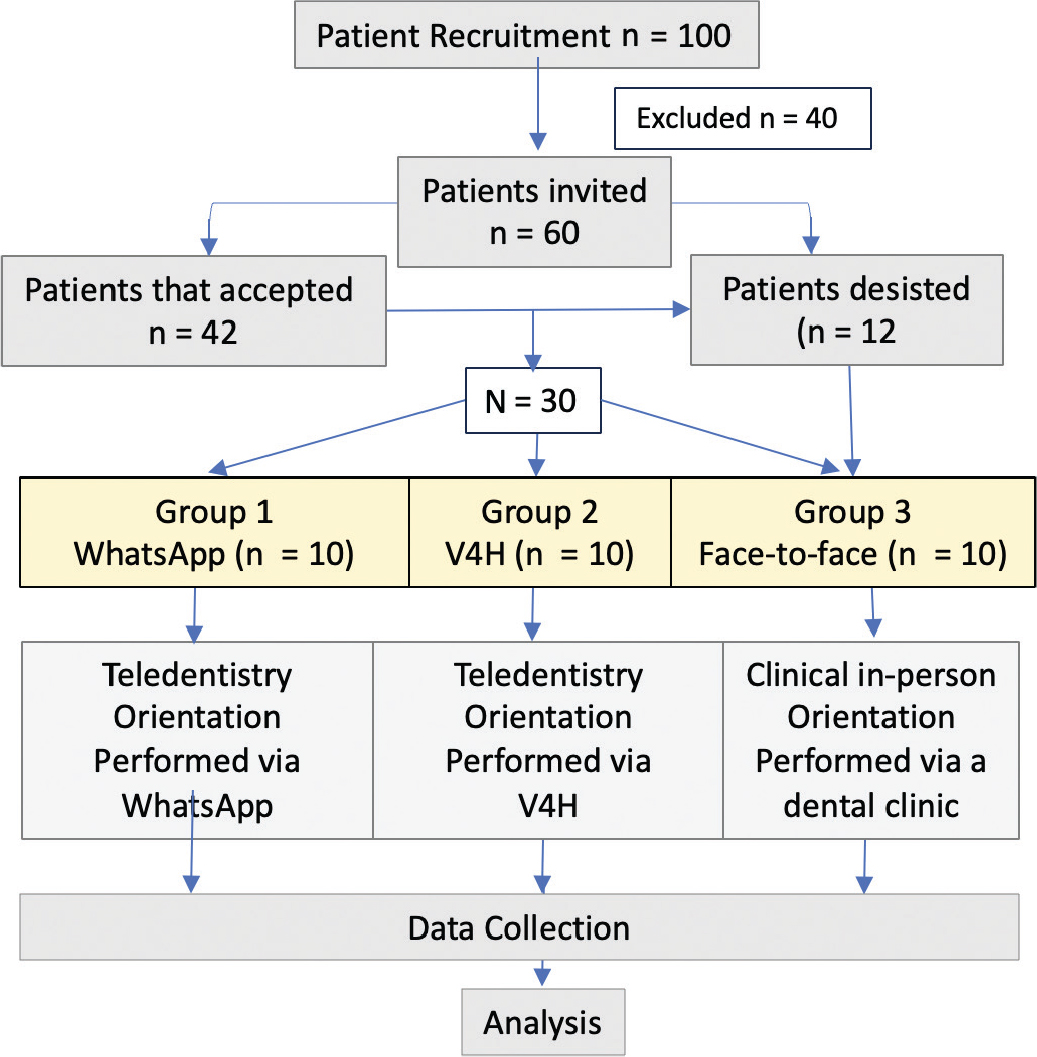
Fig. 1. Flowchart summarizing the study process. Group 1 (G1): Teleorientation via video call using WhatsApp. Group 2 (G2): Teleorientation using the V4H (Video for Health) platform. Group 3 (G3): Face-to-face oral hygiene guidance conducted at the university dental clinic.
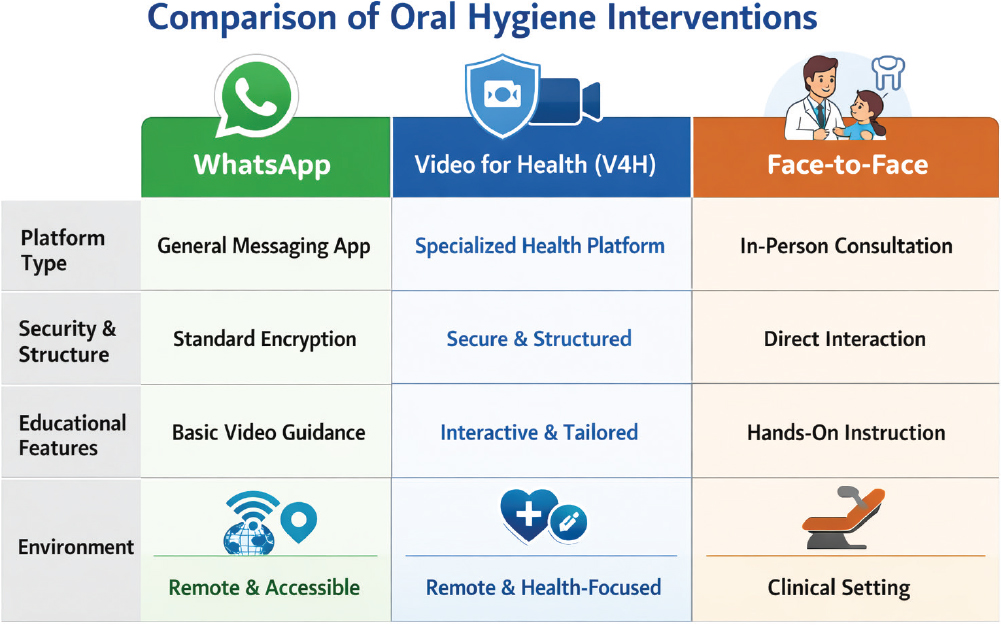
Fig. 2. Comparison of the characteristics of the three oral hygiene education interventions—WhatsApp, V4H (Video for Health), and face-to-face—regarding platform design, communication security, educational features, and delivery environment.
Ethical Approval
Ethical approval was obtained from the Ethics Committee for Research Involving Human Beings of a public university (CAAE 39685920.7.0000.5419). All legal guardians provided written informed consent, and children provided assent prior to participation. The study was also registered in Clinical Trials (Unique Protocol ID: CAAE 39685920.7.0000.5419).
Data Security and Documentation
For data communication and sharing, the standard WhatsApp application with end-to-end encryption was used. The V4H (Video for Health) platform, developed by a public university and based on synchronous telehealth videocommunication resources,11 was specifically designed for telehealth purposes and provides a secure, structured environment for health-related videoconferencing and educational communication between professionals and patients.
All questionnaires were completed in real time during the teleorientation sessions. Multimedia data, including photographs and videos, were securely stored on an encrypted online platform (Google Drive), accessible only to the research team.
Data Collection Instruments and Interventions
Participants were randomly assigned to three intervention groups (n = 10 per group), with a follow-up period of 2 months. Guardians and children allocated to the face-to-face group underwent prior screening for COVID-19 symptoms and temperature measurement. All members of the research team completed biosafety training and followed institutional biosafety protocols.
Oral Hygiene Educational Content
Oral hygiene guidance was standardized according to the recommendations of the American Academy of Pediatric Dentistry (2018). The educational content addressed hand hygiene prior to brushing; appropriate brushing environment (mirror and adult supervision); toothbrushing techniques adapted to the child’s motor skills; brushing frequency; toothbrush characteristics (size, soft bristles, rounded ends); fluoride toothpaste type and quantity; flossing methods (manual or device-assisted); tongue cleaning; rinsing instructions; toothbrush storage; and replacement and disinfection procedures (0.12% chlorhexidine digluconate).
Families were encouraged to ask questions to address individual oral hygiene needs. Importantly, identical educational content was delivered across all three groups, with the only difference being the mode of communication.
Evaluation Instruments
Q1 and Q2 refer to the first two quarters of the fiscal or calendar year, and “Supplementary Files A and B” often refer to accompanying documentation or data files.
To train caregivers to prepare self-reports and understand oral health, two questionnaires (Q1 and Q2; Supplementary Files A and B) were developed, pretested, and validated using a checklist for questionnaire development and analysis12 as a reference.” Acceptability, clarity, and comprehension were assessed during pretesting.
Q1 was administered at baseline to collect sociodemographic data and information on oral hygiene habits. Q2 was applied post-intervention and was based on the Literacy Adult Questionnaire13–15 and the Pediatric Dental Health Behavior Questionnaire (PDHBQ)16 to assess changes in children’s brushing behavior and caregivers’ understanding of oral health needs. Participant satisfaction was assessed using the Facial Image Scale.17
A video-based toothbrushing assessment was used by the guardians. Each received standardized instructions via WhatsApp on how to record videos of the child’s complete toothbrushing routine. Videos were analyzed by two calibrated examiners using the Tooth Brushing Observation System (TBOS), which evaluates caregiver–child interaction and brushing acceptance through video observation.18
Assessment
Assessment parameters included brushing duration, rinsing behavior, brushing location, toothpaste quantity, toothbrush condition and storage, flossing use, brushing technique, time distribution across dental surfaces, and consistency with questionnaire responses.
Visible Plaque Index Assessment
Each participant received a kit containing a toothbrush, dentifrice, dental floss, and plaque-disclosing tablets (Eviplac, Biodinâmica). Two frontal photographs of the child’s smile were obtained at baseline and post-intervention.
Two calibrated examiners assessed plaque accumulation using the Simplified Oral Hygiene Index of Greene and Vermillion.19,20 The six upper and lower anterior teeth were evaluated under standardized conditions using a 32-inch monitor.
Video as an Educational Reinforcement Tool
One week after the intervention, all families received a personalized reinforcement video prepared by a calibrated operator, reinforcing the oral hygiene instructions previously provided.
Intervention Workflow
A 12-step intervention was used and is listed here.
- Step 1: Initial telephone contact and explanation of the study.
- Step 2: Delivery of informed consent, assent, and baseline questionnaire (Q1) via WhatsApp.
- Step 3: Guidance for recording a video of the child’s complete toothbrushing routine.
- Step 4: Guidance for taking a photograph of the child’s smile after brushing with plaque-disclosing tablets.
- Step 5: Evaluation of videos and photographs by two calibrated examiners.
- Step 6: Randomization of participants into three groups (G1, G2, G3).
- Step 7: Delivery of standardized oral hygiene guidance according to group allocation.
- Step 8: Reinforcement of oral hygiene instructions 4 weeks after the initial session.
- Step 9: Administration of the post-intervention questionnaire (Q2).
- Step 10: Collection of post-intervention videos and photographs.
- Step 11: Delivery of personalized reinforcement videos.
Reliability Assessment
A pilot study was conducted to calibrate the proposed methodology. Six children participated, and inter-examiner agreement was assessed using the kappa index (κ = 0.7143). Pilot participants were excluded from the final sample.
Statistical Analysis
Descriptive and exploratory analyses were performed for all variables. Mann–Whitney, Spearman’s correlation, Wilcoxon, Kruskal–Wallis, and Fisher’s exact tests were applied using SPSS 22.0 (SPSS Inc., Chicago, Illinois, USA). Statistical significance was set at p < 0.05.
Results
The cohort consisted of 30 children with a mean age of 7.8 ± 1.5 years, comprising 67% females (n = 20) and 33% males (n = 10). Additionally, 97% of the guardians were female, with a mean age of 37 ± 10 years. Most had at least a high school education. (73%), and 77% of the participants were responsible for up to two children.
According to the photo and video analyses, there was no significant difference between the sexes in the plaque index (p > 0.05). Additionally, there was no significant correlation between age and the plaque index in the age range between 6 and 10 years.
Plaque index evaluated before and after the oral hygiene instructions according to age: before the instructions (r = –0.1454; p = 0.4434) and after the instructions (r = –0.3386; p = 0.0671).
In the three groups evaluated, the plaque index significantly decreased after the instructions (p < 0.05), with no significant difference among the groups. Before oral hygiene guidance, the highest index observed was score 3 (abundant presence of dental biofilm accounting for more than 2/3 of the surface). After guidance, the highest index observed was score 2 (presence of dental biofilm in the cervical and middle thirds), as shown in Table 1 and Figure 3.
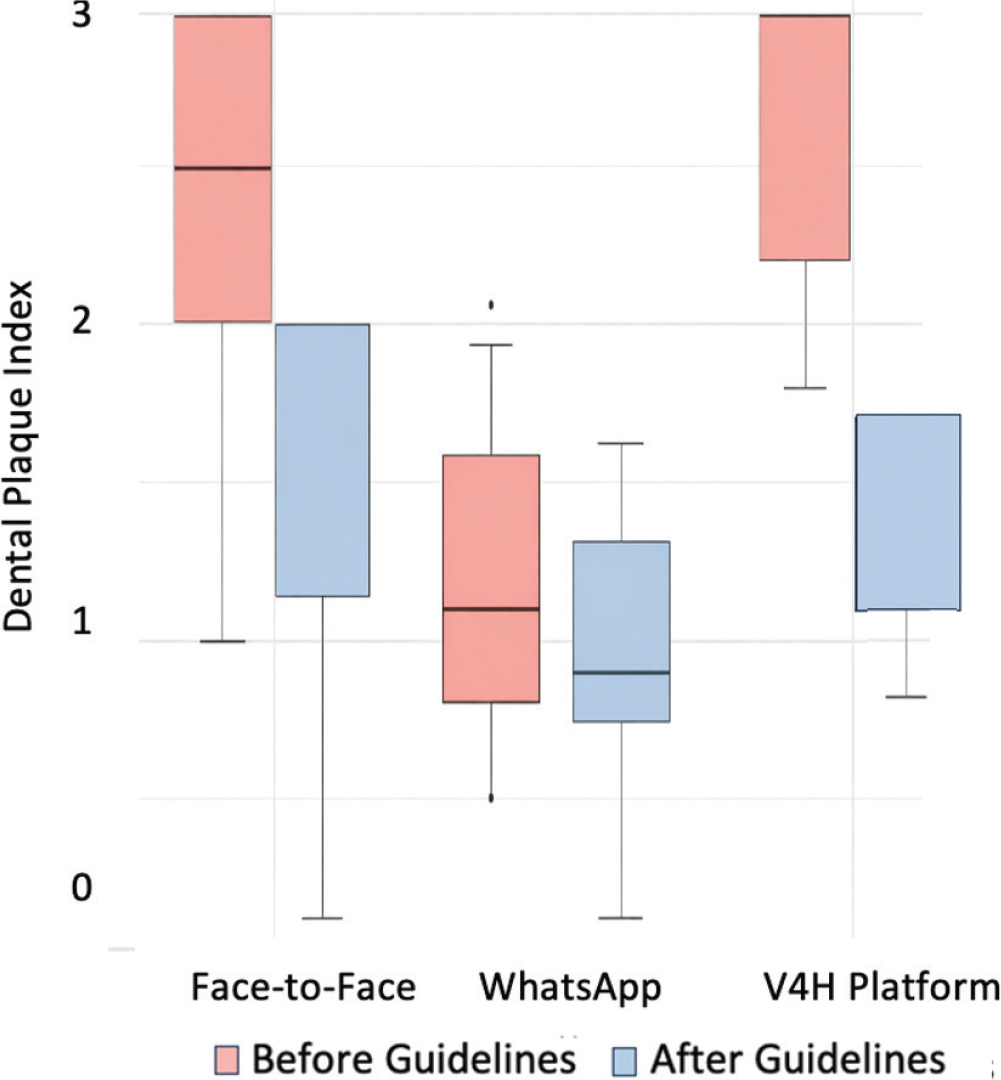
Fig. 3. Box plot of plaque index as a function of group and time.
The brushing time (Table 2 and Figure 4) increased significantly in all groups (p < 0.05), with no significant difference among them (p > 0.05).
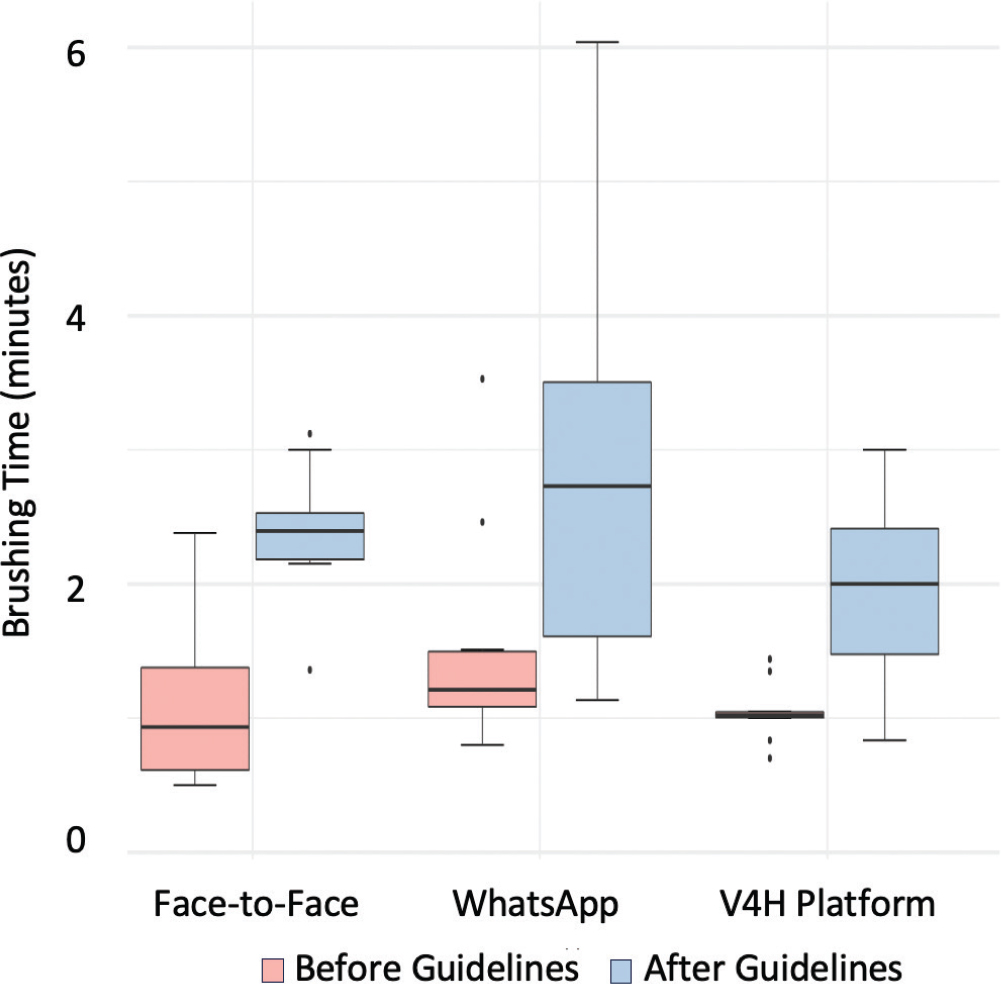
Fig. 4. Box plot of brushing time (minutes) as a function of group and time.
There was no significant association between categorical oral hygiene variables and groups (p > 0.05), as shown in Table 3. For before and after guidance, in all cases, there was parent-child interaction; and all the children used toothpaste. Additionally, in all cases, the location was suitable. In the face-to-face group, one child did not brush well before, but after guidance, all the children accepted it.
Before guidance, no child used dental floss. After the guidance, 80%, 60%, and 30% of the face-to-face, WhatsApp, and VH4 groups, respectively, started to floss.
The adequate amount of toothpaste use increased considerably from 20%, 60%, and 40% to 100%, 90%, and 80% after oral hygiene guidance in the face-to-face, WhatsApp, and VH4 groups, respectively.
Additionally, for toothbrushing alterations in different areas, 80% to 60% of the participants in the face-to-face group fell, 100% to 80% of the participants in the WhatsApp group fell, and 100% to 50% of the participants in the VH4 group fell after guidance. All brushed areas increased from 30%, 20%, and 10% before guidance to 60%, 50%, and 60% after guidance in the face-to-face, WhatsApp, and VH4 groups, respectively.
Changes in categorical oral hygiene behaviors before and after guidance are summarized in Tables 4 and 5.
| Group | Number of items with improvement | Percentage of items with improvement | ||
| Mean (SD) | Median (min-max) | Mean (SD) | Median (min-max) | |
| Face-to-face | 4.0 (1.2) | 4 (2-6) | 40 (11.6) | 40 (20-60) |
| 2.9 (1.5) | 3 (1-6) | 29 (15.2) | 30 (10-60) | |
| VH4 Platform | 3.5 (1.2) | 4 (2-5) | 35 (11.8) | 40. (20-50) |
| P = 0.1. 1Dental plaque index, brushing time, responsible/child interaction, brushing acceptance, flossing, spitting toothpaste, adequate amount of toothpaste, switching between areas, suitable place, brushing all areas. | ||||
After the intervention, initiation of dental flossing was observed in 80.0% of children in the face-to-face group, 60.0% in the WhatsApp group, and 30.0% in the V4H (Video for Health) group. Improvements were also observed in the adequate amount of toothpaste used and in brushing all dental areas across the three intervention groups.
Table 5 summarizes the overall number and percentage of oral hygiene items that improved after guidance. Considering the 10 evaluated outcomes, the mean percentage of improvement was 40% in the face-to-face group, 29% in the WhatsApp group, and 35% in the V4H (Video for Health) group, with no statistically significant differences among groups (p = 0.1).
Questionnaires 1 and 2: Analysis of Responses
When questioned before the instructions (Table 6), all guardians answered that they thought it was important to brush their teeth. The majority (77%) answered that the children’s teeth were brushed at least twice a day, and 43% of the children used dental floss. Nevertheless, 37% of those responsible before the guidelines did not help or found difficulties helping the child brush, and 57% believed that the child’s brushing time was sufficient. In most cases, it was the child who placed the toothpaste (73%), and 67% went to the dentist that year.
Regarding access to dental treatment, 73% answered that it is easy to access. In addition, 97% of the children had toothbrushes.
After receiving oral hygiene guidance, all the guardians stated they were capable of supporting the child to have better oral hygiene. Additionally, 70% of the children brushed their teeth 2 to 5 times a day in the last week, and 26% brushed their teeth more than five times a day. Notably, 74% of the participants were satisfied with the child’s oral health, and 93% thought it was important to use dental floss. All the children and 96% of the guardians liked participating in the project, but 26% had difficulties accessing the internet (Table 7).
When asked about suggestions or complaints, most praised the project, with the following statements (Table 8): “It was very good to participate in a video call, and my daughters truly enjoyed participating:” “Great project,” “I wish they had this help more often,” “I loved the patience and explanation. Grade 1000,” “I’m just grateful for this opportunity,” “I want to say hello to the dentist; she was very attentive, even by a video my son was able to understand and perform the correct way of brushing,” among others. For the suggestions, “I wish it would happen more often.”
Discussion
The findings of this study reinforce the effectiveness of teledentistry as a tool for promoting children’s oral health, supporting previous research indicating that dental telehealth can enhance adherence, monitoring, and oral health education.21 Although this study was conducted during the COVID-19 pandemic, the results extend beyond this context and support the role of teledentistry as a complementary strategy to expand access to oral health education and preventive care during routine, non-pandemic periods. In this sense, teledentistry should not be viewed solely as an emergency solution, but rather as an integrated component of contemporary dental care delivery models.
Previous reports from public health services and clinical settings have similarly demonstrated the potential of teledentistry to maintain continuity of care, support professional–patient communication, and expand access to preventive oral health services, including pediatric populations.22,23,24,25
Improvements in oral hygiene habits and the Visible Plaque Index suggest that structured, repeated, and reinforced instructions contribute significantly to behavioral change, aligning with evidence that frequent and consistent educational interventions increase knowledge retention and practical implementation by caregivers.26 These benefits are particularly relevant in pediatric populations, in which caregiver engagement and continuity of guidance are critical for sustained oral hygiene practices.
Comparisons between different digital platforms revealed important nuances in engagement. WhatsApp, being widely accessible and integrated into daily routines, facilitated easier access and immediate interaction, whereas V4H (Video for Health), although providing specific monitoring functionalities, required greater effort to access and use. This difference might have influenced caregiver adherence and perception, highlighting that platform choice should consider usability, accessibility, and user context.21 User engagement is recognized as a critical determinant of success in digital health interventions, and educational technologies that incorporate behavior-change strategies and interactive communication resources tend to improve participation and adherence.27,28 Such findings suggest that, in real-world settings, simpler and more familiar communication tools may enhance adherence, while more structured health-specific platforms may offer advantages in data security and clinical monitoring, albeit with potential barriers related to usability.
These findings are consistent with previous evidence suggesting that remote educational strategies can contribute positively to oral health promotion and preventive care when adapted to the needs and preferences of patients and caregivers.29,30
The results also emphasize the importance of educational content design. Personalized materials, video demonstrations, and step-by-step instructions enhanced understanding and engagement, corroborating prior findings that multimodal strategies maximize learning in oral health.13 The possibility of reinforcement between in-person and virtual sessions contributed to habit consolidation and improved caregivers’ perception of the importance of toothbrushing and flossing, reinforcing the value of hybrid care models. In addition, caregiver health literacy has been associated with children’s oral health outcomes and may influence the adoption and maintenance of preventive oral hygiene behaviors over time.31
Regarding access to dental care, although 73% of caregivers reported easy access to dental services, approximately one quarter of participants experienced some level of difficulty. While specific barriers were not directly assessed in this study, previous literature suggests that such difficulties may be related to factors such as transportation challenges, appointment availability, time constraints of caregivers, and indirect costs associated with dental visits.32 Even in contexts where access is generally perceived as adequate, teledentistry may function as a supportive tool to mitigate these barriers, facilitating continuity of care, follow-up, and preventive guidance without replacing necessary face-to-face treatment.33,34
Limitations
Despite positive outcomes, the small sample size (n = 30) and limited socioeconomic diversity restrict generalizability. Furthermore, the study did not assess long-term effects, preventing conclusions about habit maintenance. Future research should include larger, more diverse populations and longer follow-up periods, also evaluating the impact of instruction frequency and user interaction with different digital platforms on clinical and behavioral outcomes.
Conclusion
In summary, the results suggest that children’s oral health education delivered via teledentistry—whether through virtual platforms or mobile applications—significantly improves knowledge and hygiene habits comparably to in-person care, while offering additional advantages in accessibility, flexibility, and continuity of guidance that remain relevant beyond pandemic circumstances.
Teledentistry, via virtual platforms or mobile applications, is effective in improving children’s oral hygiene knowledge and habits, with outcomes comparable to in-person care. More accessible platforms, such as WhatsApp, enhance caregiver engagement. Structured educational reinforcement promoted consistent behavioral changes, reflected in increased flossing, brushing acceptance, and Visible Plaque Index improvements. Future studies should assess long-term effects and include more diverse populations.
Data Availability Statement (DAS), Data Sharing, Reproducibility, and Data Repositories
The data that supporting findings of this study are available from the corresponding author upon reasonable request.
Application of AI-Generated Text or Related Technology
The authors declare that no artificial intelligence (AI)-generated text or related technologies were used in the preparation of this manuscript.
Contributions
M.G.G., A.D.R., F.C.A.C., M.C.S.M., R.Z.N.V., and I.S.C. conceived the study. M.G.G., F.S.L., A.P.D.M., and I.S.C. collected the data. M.G.G. and A.D.R. analyzed the data. M.G.G. and A.D.R. led the writing of the manuscript. All authors reviewed and approved the final version of the manuscript.
Acknowledgments
The authors acknowledge the support provided by CAPES (Coordination for the Improvement of Higher Education Personnel), Brazil.
References
- Gurgel BCV, Borges SB, Borges REA, Calderon PDS. COVID-19: perspectives for the management of dental care and education. J Appl Oral Sci. 2020;28:e20200358. https://doi.org/10.1590/1678-7757-2020-0358
- Coulthard P. Dentistry and coronavirus (COVID-19) – moral decision-making. Br Dent J. 2020;228(7):503–5. https://doi.org/10.1038/s41415-020-1482-1
- Da Costa CB, Peralta FDS, Ferreira De Mello ALS. How has teledentistry been applied in public dental health services? An integrative review. Telemed J E Health. 2020;26(7):945–54. https://doi.org/10.1089/tmj.2019.0122
- Sharma H, Suprabha BS, Rao A. Teledentistry and its applications in paediatric dentistry: a literature review. Pediatr Dent J. 2021;31(3):203–15. https://doi.org/10.1016/j.pdj.2021.08.003
- Kanani H, Khubchandani M, Dangore-Khasbage S, Pandey R. Teledentistry: a comprehensive review and its application in pediatric dental care. Cureus. 2024;16(1):e52685. https://doi.org/10.7759/cureus.52685
- Danesh DO, Luca J, Kalady SE, Townsend JA, Hammersmith KJ, Meyer BD. The impact of teledentistry on travel distance and carbon emissions at a children’s hospital. J Am Dent Assoc. 2025;156(2):144–50. https://doi.org/10.1016/j.adaj.2024.11.007
- Nuvvula S, Mallineni SK. Remote management of dental problems in children during and post the COVID-19 pandemic outbreak: a teledentistry approach. Dent Med Probl. 2021;58(2):237–41. https://doi.org/10.17219/dmp/133182
- Mola ME, Çogulu D, Eden E, Topaloglu A. Is teledentistry as effective as clinical dental diagnosis in pediatric patients? Int J Paediatr Dent. 2025;35(4):783–91. https://doi.org/10.1111/ipd.13290
- Gurgel-Juarez N, Torres-Pereira C, Haddad AE, Sheehy L, Finestone H, Mallet K, et al. Accuracy and effectiveness of teledentistry: a systematic review of systematic reviews. Evid Based Dent. 2022;8:1–8. https://doi.org/10.1038/s41432-022-0257-8
- Natal KH, Machado TG, Bracco F, Lemos LI, Vigano ME, Machado GM, et al. Using information and communication technologies (ICTs) to solve the repressed demand for primary dental care in the Brazilian Unified Health System due to the COVID-19 pandemic: a randomized controlled study protocol nested with a before-and-after study including economic analysis. BMC Oral Health. 2022;22(1):112. https://doi.org/10.1186/s12903-022-02101-9
- Sousa DM, Souza GL, Silva CI, Castro GM. Synchronous video with digital preservation and distributed record as a service for telehealth. In: Proceedings of the Workshop “The Future of Videocollaboration” – Brazilian Symposium on Multimedia and the Web (WebMedia); 2019; Florianópolis, Brazil. Porto Alegre: Sociedade Brasileira de Computação; 2019:175–8. https://doi.org/10.5753/webmedia_estendido.2019.8159
- Marchesan MTN, Ramos AG. Checklist for the development and analysis of questionnaires in belief surveys. Lingu@gem. 2012;6(1):449–60. https://doi.org/10.14393/DL12-v6n1a2012-23
- Bado FMR. Translation and cross-cultural adaptation of the oral health literacy assessment-Spanish to Brazilian Portuguese. Braz Res Pediatr Dent Integr Clin. 2017;17(1):54–85. https://doi.org/10.4034/PBOCI.2017.171.19
- Adil AH, Eusufzai SZ, Kamruddin A, Muhamad W, Wan A. Assessment of parents’ oral health literacy and its association with caries experience of their preschool children. Children. 2020;7(8):1–21. https://doi.org/10.3390/children7080101
- De Buhr E, Tannen A. Parental health literacy and health knowledge, behaviors and outcomes in children: a cross-sectional survey. BMC Public Health. 2020;20(1):1096. https://doi.org/10.1186/s12889-020-08881-5
- Dieng S, Cisse D, Lombrail P, Azogui-Lévy S. Mothers’ oral health literacy and children’s oral health status in Pikine, Senegal: a pilot study. PLoS One. 2020;15(1):e0226876. https://doi.org/10.1371/journal.pone.0226876
- Buchanan H, Niven N. Validation of a Facial Image Scale to assess child dental anxiety. Int J Paediatr Dent. 2002;12(1):47–52. https://doi.org/10.1046/j.0960-7439.2001.00322.x
- Collett BR, Huebner CE, Seminario AL, Wallace E, Gray KE, Speltz ML. Observed child and parent toothbrushing behaviors and child oral health. Int J Paediatr Dent. 2016;26(3):184–92. https://doi.org/10.1111/ipd.12175
- Llewelyn J, Addy M. A photographic method for the assessment of examiner accuracy and variability for the scoring criteria of the debris index. J Periodontol. 1979;50(2):84–9. https://doi.org/10.1902/jop.1979.50.2.84
- Rovida T. Control of dental bacterial plaque and its registration forms. Dent Mag Araçatuba. 2010;31(2):57–62.
- Estai M, Kanagasingam Y, Tennant M, Bunt S. Teledentistry: a systematic review. J Dent. 2018;24(3):147–56. https://doi.org/10.1177/1357633X16689433
- Carrer F, Matuck B, Lucena E, Martins F, Junior G, Tricoli M, et al. Teledontology and the Unified Health System: an important tool for the resumption of primary health care in the context of the COVID-19 pandemic. Bras Pediatr Dent Clin. 2020;20(1):155. https://doi.org/10.1590/pboci.2020.155
- Talla PK, Levin L, Glogauer M, Cable C, Allison PJ. Delivering dental care as we emerge from the initial phase of the COVID-19 pandemic: teledentistry and face-to-face consultations in a new clinical world. Quintessence Int. 2020;51(8):672–7.
- Fernández CE, Maturana CA, Coloma SI, Carrasco-Labra A, Giacaman RA. Teledentistry and mHealth for promotion and prevention of oral health: a systematic review and meta-analysis. J Dent Res. 2021;100(9):914–27. https://doi.org/10.1177/00220345211003828
- Irving M, Stewart R, Spallek H, Blinkhorn A. Using teledentistry in clinical practice as an enabler to improve access to clinical care: a qualitative systematic review. J Telemed Telecare. 2018;24(3):129–36. https://doi.org/10.1177/1357633X16686776
- Tavares A, Carvalho JC, Antunes JLF. Frequency and reinforcement in oral health education. Community Dent Health. 2020;37(4):280–6.
- Garnett C, Crane D, West R, Brown J, Michie S. Identification of behavior change techniques and engagement strategies to design a smartphone app to reduce alcohol consumption using a formal consensus method. JMIR Mhealth Uhealth. 2015;3(2):e73. https://doi.org/10.2196/mhealth.3895
- Giraudeau N. Digital health platforms and user engagement. Telemed J E Health. 2021;27(7):771–8.
- Schmalz G, Ziebolz D. Changing the focus to the whole patient instead of one oral disease: the concept of individualized prevention. Adv Prev Med. 2020;2020:6752342. https://doi.org/10.1155/2020/6752342
- Bavaresco C, Gonçalves S, d’Avila BO, Umpierre R, Harzheim E, Rodrigues JA. Remote oral health education in children. Int J Paediatr Dent. 2021;31(5):635–42.
- de Buhr E, Tannen A. Parental health literacy and health knowledge, behaviours and outcomes in children: a cross-sectional survey. BMC Public Health. 2020;20:1096.
- World Health Organization. Improving access to oral health services: global policy and practice considerations. Geneva: WHO; 2022.
- Giudice A, Barone S, Muraca D, Averta F, Diodati F, Antonelli A, et al. Can teledentistry improve the monitoring of patients during the COVID-19 dissemination? A descriptive pilot study. Int J Environ Res Public Health. 2020;17(10):3399. https://doi.org/10.3390/ijerph17103399
- Ghai S. Teledentistry during COVID-19 pandemic. Diabetes Metab Syndr. 2020;14(5):933–5. https://doi.org/10.1016/j.dsx.2020.06.029
Copyright Ownership: This is an open-access article distributed in accordance with the Creative Commons Attribution Non-Commercial (CC BY-NC 4.0) license, which permits others to distribute, adapt, enhance this work non-commercially, and license their derivative works on different terms, provided the original work is properly cited and the use is non-commercial. See http://creativecommons.org/licenses/by-nc/4.0. The authors of this article own the copyright.