ORIGINAL CLINICAL RESEARCH
Interactive Tools to Enhance Nutritional Knowledge and Healthy Behavior Among Adolescents for Obesity Prevention
Rahmi Pramulia Fitri, M.Kes1  , Dr. Dona Martilova, M.Kes1 , Linda Suryani, M.Keb2 , Dr. Deswinda, M.Kes3 , Iyang Maisi Fitriani, M.Kom1 , Veni Dayu Putri, M.Si3 , Rahmat Saputra, M.Epid1
1Faculty of Health Sciens and Informatics, Institut Kesehatan Payung Negeri Pekanbaru, Riau, Indonesia; 2Faculty of Midwifery, Institut Kesehatan Payung Negeri Pekanbaru, Riau, Indonesia; 3Faculty of Nursing, Institut Kesehatan Payung Negeri Pekanbaru, Riau, Indonesia
Keywords: adolescents, education tools, interactive educational games, intervention; nutrition; obesity, type 2 diabetes
Abstract
Objective: The authors examined the effectiveness of an interactive digital educational game to improve adolescents’ nutritional knowledge, attitudes toward physical activity, eating behavior, and body mass index (BMI) as part of obesity prevention efforts.
Methods: A quasi-experimental design with a pretest–posttest control group was conducted among 120 high school students in Pekanbaru, Indonesia. Participants were divided into an experimental group (n = 60), which received a 6-week intervention using the “Ayo Makan Sehat dan Aktif” educational game, and a control group (n = 60) receiving no intervention.
Data were collected using a validated questionnaire and anthropometric measurements. Statistical analyses included paired and independent t-tests as well as non-parametric equivalents where appropriate. The study was granted an exemption from ethics review by Research Institute of the Payung Negeri Health Institute, Indonesia (Reference No. 089/IKES PN/KEPK/III/2025). IRB certificate available upon request from author.
Results: There was a significant improvement in nutritional knowledge (65–82, p < 0.001) and attitudes toward physical activity (70–85, p < 0.001) in the experimental group compared to the control group. Eating behavior also improved significantly, as indicated by an increase in healthy food consumption frequency (3–5 times/week, p < 0.05). Furthermore, BMI decreased significantly in the experimental group (27.56–26.64; mean change [∆, posttest minus pretest] = –0.91, p < 0.001), while the control group showed only a minimal change. Between-group comparison confirmed that the reduction in BMI was significantly greater in the intervention group (p < 0.001).
In the experimental group:
- Eating behavior improved significantly,
- BMI decreased significantly, while
- the control group showed minimal change.
Conclusion: The interactive educational game was effective in improving adolescents’ knowledge, attitudes, and eating behavior and contributed to a modest but significant reduction in BMI. These findings highlight the potential of digital health education tools as an innovative and scalable strategy for adolescent obesity prevention.
Plain Language Summary
Obesity among teenagers is increasing in Indonesia and increases the risk of health problems such as type 2 diabetes. Schools can play an important role in teaching healthy habits. Yet many school health programs are short-lived and unstructured. The authors tested an interactive educational game, “Ayo Makan Sehat dan Aktif” (“Let’s Eat Healthy and Be Active”), at a senior high school in Pekanbaru, Indonesia. Sixty students played the game twice a week for six weeks, while 60 similar students served as the control group. Compared with the students who did not play, those who played:
- gained more knowledge about nutrition,
- developed more positive attitudes toward physical activity,
- reported eating healthy food more often, and
- average body mass index decreased slightly.
These findings suggest that interactive games can support healthy lifestyles in schools, but larger and longer studies are needed.
Key Takeaway
- Participation in a 6-week interactive educational game improved adolescents’ nutritional knowledge (mean score 65 to 82) and attitudes.
Citation: Telehealth and Medicine Today 2026, 11: 647.
DOI: https://doi.org/10.30953/thmt.v11.647
Copyright: © 2026 R.P. Fitri et al. This is an open-access article distributed in accordance with the Creative Commons Attribution Non-Commercial (CC BY-NC 4.0) license, which permits others to distribute, adapt, enhance this work non-commercially, and license their derivative works on different terms, provided the original work is properly cited and the use is non-commercial. See http://creativecommons.org/licenses/by-nc/4.0. The authors of this article own the copyright.
Submitted: November 16, 2025; Accepted: July 9, 2026; Published: October 7, 2026
Corresponding Author: Rahmi Pramulia Fitri, Email: rahmipramulia86@gmail.com
Competing interests and funding: No funding was applyed to the preparation of this article.
Financial and Non-Financial Relationships and Activities: None relevant to the writing of this article.
Adolescent obesity has emerged as an increasingly pressing global health concern, including in Indonesia. This phenomenon adversely affects not only adolescents’ physical health but also their mental well-being and overall quality of life. Data from the World Health Organization (WHO) reveal a significant increase in the prevalence of obesity among adolescents over the last two decades. In Indonesia, Basic Health Survey results indicate a continual rise in obesity rates among children and adolescents, driven by factors such as unbalanced dietary patterns, insufficient physical activity and the growing influence of digital media. The escalating rate of adolescent obesity carries the potential to induce various degenerative diseases, including type 2 diabetes, hypertension, and cardiovascular issues, while also impacting mental health, potentially leading to depression and anxiety. Therefore, comprehensive and sustained obesity prevention efforts are imperative, requiring the use of a range of effective and appealing strategies for adolescents.
One promising strategy for obesity prevention is the leverage of interactive educational games. These games offer not only enjoyment but also function as an effective vehicle for communicating health information and facilitating behavioral change. By engaging with interactive educational games, adolescents can learn about the importance of a healthy diet and proper exercise techniques and understand the repercussions of an unhealthy lifestyle in an engaging, interactive format.
The results from prior studies suggest that integrating digital media into health education can enhance adolescents’ knowledge and awareness regarding health issues. The results of one study1 revealed that game-based interventions can improve adolescents’ nutritional knowledge and cultivate positive attitudes toward physical activity. Furthermore, research2 indicated that educational games can assist adolescents in making healthier food choices and increasing their level of physical activity. Another study3 also suggested that using mobile applications for nutritional education can improve adolescents’ understanding of healthy eating patterns.
This study aimed to evaluate the effectiveness of an interactive educational game in improving adolescents’ knowledge of nutrition, attitudes toward physical activity, and eating behavior as part of obesity prevention efforts. The research was conducted at Sekolah Menengah Atas (SMA; senior high school) Negeri 10 Pekanbaru, Riau, Indonesia, necessitating the active participation of students and teachers. The chosen methodology is a quasi-experimental design with a pretest-posttest control group, allowing researchers to quantify changes in students’ knowledge, attitudes, and behaviors before and after the intervention. Data were collected via questionnaires and measurements of body mass index (BMI) to evaluate the intervention’s effectiveness.
Thus, it is expected that the findings of this study will offer a significant contribution to the efforts to prevent adolescent obesity in Indonesia. Moreover, it is hoped that these results will form the basis for the development of more effective and innovative health promotion programs suitable for implementation in school and community settings. Ultimately, this study is intended to provide new insights into the critical role of digital media-based health education in preventing adolescent obesity and to foster collaboration among stakeholders in establishing an environment supportive of healthy lifestyles.
As formal educational institutions, schools play a paramount role in cultivating healthy living behaviors in adolescents. By implementing health education activities and physical fitness training and by providing facilities such as canteens with nutritious menus, schools possess the potential to be a catalyst in obesity prevention endeavors.4 Despite this, most schools have not optimally and systematically integrated health promotion programs into the curriculum on a continuous basis. Many programs remain temporary and unstructured, consequently limiting their sustained impact. Conversely, if such programs are meticulously designed, consistently implemented, and involve all school components, achieving significant and lasting healthy behavioral changes among students is feasible.
Methods
This study employed a quantitative quasi-experimental design with a pretest–posttest control group approach. The study was conducted at SMA Negeri 10 Pekanbaru, Indonesia.
Participants and Sampling
The study population consisted of approximately 300 students. A total of 120 students were selected using systematic random sampling. The sampling interval (k) was calculated as 300/120 = 2.5 and rounded to 3. A random starting point was selected, and every third student was included in the sample.
Participants were then allocated into two groups: an experimental group (n = 60) and a control group (n = 60). Group allocation was performed using matching based on age and gender to ensure comparability between groups.
Intervention
The experimental group participated in a 6-week intervention using the “Ayo Makan Sehat dan Aktif” (AMI) interactive educational game. The game included quizzes, simulations, and interactive challenges related to balanced nutrition, physical activity, and healthy lifestyle choices. Participants engaged with the game for approximately 30–45 minutes per session, twice per week under teacher supervision.
The control group received no intervention during the study.
Data Collection
Body weight and height were measured using a calibrated digital scale and a stadiometer. Participants were asked to remove their shoes and wear light clothing, then stand upright on the scale with their body weight evenly distributed across both feet and their gaze directed straight ahead. Body weight was recorded in kilograms to one decimal place, while height was measured from the floor to the top of the head with the head positioned in the Frankfort horizontal plane and recorded in centimeters to one decimal place. Each measurement was taken twice by the same researcher, and if the two readings differed by more than 0.5 kg or 0.5 cm, the measurement was repeated until consistent results were obtained. Body mass index (BMI) was then calculated by dividing body weight (kg) by the square of height (m). All measurements were conducted in a quiet, comfortably temperatured room at the same time of day to minimize variation caused by physiological conditions such as food or fluid intake. The scale and stadiometer were calibrated before data collection began and checked periodically throughout the study to ensure the accuracy and reliability of the measurements, and BMI was calculated as weight in kilograms divided by height in meters squared (kg/m²). Nutritional status was classified using [reference standard, e.g., WHO BMI-for-age z-score cut-offs: overweight >+1 SD, obesity >+2 SD].
Pretest data were collected before the intervention, and post test data were collected after 6 weeks.
Statistical Analysis
Data were analyzed using IBM SPSS Statistics (Statistical Package for the Social Sciences) version 27 (IBM Corp., Armonk, NY, USA). Descriptive statistics were used to summarize participant characteristics.
Normality was assessed using the Kolmogorov–Smirnov test. Paired t-tests (or Wilcoxon signed-rank tests) were used to assess within-group differences, while independent t-tests (or Mann–Whitney U tests) were used to compare differences between groups. Statistical significance was set at p < 0.05. Results with p < 0.01 or p < 0.001 are also significant at those more stringent levels and are reported as such in the tables.
Ethical Considerations
Ethical approval for this study was obtained from the Institutional Ethics Committee of Institut Kesehatan Payung Negeri Pekanbaru (Appendix). Written informed consent was obtained from all participants and their parents/guardians prior to data collection.
Table 1 presents the baseline characteristics of respondents. The mean age of participants was comparable between the experimental group (16.2 ± 0.8 years) and the control group (16.1 ± 0.7 years). The distribution of gender was also balanced across both groups. These findings indicate that the two groups were relatively homogeneous at baseline, supporting the internal validity of the study and minimizing potential confounding effects.
Table 2 shows a substantial improvement in nutritional knowledge among participants in the experimental group following the intervention. The mean score increased from 65 to 82, with a statistically significant difference (p < 0.01). In contrast, the control group showed only a minimal increase (66–68), which was not statistically significant. This suggests that the interactive educational game was effective in enhancing adolescents’ understanding of nutrition.
| Group | Pretest mean ± SD | Posttest mean ± SD | Mean difference | p |
| Experimental | 65 ± 8 | 82 ± 7 | + 17 | < 0.01* |
| Control | 66 ± 7 | 68 ± 6 | + 2 | 0.08 |
| *Statistically significant at the prespecified level of p < 0.05. Values reported as p < 0.01 or p < 0.001 are also significant at those more stringent levels. | ||||
Table 3 demonstrates a similar trend in attitudes toward physical activity. The experimental group exhibited a marked improvement, with mean scores increasing from 70 to 85 (p < 0.01), while the control group showed no meaningful change. This finding indicates that the intervention not only improved knowledge but also positively influenced motivational and attitudinal aspects related to physical activity.
| Group | Pretest (Mean ± SD) | Posttest (Mean ± SD) | Mean difference | p |
| Experimental | 70 ± 9 | 85 ± 8 | + 15 | < 0.01* |
| Control | 69 ± 8 | 70 ± 7 | + 1 | 0.12 |
| *Statistically significant at the prespecified level of p < 0.05. Values reported as p < 0.01 or p < 0.001 are also significant at those more stringent levels. | ||||
Table 4 highlights the changes in eating behavior, particularly the frequency of healthy food consumption. The experimental group increased from 3 to 5 times per week, showing a statistically significant improvement (p < 0.05), whereas the control group exhibited only a slight increase. This suggests that the intervention contributed to actual behavioral change although the magnitude was smaller compared to knowledge and attitude improvements.
| Group | Pretest mean | Posttest mean | Mean difference | p |
| Experimental | 3.0 | 5.0 | + 2.0 | < 0.05* |
| Control | 2.5 | 3.0 | + 0.5 | 0.09 |
| *Statistically significant at the prespecified level of p < 0.05. Values reported as p < 0.01 or p < 0.001 are also significant at those more stringent levels. | ||||
In addition to the mean frequencies, the proportion of adolescents who reported an increase in healthy food consumption after the intervention was calculated. Of the 120 participants, 40 of 60 adolescents in the experimental group (66.7%) and 20 of 60 in the control group (33.3%) reported such an increase, giving a total of 60 of 120 adolescents (50.0%). The proportion of adolescents with improved eating behavior was therefore twice as high in the experimental group as in the control group, which is consistent with the between-group difference in eating behavior reported in Table 5. The overall figure of 50.0% combines both groups and is descriptive only; the comparison between groups is the informative result.
| Variable | Experimental mean ± SD | Control mean ± SD | p |
| Nutritional knowledge | 82 ± 7 | 68 ± 6 | < 0.01* |
| Attitude toward activity | 85 ± 8 | 70 ± 7 | < 0.01* |
| Healthy eating behavior | 5.0 | 3.0 | < 0.05* |
| *Statistically significant at the prespecified level of p < 0.05. Values reported as p < 0.01 or p < 0.001 are also significant at those more stringent levels. | |||
Table 5 presents post-intervention comparisons between groups, showing that the experimental group performed significantly better across all measured variables (knowledge, attitude, and eating behavior) compared to the control group (p < 0.05). This strengthens the evidence that the observed improvements were attributable to the intervention rather than external factors.
The analysis of BMI demonstrated a statistically significant reduction in the experimental group following the 6-week intervention (Table 6). The mean BMI decreased from 27.56 to 26.64 (p < 0.001), indicating a meaningful improvement in nutritional status. In contrast, the control group showed only a minimal reduction in BMI (27.55–27.47), although statistically significant, the magnitude of change was negligible.
| Group | Pretest BMI (Mean ± SD) | Posttest BMI (Mean ± SD) | Mean difference | p |
| Experimental | 27.56 ± 2.30 | 26.64 ± 2.20 | –0.91 | < 0.001* |
| Control | 27.55 ± 2.25 | 27.47 ± 2.28 | –0.08 | 0.003* |
| *Statistically significant at the prespecified level of p < 0.05. Values reported as p < 0.001 are also significant at that more stringent level. BMI: body mass index. | ||||
Further analysis comparing the mean change in BMI between groups revealed a highly significant difference (p < 0.001), confirming that the observed reduction in BMI was attributable to the intervention (Table 7). These findings suggest that the interactive educational game not only improved knowledge and behavior but also contributed to measurable physiological outcomes.
| Variable | Experimental Mean ∆ | Control Mean ∆ | p |
| BMI change | –0.91 | –0.08 | < 0.001* |
| *Statistically significant at the prespecified level of p < 0.05. Values reported as p < 0.001 are also significant at that more stringent level. BMI: body mass index. | |||
Although the reduction in BMI within a 6-week period is relatively modest, it is clinically relevant and demonstrates the potential of digital health interventions in supporting early obesity prevention efforts among adolescents.
Table 8 reports the effect sizes of the intervention, expressed as Cohen’s d, the standardized mean difference.
Effect size was expressed as Cohen’s d, calculated as the difference between the two group means divided by the pooled standard deviation. The pooled standard deviation was obtained by taking the square root of the weighted average of the two group variances, with each variance weighted by its degrees of freedom (n − 1). Following Cohen’s conventional benchmarks, values of 0.2, 0.5, and 0.8 were interpreted as small, medium, and large effects, respectively. For the paired or within-subject design, d was calculated using the mean difference divided by the standard deviation of the difference scores, and where appropriate a small-sample correction (Hedges’ g) was applied to reduce upward bias when the sample size was small. Effect sizes and their 95% confidence intervals were computed using [software name, e.g., SPSS version X/R package X] to support the interpretation of practical significance alongside statistical significance. The results indicate a large effect on knowledge (d = 1.2) and attitude (d = 1.1), and a moderate effect on eating behavior (d = 0.8). These findings suggest that the intervention was highly effective in improving cognitive and affective outcomes, while behavioral change, although significant, may require longer or more intensive interventions to achieve stronger effects.
Figure 1 shows a comparison of pretest and posttest scores for nutritional knowledge, attitudes toward physical activity, and eating behavior in experimental and control groups. The experimental group shows substantial improvement across all variables following the 6-week intervention, while the control group demonstrates minimal changes.
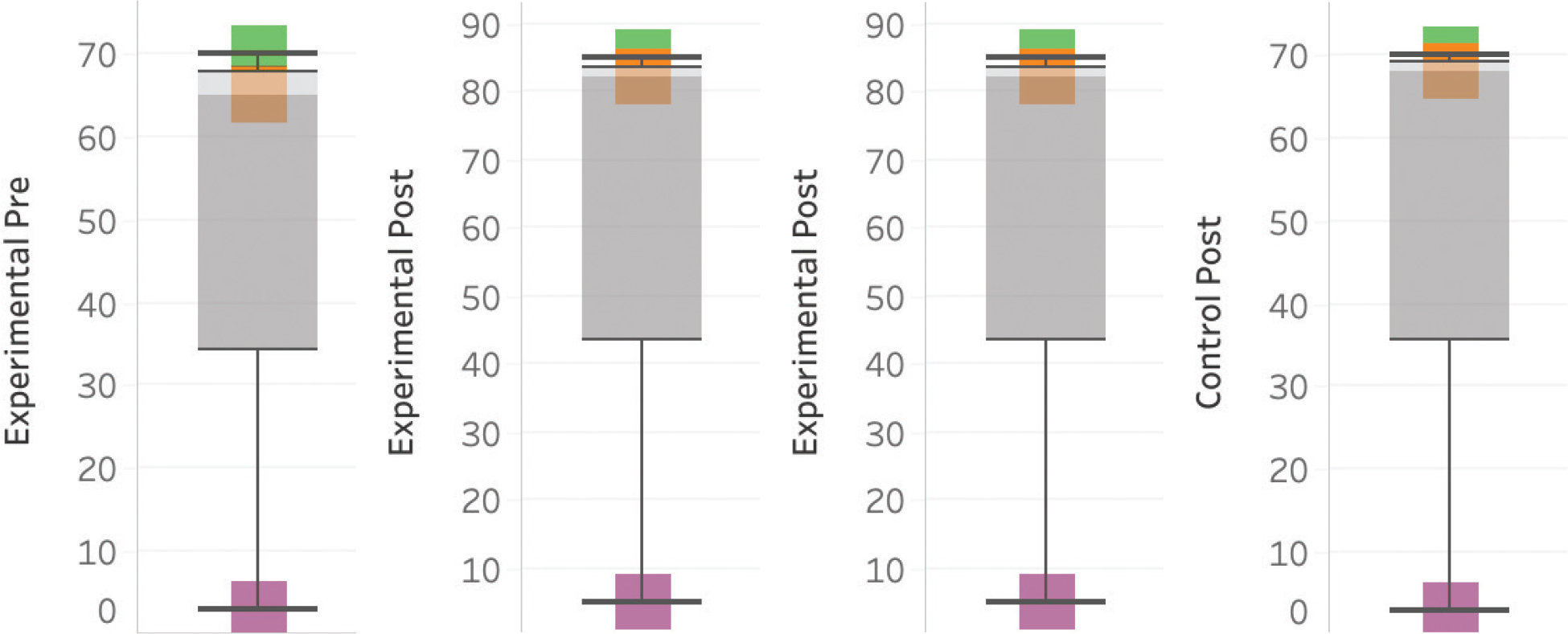
Overall, the findings of this study demonstrate that the interactive digital educational game intervention was effective in improving adolescents’ nutritional knowledge, attitudes toward physical activity, eating behavior, and BMI.
Importantly, the intervention also resulted in a statistically significant reduction in BMI in the experimental group, while the control group showed only minimal change. The between-group comparison of BMI change further confirmed a significant difference, suggesting that the intervention not only influenced knowledge and behavior but also produced measurable physiological outcomes. Although the reduction in BMI was modest, it is meaningful within the relatively short duration of the intervention and highlights the potential of digital health education as an early preventive strategy against adolescent obesity.
Taken together, these findings provide strong evidence that interactive digital educational games can serve as an effective, engaging, and scalable approach to improving adolescent health outcomes. The results support the integration of digital health interventions into school-based health promotion programs as part of comprehensive obesity prevention strategies.
Discussion
The findings of this study demonstrate that the interactive educational game has a significant positive influence on students’ knowledge, attitude, and eating behavior. These results align with previous studies indicating that digital media-based interventions can improve adolescents’ nutritional knowledge.5 For instance, research by6 found that the use of educational games can enhance students’ understanding of nutrition and physical activity. Additionally, the study by7 indicated that mobile applications designed for nutrition education can help adolescents make healthier food choices. However, the results of this study also differ from those of other studies that did not observe a significant increase in nutritional knowledge following the intervention. For example, research by8 reported that the use of educational applications did not consistently produce the anticipated changes in eating behavior. This discrepancy may be attributable to factors such as insufficient student engagement with the application or a lack of support from the surrounding environment.9 In addition, research by10,11 emphasized that digital health interventions are particularly effective in shaping early preventive behaviors, even when short-term changes in BMI are relatively small. The authors argue that improvements in knowledge and attitudes are critical precursors to long-term behavioral and physiological changes, which supports the pattern observed in this study, where cognitive and attitudinal gains were more pronounced than behavioral changes.
In the context of national data, these findings are consistent with the results of12, which indicate that the prevalence of obesity among adolescents in Indonesia continues to increase, driven by factors such as unhealthy eating patterns and insufficient physical activity. Approximately 18.8% of adolescents in Indonesia are obese, and 26.7% are physically inactive. These data underscore the importance of effective interventions, such as interactive educational games, to address adolescent obesity. A key factor supporting the effectiveness of the educational game in this study is the interactive methodology employed. Educational games transmit information and actively involve students in the learning process.13 This is consistent with constructivist learning theory, which emphasizes the significance of direct experience in learning. Providing a pleasurable and engaging learning experience makes students more likely to participate and retain the information presented. Furthermore, this research highlights the importance of social support, including from teachers and parents, in reinforcing students’ behavioral change.14 In the experimental group, teachers involved in the intervention provided supplemental support through discussions and reflections after each game session. This support can augment students’ motivation to apply their learning to their daily lives.
Although the study results show a positive impact, we must acknowledge certain limitations. Firstly, the research was conducted in a single school with a restricted sample size, which may limit the generalizability of the findings to a broader population. Secondly, the measurement of eating behavior and physical activity was based on self-reports, potentially introducing social desirability bias.15 Consequently, further research utilizing larger designs and objective measurements is warranted to corroborate these findings. To effectively address adolescent obesity, it is essential to develop sustainable, integrated health education programs. The results of this study suggest that interactive educational games can be an effective strategy, but continued efforts are necessary to ensure that students apply the knowledge they acquire in their daily lives.16 Furthermore, the engagement of parents and the community is also crucial in creating an environment that supports healthy living behaviors. As a subsequent step, it is recommended that Indonesian schools adopt similar approaches in health education, utilizing technology and interactive media to capture students’ attention. These programs should be designed with students’ needs and interests in mind and actively involve them in the planning and implementation process.17 This approach is expected to cultivate a generation of adolescents who are healthier and more conscious of the importance of good nutrition and adequate physical activity.
In conclusion, this research demonstrated that interactive educational games can enhance students’ knowledge, attitudes, and eating behaviors, thereby contributing to the prevention of obesity among adolescents. These outcomes are consistent with national data highlighting the high prevalence of obesity in Indonesia and the necessity for effective interventions. By actively involving students in the learning process and providing support from the social environment, it is anticipated that positive and sustainable behavioral changes can be achieved in addressing adolescent obesity. Therefore, this research offers valuable insight for the development of more innovative and effective health education programs and underscores the importance of collaboration among schools, parents, and the community in establishing an environment that supports a healthy lifestyle for adolescents.18
Conclusion
Based on the research findings, it is concluded that the interactive educational game intervention had a significant positive impact on students’ knowledge, attitude, and eating behavior. The 6-week intervention clearly resulted in an enhancement of nutritional knowledge, with the experimental group’s mean score rising from 65 to 82, a much greater increase than the marginal rise observed in the control group. Students’ attitude toward physical activity also significantly improved, as evidenced by the experimental group’s mean score climbing from 70 to 85. This confirms that an interactive approach to health education can motivate students to be more active and attentive to the importance of exercise. Moreover, the observed change in eating behavior—the increase in healthy food consumption frequency in the experimental group from three to five times per week, in contrast to the minor increase in the control group—demonstrates the intervention’s effectiveness in promoting healthier eating patterns. These findings align with national data concerning the high prevalence of obesity among adolescents in Indonesia, underscoring the necessity for innovative and engaging educational strategies. In this research, we calculated the prevalence of adolescents who showed an improvement in their healthy food consumption following the intervention. Out of the 120 participants involved in the study, 40 adolescents from the experimental group and 20 adolescents from the control group reported an increase in their healthy food consumption after the intervention.
This resulted in a total of 60 adolescents who demonstrated positive changes in their eating habits. Therefore, the prevalence of adolescents who improved their healthy food consumption after participating in the program is 50%. This finding highlights the effectiveness of the intervention in promoting healthier eating behaviors among adolescents, with significant improvements observed across both the experimental and control groups. underscoring the necessity for innovative and engaging educational strategies. This research provides evidence that interactive educational games can be a potent tool for raising awareness and nutritional knowledge among adolescents. To attain optimal results, the involvement of parents and the community in supporting healthy behavior, alongside the continuous integration of this health education program into the school curriculum, is crucial. We extend our gratitude to the Research Institute of the Payung Negeri Health Institute and the research site for providing the opportunity and assistance throughout the research process. The support provided was instrumental in achieving the research objectives and realizing outcomes beneficial to the community.
This study demonstrates that the interactive digital educational game intervention was effective in significantly improving adolescents’ nutritional knowledge, attitudes toward physical activity, and healthy eating behavior. The intervention group showed substantial gains across cognitive and behavioral domains compared to the control group, indicating that the observed effects were attributable to the intervention.
Importantly, the study also identified a modest but statistically significant reduction in BMI among participants in the intervention group. Although the magnitude of BMI change over the 6-week period was relatively small, it is clinically meaningful and highlights the potential of short-term digital interventions in influencing early physiological outcomes.
These findings support existing evidence that digital health education tools, particularly game-based interventions, can enhance engagement and facilitate behavior change among adolescents. The stronger effects observed in knowledge and attitudes compared to behavior are consistent with behavioral change theories, suggesting that cognitive and affective improvements precede sustained behavioral modification.
Overall, this study underscores the potential of interactive educational games as an innovative, scalable, and cost-effective strategy for adolescent obesity prevention. Future research should consider longer intervention durations, larger multi-site samples, and objective behavioral measurements to strengthen the evidence base and improve generalizability.
Data Availability Statement (DAS), Data Sharing, Reproducibility, and Data Repositories
Available at the discretion of the author only.
Application of AI-Generated Text or Related Technology
Not applied to the preparation of this article.
Contributions
Rahmi Pramulia Fitri: conceptualization, methodology, writing – original draft, writing – review and editing, corresponding author. Dona Martilova: methodology, supervision, validation, writing – review and editing. Linda Suryani and Deswinda: investigation and data collection (anthropometric measurement and questionnaire administration), project administration with the school. Iyang Maisi Fitriani: software (development of the “Ayo Makan Sehat dan Aktif” game), visualization. Veni Dayu Putri: data curation, formal analysis. Rahmat Saputra: formal analysis, statistical analysis, validation. All authors reviewed and approved the final manuscript.
Acknowledgements
The study was granted an exemption from ethics review by Research Institute of the Payung Negeri Health Institute, Indonesia (Reference No. 089/IKES PN/KEPK/III/2025). IRB certificate available upon request from author.
The authors extend their gratitude to the Research Institute of the Payung Negeri Health Institute and the research site for providing the opportunity and assistance throughout the research process. The support provided was instrumental in achieving the research objectives and realizing outcomes beneficial to the community.
References
- Campbell K, Waters E, O’Meara S, Summerbell C. Interventions for preventing obesity in childhood: a systematic review. Obes Rev. 2001;2(3):149–57. https://doi.org/10.1046/j.1467-789x.2001.00035.x
- Chau MM, Burgermaster M, Mamykina L. The use of social media in nutrition interventions for adolescents and young adults—a systematic review. Int J Med Inform. 2018;120:77–91. https://doi.org/10.1016/j.ijmedinf.2018.10.001
- Adzika A, Kartasurya MI, Shaluhiyah Z. Models of nutrition education interventions for adolescent lifestyle changes: a scoping review. Jurmedlitbangkes. 2025;35(4):1314–26. https://doi.org/10.34011/jmp2k.v35i4.3242
- Negi S, Forbush KT. A pilot study of “H elp for O vercoming P roblem E ating” (HOPE): a single session intervention for college students with binge–spectrum eating disorders. Intl J Eating Disord. 2025;58(5):903–16. https://doi.org/10.1002/eat.24404
- De Luca V, Virgolesi M, Vetrani C, Aprano S, Cantelli F, Di Martino A, et al. Digital interventions for weight control to prevent obesity in adolescents: a systematic review. Front Public Health. 2025;13:1584595. https://doi.org/10.3389/fpubh.2025.1584595
- Baranowski T, Ryan C, Hoyos-Cespedes A, Lu AS. Nutrition education and dietary behavior change games: a scoping review. Games Health J. 2019;8(3):153–76. https://doi.org/10.1089/g4h.2018.0070
- Rohde A, Duensing A, Dawczynski C, Godemann J, Lorkowski S, Brombach C. An app to improve eating habits of adolescents and young adults (challenge to go): systematic development of a theory-based and target group–adapted mobile app intervention. JMIR Mhealth Uhealth. 2019;7(8):e11575. https://doi.org/10.2196/11575
- Moore D, Ma Z, Villasenor D, Odegaard A, Lu Y, Lindsay K. Easy-to-learn dietary behavior change intervention does not significantly improve diet quality of college students: a randomized controlled trial. Nutr Res. 2025;140:11–23. https://doi.org/10.1016/j.nutres.2025.05.005
- Robinson TN, Sirard JR. Preventing childhood obesity. Am J Prevent Med. 2005;28(2):194–201. https://doi.org/10.1016/j.amepre.2004.10.030
- Chatterjee A, Prinz A, Gerdes M, Martinez S. Digital interventions on healthy lifestyle management: systematic review. J Med Internet Res. 2021;23(11):e26931. https://doi.org/10.2196/26931
- Otte RA, Duracher L, Demir O, Spelt HAA. Digital lifestyle interventions to support healthy gestational weight gain: scoping review. J Med Internet Res. 2025;27:e71548. https://doi.org/10.2196/71548
- Kementerian Kesehatan RI. Profil Kesehatan Indonesia 2024. Jakarta: Kementerian Kesehatan; 2024.
- Vygotsky LS. Mind in society: development of higher psychological processes [Internet]. In: Cole M, John-Steiner V, Scribner S, Souberman E, editors. Harvard University Press; 1980 [cited 2026 May 22]. Available from: http://www.jstor.org/stable/10.2307/j.ctvjf9vz4
- Bandura A. Health promotion by social cognitive means. Health Educ Behav. 2004;31(2):143–64. https://doi.org/10.1177/1090198104263660
- FitzGerald C, Martin A, Berner D, Hurst S. Interventions designed to reduce implicit prejudices and implicit stereotypes in real world contexts: a systematic review. BMC Psychol. 2019;7(1):29. https://doi.org/10.1186/s40359-019-0299-7
- Moore TH, Tomlinson E, Spiga F, Higgins JP, Gao Y, Caldwell DM, et al. Interventions to prevent obesity in children aged 12 to 18 years old. Cochrane Database Syst Rev. 2022;2022(7):CD015330. https://doi.org/10.1002/14651858.CD015330
- Arundell L, Parker K, Timperio A, Salmon J, Veitch J. Home-based screen time behaviors amongst youth and their parents: familial typologies and their modifiable correlates. BMC Public Health. 2020;20(1):1492. https://doi.org/10.1186/s12889-020-09581-w
- Ma Y, Wu H, Shen J, Wang J, Wang J, Hou Y. Correlation between lifestyle patterns and overweight and obesity among Chinese adolescents. Front Public Health. 2022;10:1027565. https://doi.org/10.3389/fpubh.2022.1027565
Copyright Ownership: This is an open-access article distributed in accordance with the Creative Commons Attribution Non-Commercial (CC BY-NC 4.0) license, which permits others to distribute, adapt, enhance this work non-commercially, and license their derivative works on different terms, provided the original work is properly cited and the use is non-commercial. See http://creativecommons.org/licenses/by-nc/4.0. The authors of this article own the copyright.