NARRATIVE/SYSTEMATIC REVIEWS/META-ANALYSIS
Telemedicine Post-COVID-19 as a Strategic Lever for Transforming Access to Healthcare
El Mehdi Abiza, PhD (Student)1  and Zouhayr Souirti, MD, PhD2,3
1Clinical Neurosciences Research Laboratory, University Medical School, Sidi Mohammed Ibn Abdellah University, Fez, Morocco; 2Division of Information Systems, Hassan II University Hospital Center, Fez, Morocco; 3Department of Neurology, Hassan II University Hospital Center, Fez, Morocco
Keywords: COVID-19, health system, medical deserts, Morocco, pandemic, telemedicine
Abstract
Background: The Moroccan health system faces significant structural problems, including major regional disparities in access to primary healthcare, the persistence of “medical deserts” (rural areas in extreme conditions, especially mountainous regions), and a rapidly growing burden of chronic diseases. The physician density (ratio of 7.8 per 10,000 people) is far below the World Health Organization’s minimum recommendation of 23 per 10,000, with a shortage of healthcare workers estimated to exceed 97,000 (1,2).
Methods: This study examines the role of telemedicine as a technology-based solution to address these systemic weaknesses. It analyses the structural limitations of the existing healthcare model in Morocco, drawing on public health data and the impact of the COVID-19 outbreak as a catalyst for reform.
Results: The findings highlight that telemedicine is now considered an essential component of healthcare delivery. It offers a strategic means of enhancing access to care, particularly in underserved and remote areas, while supporting the development of a more equitable and patient-centered healthcare system.
Conclusions: Telemedicine represents a promising and necessary approach to overcoming Morocco’s healthcare challenges. Its structured adoption can help bridge the gap between urban and rural healthcare access, reduce the burden on the existing workforce, and improve patient outcomes across the country.
Plain Language Summary
Morocco faces a critical shortage of healthcare workers, with a physician density of only 7.8 per 10,000—far below the World Health Organization’s recommendation of 23 per 10,000. It is imperative that Morocco determine how to implement telemedicine equitably, efficiently, and strategically.
Here, the authors report that telemedicine is a promising and necessary approach to overcoming Morocco’s healthcare challenges. Its structured adoption can improve healthcare several ways.
- access to urban and rural healthcare,
- reduced the burden on the existing workforce, and
- improved patient outcomes across the country.
Citation: Telehealth and Medicine Today © 2026, 11: 700
DOI: https://doi.org/10.30953/thmt.v11.700
Copyright: © 2026 The Authors. This is an open-access article distributed in accordance with the Creative Commons Attribution Non-Commercial (CC BY-NC 4.0) license, which permits others to distribute, adapt, enhance this work non-commercially, and license their derivative works on different terms, provided the original work is properly cited and the use is non-commercial. See http://creativecommons.org/licenses/by-nc/4.0. The authors of this article own the copyright.
Submitted: March 5, 2026; Accepted: May 18, 2026; Published: July 3, 2026
Corresponding Author: El Mehdi Abiza, Email: elmehdi.abiza@usmba.ac.ma
Competing interests and funding: The authors received no financial support, grant, or funding for the research, authorship, and/or publication of this article.
Worldwide, many people adopted telemedicine during the COVID-19 pandemic. Despite the different types of healthcare systems in various countries, all have been impacted dramatically by the pandemic, and each country has had a large increase in planning and utilizing telemedicine.1,2
In the United States, before the pandemic, telemedicine represented only 0.3% of all medical visits, but during the early phases of the pandemic, telemedicine comprised 23.6%—nearly an increase of 80 times,3 of all medical visits. On March 20, 2020,4 it was reported that in France, telemedicine accounted for 11–12% of the total visits compared to 0% 1 week before the pandemic occurred. Before the pandemic in 2019, in Canada, the percentage of the total care provided in Canada through virtual healthcare was 10–20%, whereas on July 1, 2020, it increased to approximately 60%.5 In Saudi Arabia, there has been a 24-fold increase in the percentage of the population utilizing telemedicine services; telemedicine usage went from approximately 2% to approximately 48%6 (Figure 1).
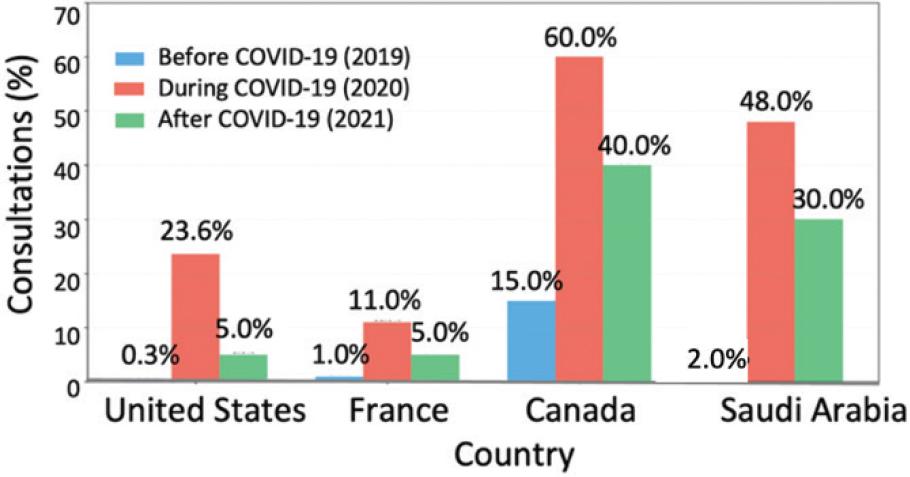
Fig. 1. Adoption of telemedicine before, during, and after the COVID-19 pandemic: an international comparison.
As illustrated in Figure 1, the adoption of telemedicine experienced a dramatic surge across diverse healthcare systems during the height of the pandemic in 2020. For instance, Canada saw the most significant absolute adoption rate, peaking at 60.0%, while Saudi Arabia followed closely at 48.0%. The United States and France also demonstrated substantial relative growth, reaching 23.6 and 11.0%, respectively. This global trend indicates that telemedicine continues to be an effective method of providing care during crises. While telemedicine usage decreased slightly during the aftermath of the COVID-19 pandemic (2021), it remains at an elevated level compared to before 2019 across all surveyed nations. For example, Canada and Saudi Arabia maintained high adoption rates of 40.0 and 30.0%, respectively, post-pandemic, indicating a permanent shift toward telemedicine as a method of healthcare delivery into the future.
The global trend illustrated in the data indicates that telemedicine continues to be an effective method of providing care during crises. While telemedicine use decreased slightly during the aftermath of the COVID-19 pandemic, it remains at an elevated level compared to before 2019, indicating a shift toward telemedicine as a method of healthcare delivery into the future (Figure 2).
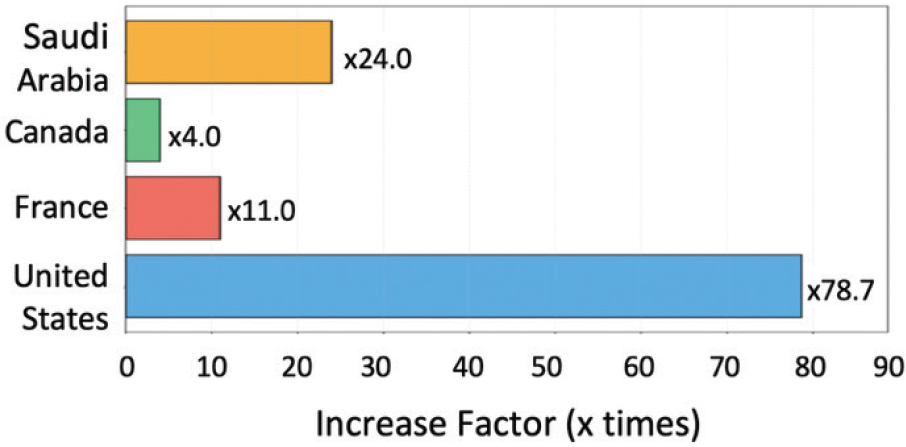
Fig. 2. Increase in teleconsultations during the COVID-19 pandemic (2019–2020).
This paradigm shift is further emphasized when examining the relative growth rates. Figure 2 highlights the staggering multiplication factors of teleconsultations between 2019 and 2020. The United States experienced an unprecedented 78.7-fold increase, reflecting a massive and rapid mobilization of digital health resources from a near-zero baseline. Saudi Arabia and France also recorded exponential growth, with increases of 24.0 and 11.0 times, respectively. Even in Canada, where the baseline adoption was already higher, the volume quadrupled (x4.0). These figures collectively underscore that the pandemic acted as a universal catalyst, overcoming previous barriers to adoption and permanently altering the trajectory of global healthcare delivery.
The Impact of Telemedicine on the Efficiency of the Healthcare System
Telemedicine goes beyond simply providing continuity of care; it has also proved capable of solving long-standing problems with efficiency in today’s medical systems. A systematic review of the studies on telemedicine showed that telemedicine quantitatively improves wait times for outpatient consultations,7 with one study reporting that wait times decreased by 43%, from an average of 48.4 days to an average of 27.7 days.8 Furthermore, telemedicine has also greatly improved attendance rates. The percentage of no-shows for in-person visits fell from 36.1% to just 7.5% for teleconsultations (almost an 80% decrease).9 This improved efficiency of telemedicine will help to maximize the utilization of limited medical resources (Figure 3).
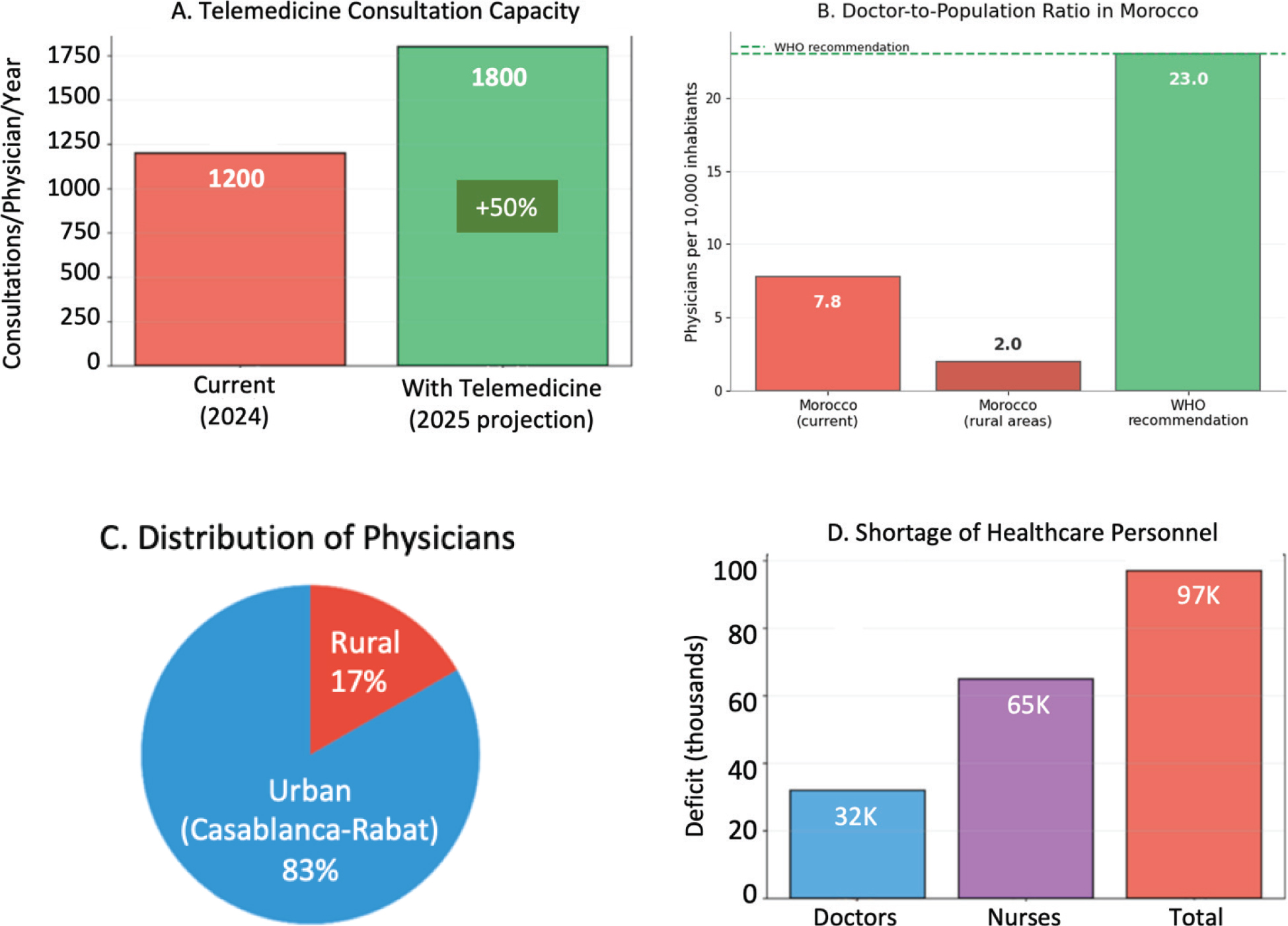
Fig. 3. Challenges facing the Moroccan healthcare system and the potential of telemedicine.
The tangible benefits of this efficiency are clearly demonstrated in Figure 3. Panel A visually quantifies the substantial improvements in operational metrics, showing a 43% reduction in waiting periods and a remarkable 79% drop in absenteeism rates when comparing traditional care to telemedicine. This reduction in missed appointments directly translates to optimized physician schedules and better patient outcomes. Furthermore, Figure 3 Panel B illustrates the sustained, long-term growth of e-consultations in Saudi Arabia, which rose steadily from 0.79 million users in 2019 to a projected 1.30 million in 2024. This continuous upward trajectory suggests that once patients and providers experience the efficiency and convenience of telemedicine, adoption continues to grow organically, solidifying its role as a core component of effective healthcare delivery.
Morocco: An Opportunity for Equitable Access to Healthcare
Digital transformation creates opportunities for equitable access to healthcare in Morocco. The country has specific challenges that position it well to take advantage of the digital transformation. More than 50% of doctors practice along the Casablanca-Rabat corridor, creating a disparity in the availability of healthcare services throughout the country.2 Telemedicine provides an excellent opportunity to begin closing this disparity by providing direct access to physicians where there is limited access to healthcare resources and expertise.
The Moroccan regulatory framework enabling telemedicine initiatives was established by Law 131-13 in 2015, reinforced with Decree 2-18-378 in 2018, and updated in 2021. Along with the growing number of telemedicine initiatives in the country and throughout North Africa, this establishes the foundation for deploying telemedicine services in Morocco.1,10
Telemedicine offers significant opportunities to boost physician productivity, increase consultation capacity, and reduce wait times for chronic care patients. However, nationwide deployment in Morocco remains slow.
Suppose that the structured adoption of telemedicine initiatives occurs. In that case, as illustrated in Figure 3 Panel A, structured telemedicine adoption could increase a physician’s annual consultation capacity from approximately 1,200–1,800 consultations, a 50% gain. This projection is based on the reduction of administrative overhead and no-show rates demonstrated internationally combined with the critical need to compensate for Morocco’s physician density of only 7.8 per 10,000 inhabitants (Figure 3, Panel B) and the geographic maldistribution where 83% of physicians are concentrated in urban areas (Figure 3, Panel C). However, achieving this target requires adequate digital infrastructure, streamlined triage processes, and dedicated tele-assistants to support physicians.
The critical need for such an intervention in Morocco is comprehensively detailed in Figure 3. Panel B reveals the stark reality of medical density: while the national average is only 7.8 physicians per 10,000 inhabitants, rural areas suffer even more acutely with a mere 2.0, both falling drastically short of the World Health Organization (WHO) recommendation of 23.0. This deficit is quantified in Figure 3, Panel D, which highlights a staggering shortage of 97,000 health personnel (including 32,000 doctors and 65,000 nurses). Compounding this shortage is the severe geographic maldistribution shown in Figure 3, Panel C, where 83% of physicians are concentrated in urban centers such as Casablanca and Rabat, leaving only 17% to serve rural populations. However, Panel A offers a promising solution: by integrating telemedicine, the annual consultation capacity per physician could increase by 50%, from 1,200 to 1,800 consultations. This significant boost in productivity presents a viable strategy to mitigate the severe personnel shortages and bridge the geographic divide, bringing essential medical expertise to underserved rural communities.
Recommendations for an Ambitious National Strategy
To fully leverage telemedicine’s immense potential, Morocco must create a clear, ambitious national telemedicine strategy that combines financial integration, governance and interoperability, workforce education and training, and digital access to reduce the digital divide.
Financial Integration
Telemedicine must be integrated into Compulsory Health Insurance (AMO) codes in Morocco. Establishing clear reimbursement processes will incentivize providers and patients. The Ministry of Health and the National Health Insurance Agency—Morocco—should spearhead this initiative within 12–18 months.11,12 Governance and Interoperability—Creating governance through aligning telemedicine systems with International Health Standards, e.g., Health Level Seven/Fast Healthcare Interoperability Resources (HL7/FHIR)—will help to promote interoperable health information systems, which is necessary for the WHO Global Strategy. Privacy of patient data should be a high priority and be governed by the National Commission for the Control of Personal Data Protection Guidelines (CNDP) and General Data Protection Regulation (GDPR) as a starting point.11,12 Education and Training—a national program to educate healthcare providers on the proper and ethical use of telemedicine tools—will be implemented, and medical schools and professional associations should collaborate to integrate these modules into their curricula. Digital access—a national initiative to eliminate the digital divide in Morocco—will be implemented to ensure that everyone can access reliable internet service and affordable equipment, especially in rural areas. Telecommunication companies and government agencies must work together to expand infrastructure.
Conclusion
Telemedicine was rapidly growing as a means of delivering healthcare before the COVID-19 epidemic, but the global experience of this pandemic has confirmed many of the assertions made concerning telemedicine. Rather than debating whether telemedicine should be incorporated into the existing healthcare systems in Morocco today, it is imperative that Morocco determine how to implement telemedicine in a method that is equitable, efficient, and strategic. In addition, Morocco must build upon lessons learned from the experience of other countries when determining its own implementation approach and utilize the existing regulatory structure of Morocco. The time for action is now; stakeholders must unite to transform this potential into a sustainable reality for the benefit of the entire population.
Financial and Non-Financial Relationship and Activities
The authors declare that they have no financial or non-financial relationships, interests, or activities that could be perceived as influencing the work reported in this manuscript.
Data Availability Statement (DAS), Data Sharing, Reproducibility, and Data Repositories
No new datasets were generated or analyzed during the preparation of this manuscript. The article is based on a narrative and strategic analysis using information from publicly available sources and previously published literature cited in the manuscript. Therefore, data sharing is not applicable.
Application of AI-Generated Text or Related Technology
AI-assisted tools were used solely for language editing, formatting support, and refinement of the revised manuscript. The authors carefully reviewed, verified, and approved all AI-assisted edits and took full responsibility for the accuracy, integrity, originality, and scientific content of the final manuscript. No AI-assisted tool was used to generate original research data, conduct data analysis, produce scientific conclusions, or replace the authors’ intellectual contribution and scientific judgment.
Contributions
El Mehdi Abiza contributed to the conceptualization, literature review, drafting, revision, and final approval of the manuscript. Zouhayr Souirti contributed to the conceptualization, critical review, intellectual revision, supervision, and final approval of the manuscript. Both authors approved the final version submitted for publication and agreed to be accountable for all aspects of the work.
References
- Jallal M, Serhier Z, Berrami H, Bennani H, Othmani MB. Current state and prospects of telemedicine in Morocco: analysis of challenges, initiatives, and regulatory framework. Cureus. 2023;15(12):e50963. https://doi.org/10.7759/cureus.50963
- Maaini A. International relations and diplomacy in Morocco, what news in 2025? [Relations internationales et diplomatie au Maroc, quelles actualités en 2025?]. Working Papers. HAL; 2025.
- Shaver J. The state of telehealth before and after the COVID-19 pandemic. Prim Care. 2022;49(4):517–30. https://doi.org/10.1016/j.pop.2022.04.002
- Hommes F, Lépine C, Merle Y, Andrès E. L’après-Covid: quelle place la téléconsultation pourra-t-elle occuper en médecine générale? Cah Santé Méd Thér. 2021;30(5):370–7. https://doi.org/10.1684/sanmt.2021.66
- Force V. Virtual care in Canada: progress and potential. Canadian Medical Association; 2022 [cited 2025 Mar 3]. Available at: https://www.cma.ca/sites/default/files/2022-02/Virtual-Care-in-Canada-Progress-and-Potential-EN.pdf
- Al-Wathinani AM, Dhafar YO, Aljarallah SA, Alqahtani MS, Alamri FA, Aljohani AO, et al. Healthcare providers’ experience with Saudi Arabia’s 937 virtual medical call centers and telehealth. J Multidiscip Healthc. 2024;17:2949–60. https://doi.org/10.2147/JMDH.S467172
- Capodici A, Noci F, Nuti S, Emdin M, Dalmiani S, Passino C, et al. Reducing outpatient wait times through telemedicine: a systematic review and quantitative analysis. BMJ Open. 2025;15(1):e088153. https://doi.org/10.1136/bmjopen-2024-088153
- Cengil AB, Eksioglu S, Eksioglu B, Eswaran H, Hayes CJ, Bogulski CA. Statistical analysis of telehealth use and pre-and postpandemic insurance coverage in selected healthcare specialties in a large healthcare system in Arkansas: comparative cross-sectional study. J Med Internet Res. 2024;26:e49190. https://doi.org/10.2196/49190
- Alkilany R, Tarabichi Y, Hong R. Telemedicine visits during covid-19 improved clinic show rates. ACR Open Rheumatol. 2022;4(2):136–41. https://doi.org/10.1002/acr2.11372
- Chafiq K, Dib K, Zahidi A, Cherti M, Doukkali A, El Menzhi K. Les enjeux des nouvelles technologies numériques sur le système de santé marocain: cas du service de cardiologie -B- du Centre Hospitalier Universitaire Ibn Sina (CHUIS) Rabat. Ann Cardiol Angeiol. 2025;74(1):101858.
- Kalinski C. Quelles sont les mesures à adopter par les entreprises pour respecter l’obligation d’accountability imposée par le Règlement (UE) 2016/679 relatif à la protection des données personnelles? Mémoire de Master. Nancy: Université de Lorraine; 2024.
- Bassime L. Application en droit marocain des normes de protection des personnes physiques à l’égard du traitement des données à caractère personnel. Rev Étu Multidiscip Sci Écon Soc. 2024;9(2):357–376.
Copyright Ownership: This is an open-access article distributed in accordance with the Creative Commons Attribution Non-Commercial (CC BY-NC 4.0) license, which permits others to distribute, adapt, enhance this work non-commercially, and license their derivative works on different terms, provided the original work is properly cited and the use is non-commercial. See http://creativecommons.org/licenses/by-nc/4.0. The authors of this article own the copyright.