NARRATIVE/SYSTEMATIC REVIEWS/META-ANALYSIS
Sepsis Diagnosis With Telemedicine: A Scoping Review
Bethany S. Hansen, BBiomedSc1  , James H. Boyd, BSc (Hons), PhD2,3 and Jennifer Hutton, MBChB, MPH, FACEM2,3,4
1Melbourne Medical School, University of Melbourne, Melbourne, Australia; 2Department of Public Health, La Trobe University, Victoria, Australia; 3Victorian Virtual Emergency Department, Northern Health, Victoria, Australia; 4Department of Medicine, University of Melbourne, Victoria, Australia
Keywords: diagnosis, telehealth, telemedicine, sepsis
Abstract
Background: Sepsis is a life-threatening condition requiring early recognition to reduce morbidity and mortality. As telemedicine grows as a mode of healthcare delivery, understanding its role in sepsis diagnosis is becoming increasingly important. However, evidence on sepsis diagnosis in the virtual space is limited in the literature. This scoping review aims to explore and synthesize the available evidence on factors inherent to telemedicine consultations that may influence sepsis diagnosis.
Methods: This scoping review was conducted in accordance with (Joanna Briggs Institute methodology for scoping review) JBI, MEDLINE, Embase, and Cochrane databases were searched for peer-reviewed publications of any study design published in English after 2000. Our inclusion criteria included patients of any age, assessed via any telemedicine modality and subsequently diagnosed with sepsis. The settings included were primary care and emergency care. Data were extracted into tabular and narrative formats.
Results: The eight studies included demonstrated considerable heterogeneity in study design, telemedicine modality, and setting. Several consistent themes that influenced virtual sepsis diagnosis emerged across the included studies. Enablers to virtual sepsis diagnosis included awareness of risk factors, recognition of acute deterioration, and longer consultation duration. Considerable barriers remained, including the non-specificity of sepsis presentations, diagnostic uncertainty, and the impact of telemedicine on the ability to perform physical examinations.
Conclusions: Telemedicine may play a complementary and synergistic role in the sepsis diagnostic pathway; however, it may also amplify existing diagnostic challenges. The integration of multiple clinical indicators, help-seeking behaviors, and appropriate escalation is likely to support sepsis diagnosis and enhance patient safety in virtual care. Future research should focus on evaluating the diagnostic accuracy of telemedicine for sepsis diagnosis and on developing a telemedicine-specific sepsis screening tool.
Plain Language Summary
Sepsis is a life-threatening condition, and early diagnosis is important to reduce serious illness and death. As telemedicine use increases in healthcare, it is important to understand how it impacts sepsis diagnosis. This review explores factors within telemedicine that influence sepsis diagnosis.
Eight studies were included in this review, and several factors were identified that may affect sepsis diagnosis in the virtual space. Factors that supported diagnosis included: awareness of sepsis risk factors, recognition of sudden deterioration, and longer consultation times.
Barriers to diagnosis included:
- non-specific sepsis symptoms,
- uncertainty about the diagnosis, and
- difficulty of performing physical examinations through telemedicine.
Ultimately, telemedicine may support the diagnosis of sepsis, but it may also increase existing challenges. Using multiple clinical indicators, help-seeking behaviors and appropriate escalation is likely to improve sepsis diagnosis and patient safety in virtual care. Further research should focus on developing a sepsis screening tool for telemedicine.
Key Takeaways
- Factors inherent to telemedicine consultations that contribute to missed or delayed diagnoses of sepsis
- The most effective virtual clinical predictors for identifying sepsis in telemedicine consultations
Citation: Telehealth and Medicine Today 2026, 11: 726.
DOI: https://doi.org/10.30953/thmt.v11.726
Copyright: © 2026 B.S. Hansen et al. This is an open-access article distributed in accordance with the Creative Commons Attribution Non-Commercial (CC BY-NC 4.0) license, which permits others to distribute, adapt, enhance this work non-commercially, and license their derivative works on different terms, provided the original work is properly cited and the use is non-commercial. See http://creativecommons.org/licenses/by-nc/4.0. The authors of this article own the copyright.
Submitted: May 25, 2026; Accepted: August 19, 2026; Published: September 17, 2026
Corresponding Author: Bethany S. Hansen, Email: bethany.hansen2000@gmail.com
Funding: Not applicable.
Financial and Non-Financial Relationships and Activities: Not applicable.
Sepsis is a life-threatening condition characterised by a dysregulated host immune response to an infection.1 This immune response can lead to widespread systemic inflammation, and multi-organ damage can be fatal.2 Globally, sepsis is responsible for approximately 11 million deaths annually, accounting for approximately 20% of all deaths worldwide.3
The COVID-19 pandemic accelerated the global adoption and expansion of telemedicine as a mode of healthcare delivery.4 Telemedicine encompasses the provision of healthcare services through digital and communication technologies, including telephone consultations, video conferencing, or remote patient monitoring technologies.5 These services may facilitate interactions between patients and clinicians or support communication between healthcare professionals (provider-to-provider model).6
Telemedicine offers several advantages, including convenience, improved timeliness of consultations, and enhanced infection prevention and control during periods of communicable disease transmission.4 It can also improve access to specialist services, particularly for rural communities.6 As a result, telemedicine has become increasingly embedded across a range of clinical settings, including primary care,4 emergency medicine,7 and outpatient settings.6 Despite these benefits, telemedicine consultations present several challenges, particularly in relation to diagnostic processes, where the absence of physical examination and variability in assessment methods may complicate clinical decision-making.
Several challenges are associated with telemedicine in clinical care, including concerns regarding privacy, inequities in access to digital technology, and reduced digital literacy.4 Bokolo8 discusses the reduced capacity to conduct a physical examination in telemedicine contexts. Physical examination is absent in telephone consultations and may be limited in video consultations due to factors such as lighting, camera and microphone quality, and privacy of the consultation environment.8
Vital signs are central to sepsis recognition and diagnosis. Clinical indicators such as fever or hypothermia, tachycardia, and tachypnea contribute to systemic inflammatory response syndrome (SIRS) criteria,9 while the quick Sequential Organ Failure Assessment (qSOFA) incorporates respiratory rate, mental status, and systolic blood pressure.10 While some vital signs may be assessed during telemedicine consultation, their availability and accuracy depend on patient access to monitoring devices and the reliability of self-reported measurements. These limitations may increase reliance on patient-reported symptoms,11 which as previously noted, are frequently non-specific in sepsis. Ultimately, this may result in missed or delayed sepsis diagnoses via telemedicine.
The existing literature has broadly explored the diagnostic capabilities of telemedicine. Some studies report that telemedicine can achieve acceptable levels of diagnostic accuracy,12 while others recognize the potential risks of misdiagnosis and treatment delays.13 These concerns are particularly relevant for time-critical conditions where early identification is essential.
In face-to-face clinical settings, several validated tools are used to support the early identification of sepsis. Among these, the National Early Warning Score has frequently been found to be superior for sepsis detection compared with other scoring systems, including qSOFA and SIRS criteria.14 However, evidence regarding the identification of sepsis via telemedicine remains limited. In particular, there is a lack of research examining virtual clinical predictors of sepsis or evaluating whether established scoring systems retain their reliability and validity when applied in remote consultation settings.
Given the emerging nature of this field, a scoping review was conducted to systematically map the breadth of the existing literature, establish key concepts, and identify knowledge gaps to inform and guide future research and interventions.
The aim of this review is to explore and synthesize the available evidence on factors inherent to telemedicine consultations that may contribute to missed or delayed sepsis diagnoses and to identify potential virtual clinical indicators that may support early recognition of sepsis in telehealth settings.
Inclusion Criteria
Studies involving patients of any age who were assessed by a healthcare provider via virtual care and diagnosed with sepsis were included in this review. No restrictions were placed on the definition of sepsis to maximize the breadth of literature.
Studies that explored factors inherent to telemedicine consultations that influenced sepsis diagnosis, including factors contributing to misdiagnoses or delayed diagnoses of sepsis, as well as enablers to sepsis diagnosis, were considered for inclusion. Studies were also considered if they addressed virtual clinical predictors of sepsis.
Eligible studies were those in which telemedicine consultation was used as a primary or secondary diagnostic tool, including video and telephone consultations. The clinical setting was limited to primary care and emergency care. Studies conducted in intensive care units were excluded to maintain a focus on the initial diagnostic phase of care. Both synchronous and asynchronous telemedicine models were eligible, encompassing provider-to-provider and provider-to-patient frameworks. However, all included studies evaluated synchronous telemedicine modalities, specifically telephone or video consultations, with no eligible studies examining asynchronous approaches for sepsis diagnosis.
Peer-reviewed publications of all study design types were considered for inclusion. Grey literature was excluded due to time and resource constraints, which is a recognized limitation. Poster presentations and conference abstracts were also excluded.
Methods
This scoping review was conducted in accordance with Joanna Briggs Institute (JBI) methodology for scoping reviews.15 Reporting was guided by the Preferred Reporting Items for Systematic Review and Meta-Analyses extension for Scoping Reviews (PRISMA-ScR).16
Search Strategy
An initial limited search of PubMed, Google Scholar, and MEDLINE was undertaken to identify relevant keywords and refine search terms. The final search strategy was developed in collaboration with an information specialist to strengthen the robustness of the search process. A systematic search of MEDLINE, Embase, and Cochrane (including Cochrane Central Register of Controlled Trials and Cochrane Database of Systematic Reviews) was conducted via Ovid in February 2026.
The search was included from the year 2000 to present day to ensure relevance to contemporary telemedicine practice. Additionally, the search was limited to English-language publications due to resource constraints. The full search strategy is provided in Appendix 1. Reference lists of included sources were screened to identify additional relevant literature.
Source of Evidence Selection
All identified citations were uploaded to Covidence, where duplicates were removed. Two reviewers (BH and JH) independently screened titles and abstracts against the eligibility criteria. Full-text versions of potentially relevant records were sought for retrieval. (Appendix 2)
Available full texts were then screened by two reviewers (BH and JH) against the eligibility criteria. For both abstract and full-text screening, conflicts were resolved through discussion and consensus with a third reviewer (JB). Studies that did not meet the eligibility criteria in the full-text screening stage were excluded with reasons documented. The search results and study inclusion process are presented in a PRISMA flow diagram (Figure 1).
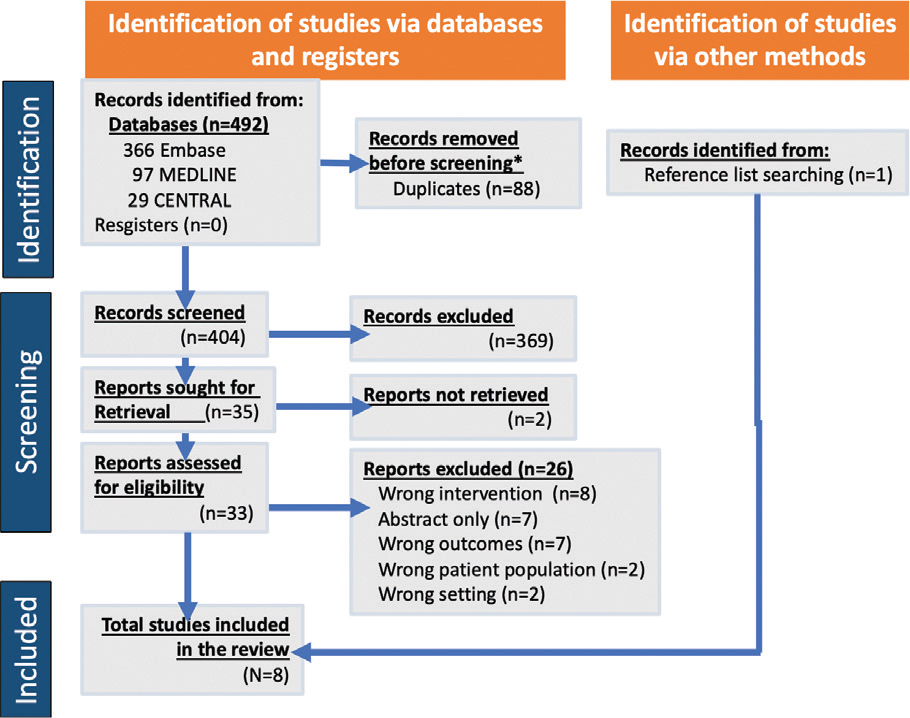
Fig. 1. Search Results: PRISMA 2020 flow diagram for updated systematic reviews, which include searches of databases, registers, and other sources. Source: Page MJ, et al. BMJ 20921:372;n71. doi: 10.1136/bmj71. This work is licensed under CC BY 4.0. To view a copy of this license, visit https://creativecommons.org/licenses/by/4.0/.
Data Extraction
Data extraction was independently conducted by two reviewers (BH and JH), using a data extraction tool developed by the research team. The extracted data included details regarding the authors, year of publication, country, study design, sample size, population description, telemedicine modality, setting, comparison group, factors associated with virtual sepsis diagnosis, key insights relevant to the review, and key limitations of each article. Any disagreements between reviewers were resolved through discussion.
Data Analysis and Presentation
The main findings of this review are presented in tables and figures, accompanied by a descriptive format of the findings (see Figure 1, Appendix 1, Table 1) summarize the characteristics of the included studies, and Table 1 summarizes the key findings of included studies.
| Author | Factors associated with virtual sepsis diagnosis | Key insights relevant to review | Key limitations |
| Blozik et al.17 | |||
|
|
|
|
| Bohm et al.22 | |||
|
|
|
|
| Cecil et al.19 | |||
|
|
|
|
| Chandrakanthan & Ritsema18 | |||
|
|
|
|
| Kaldjian et al.20 | |||
|
|
|
|
| Mohr et al.23 | |||
|
|
|
|
| Mohr et al.21 | |||
|
|
|
|
| Mohr et al.21 | |||
|
|
|
|
| Stassen et al.24 | |||
|
|
|
|
| aOR: adjusted odds ratio, tele-ED: tele-emergency department, GP: general practitioner. * Data relevant for all conditions and all consultation types. ** Data relevant for all conditions and not solely sepsis. *** Data relevant for all consultation types and not solely telemedicine. |
|||
Results
Search Results
The initial database search process identified 492 records, with 404 remaining following duplicate removal. Following title and abstract screening, 35 records were sought for full-text retrieval: two could not be obtained despite consultation with an information specialist. Seven sources met the eligibility criteria, with exclusions primarily due to incorrect interventions. Hand searching reference lists from included sources yielded one additional record, resulting in eight included studies overall. The source selection process is detailed in Figure 1. The characteristics and patient, clinician, and consultation factors are summarized in Appendix 1 and Table 1 and are detailed next.
Characteristics of Included Sources
The eight studies included two case reports,17,18 three cohort studies,19–21 one case series,22 one qualitative study23 and one mixed-methods content analysis.24
Sample sizes ranged from one individual case17,18 to a large-scale population study of 116,097.19 While most studies focused on patients diagnosed with sepsis, Mohr et al.23 specifically examined perspectives of healthcare staff involved in tele-emergency department (tele-ED) sepsis care. The median age of participants tended to range between 66 years19 and 75 years.24
The telemedicine modalities and consultation models were categorized into two distinct groups. No included studies evaluated asynchronous telemedicine modalities, indicating that the current evidence for virtual sepsis diagnosis is limited to synchronous telephone- and video-based consultations. In five studies, the primary modality was telephone-based provider-to-patient consultations.17–19,22,24 The other studies involved video tele-ED provider-to-provider consultations.20,21,23
The included studies examined telemedicine use across a range of settings, including primary care,18,19 rural emergency departments,20,21,23 emergency dispatch centers,22,24 and a dedicated teleconsultation center.17 Comparison groups were present in three of the included studies.19–21
Patient Factors Associated With Virtual Sepsis Diagnosis
Several patient-related factors influencing virtual sepsis diagnosis were identified across the included studies, including symptom presentation, recognition of acute deterioration, and risk factors.
The most consistently reported patient factor was symptom presentation. Fever was commonly identified as a feature of sepsis,17,18,22,24 with Bohm et al.22 noting it as the ‘most prominent description’ within the category of physical signs.
Other symptoms identified were pain and breathing difficulties.22 In addition, Stassen et al.24 found the most prevalent keywords relating to sepsis to be gastrointestinal symptoms, including diarrhea and vomiting. Two studies22,24 noted altered mental status as a key sign of sepsis, with Bohm et al.22 suggesting this may be consistent with receiving calls from a third party. Additionally, these studies identified weakness as a prominent feature of sepsis, with ‘falling and collapsing’ noted in Bohm et al.22 and ‘weakness of the legs’ present in 33% of calls in Stassen et al.24 Importantly, several studies found that presentations were often vague and non-specific.18,22,24
Recognition of acute deterioration additionally emerged as a prominent theme. Bohm et al.22 identified descriptions of a ‘sudden deterioration’ or concern regarding severity of the condition as important indicators for identifying sepsis virtually. Descriptions relating to malaise, including deterioration, were present in 31% of telephone calls for sepsis in Stassen et al.24
The utility of telemedicine in managing these critical shifts was further supported by Mohr et al.23 and Mohr et al.21 Their research found that tele-ED consultations were more likely to be initiated for deteriorating patients or those with ‘increased severity of illness’.23
The identification of patient risk factors, such as comorbidities, was found to be important in virtual sepsis recognition across several studies.19–21,23 In Cecil et al.,19 patients with general practitioners (GPs) reported comorbidities were more likely to experience potentially missed acute deterioration across both telephone and face-to-face consultations. Mohr et al.23 identified that clinicians were more likely to activate tele-ED for patients with complex commodities. Mohr et al.21 and Kaldjian et al.20 found that complex comorbidities, including cirrhosis, solid organ transplant and chronic dialysis, were more prevalent in patients who received tele-ED consultation, which is consistent with the findings in Mohr et al.23 Blozik et al.17 highlighted potential underlying malignancy as a sepsis risk factor, and Chandrakanthan and Ritsema18) recognized high-risk medication use.
Clinician Factors Associated With Virtual Sepsis Diagnosis
Several studies identified clinician-related factors influencing virtual sepsis recognition, including clinician experience, provider type, diagnostic uncertainty, and history-taking practices.
Clinician experience emerged as a theme across the literature. Mohr et al.23 identified clinician inexperience to be a facilitator of tele-ED activation, while Blozik et al.17 highlighted the relevance of the physician possessing ‘several years of experience’.
Provider type also appeared to influence telemedicine utilization. Kaldjian et al.20 reported higher rates of sepsis recognition when an advanced practice providers (APPs) was involved in care, a finding attributed to a greater willingness among APPs to seek expert advice. Similarly, Mohr et al.21 found that APPs were more likely to utilize tele-ED services compared to physicians alone. Furthermore, telemedicine use in patients treated by an APP was associated with a reduced 28-day in-hospital mortality.21
Several clinician-level factors were also identified as barriers to tele-ED activation. Mohr et al.23 reported that diagnostic uncertainty and provider reluctance inhibited engagement with tele-ED services, with reluctance partly attributed to perceptions that activation signaled a deficiency in clinical competence among rural providers.23 Consistent with this, Kaldjian et al.20 found that under-recognition of sepsis was associated with reduced tele-ED activation.
Two studies17,18 highlighted the importance of structured history taking in virtual sepsis recognition, especially in the absence of physical examination. However, Chandrakanthan and Ritsema18 warn against overreliance on patient self-reported information.
Consultation Factors Associated With Virtual Sepsis Diagnosis
Several consultation-specific factors were identified as influencing virtual sepsis diagnosis, including the modality, consultation duration, and absence of physical examination.
The efficacy of specific modalities remains a point of nuance in the literature. Cecil et al.19 ultimately cautioned against reliance on telephone consultations alone for patients with deteriorating conditions, finding that telephone consultations were associated with an increased risk of a potentially missed acute deterioration (adjusted odds ratio [aOR] 1.14) compared with face-to-face consultations. Interestingly, the same study found that a telephone consultation following a face-to-face consultation was protective, reducing the likelihood of a potentially missed aOR 0.89 compared with face-to-face consultations alone.19
Conversely, Mohr et al.21 found that patients treated with tele-ED had similar clinical outcomes to those treated without tele-ED. Tele-ED patients did not have more 28-day hospital-free days or 28-day in-hospital mortality.21
Cecil et al.19 discusses the significance of consultation duration, finding that for all consultation types, consultation time for sepsis patients was consistently shorter compared with other acute conditions. Consequently, it was found that a 5-min increase in consultation duration was associated with a 9% reduction in the odds of a potentially missed acute deterioration.19
Chandrakanthan and Ritsema18 explicitly addressed the challenges associated with physical examination in the telemedicine context. The authors suggest that telephone-based consultations may not be suitable for all patient presentations, particularly for those requiring hands-on assessment or involving patients who face communication barriers. As a partial compensatory measure, the authors proposed that photographic documentation may help mitigate the risk of misdiagnosis.18
Discussion
Despite the rapid global expansion of telemedicine, limited research has explored its diagnostic accuracy for sepsis. While the eight studies in this review exhibited moderate heterogeneity, synthesis revealed consistent themes influencing virtual sepsis diagnosis. These diagnostic influencers encompass a complex interplay of patient-related characteristics, clinician perspectives, and consultation-specific factors.
Several studies consistently reported that sepsis presentations in virtual settings were vague and non-specific.18,22,24 The finding by Cecil et al.19 that sepsis had the highest self-referral rate suggests that sepsis is inherently challenging to diagnose. Wattanapaiboon et al.25 found that patients presenting with vague features of sepsis had higher in-hospital mortality, emphasizing the need for clinical suspicion in non-specific presentations.
While non-specific symptoms can increase the risk of missed diagnoses, several studies propose clinical predictors that might mitigate this risk.17,18,22,24 Although fever was commonly recognized in the included studies17,18,22,24 and is widely reported in the literature,25,26 its inconsistent presence serves as a reminder that its absence does not exclude sepsis. Collectively, the included studies22,24 suggest that the reliability of fever as a predictor may be influenced by the socio-cultural and geographical context of the study.
While nausea and vomiting were only briefly mentioned in Bohm et al.,22 they were the most prevalent keywords in the South African study by Stassen et al.24 This discrepancy may be attributed to the high incidence of infectious gastrointestinal diseases,27 potentially limiting the relevance of gastrointestinal distress as a specific sepsis predictor in Western contexts.
Generalized weakness was highlighted as a common feature of sepsis.22,24 Descriptions such as ‘falling’ and ‘collapsing’22 or ‘weakness of the legs’24 likely reflect physiological deterioration, including potential hypotension. While this could serve as a valuable proxy for sepsis criteria, its inherent vagueness warrants caution.
Recognition of acute deterioration21–24 and sepsis risk factors17–21,23 were identified across all studies as enablers to virtual sepsis diagnosis. These indicators support accurate clinical judgment and prompt earlier escalation, aligning with the Surviving Sepsis Campaign’s recommendation to prioritize screening for acutely ill and high-risk patients.28 Collectively, these findings suggest that while patient-reported signs and symptoms may be unreliable in isolation, integration of multiple indicators of sepsis, such as acute deterioration and risk factors, may improve virtual sepsis identification.
Furthermore, the quality of the data collected is significant in diagnosing sepsis. Although the importance of history taking is reinforced in our included studies17,18 and the wider literature,29–31 it is essential to note that diagnostic criteria of sepsis (e.g. SIRS, SOFA, and qSOFA) are primarily composed of objective physiological data and laboratory investigations.32 Given that these elements are often limited in telemedicine, the findings reinforce the necessity of maintaining a high index of suspicion and initiating early escalation.
Clinician-related factors, including level of experience and provider type, also influenced virtual sepsis diagnosis outcomes. Both Kaldjian et al.20 and Mohr et al.21 demonstrated that APPs were more likely to activate tele-ED compared with physicians alone, and their involvement was associated with greater sepsis recognition and improved clinical outcomes. This finding is likely due to help-seeking behavior, acknowledgment of diagnostic uncertainty, and lower thresholds for escalation.
These findings are complemented by Mohr et al.23 who identified that while clinical inexperience acted as a facilitator for tele-ED activation, concern regarding professional credibility often served as a barrier. This creates a notable paradox in rural tele-ED usage: while telemedicine is arguably most required during periods of diagnostic uncertainty, that same uncertainty, coupled with the under-recognition of sepsis, can act as a barrier to its utilization.20,23 Realizing and appraising the full potential of provider-to-provider telemedicine likely requires a shift in organizational culture to normalize diagnostic uncertainty and encourage help-seeking behaviors.
An important consideration beyond diagnostic accuracy is the value of telemedicine in providing access to specialist expertise where it may otherwise be unavailable. This is particularly relevant in rural and underserved settings, where provider-to-provider telemedicine can support local clinicians managing patients with suspected sepsis. Although the studies included in this review primarily compared telemedicine with conventional models of care rather than the absence of specialist support, the findings of the rural tele-ED studies20,21,23 suggest that access to remote expertise may facilitate earlier recognition, support clinical decision-making, and improve adherence to evidence-based sepsis management. Further research comparing outcomes in settings with and without access to specialist telemedicine services would help quantify the broader system-level benefits of telemedicine.
Consultation modality was found to be a point of difference across our included studies. While Cecil et al.19 cautioned against reliance on telephone consultations due to the associated risk of self-referrals, Mohr et al.21 found no significant difference in clinical outcomes between patients treated with and without video tele-ED. However, these findings are not directly comparable, given the distinct telemedicine modalities and clinical contexts.
The warnings by Cecil et al.19 are generally consistent with the broader literature. For instance, Huibers et al.33 found that 10% of telephone triages in clinics were not safe.
The protective effect of the hybrid model found by Cecil et al.,19 in which a telephone consultation follows a face-to-face consultation, may highlight the synergistic potential of telemedicine. This is also supported by the broader literature, with telephone screening and follow-up noted to be valuable in identifying patients requiring face-to-face consultation and reducing emergency presentations.34
Consultation duration emerged as a potential contributor to missed sepsis diagnoses, although this was solely addressed by Cecil et al.19 Evidence in the broader literature highlights that telephone consultations are consistently and significantly shorter than face-to-face consultations in general practice (5.32 vs. 9.24 min).35 These figures contextualize the findings from Cecil et al.,19 where shorter consultation durations were associated with higher odds of self-referral. Importantly, Car and Sheikh34 suggest that, for the same problem, telemedicine consultations should be comparable in length to face-to-face consultations.
The broader literature concurs with Chandrakanthan and Ritsema18 regarding the limitations of physical examination in telemedicine. Telemedicine is suggested to not be suitable for potentially serious, high-risk conditions or those needing physical examination.36 However, existing literature still agrees that video consultation is superior to telephone consultation due to the presence of visual cues and reassurance.37
While our review identified several enablers to virtual sepsis diagnosis—including recognition of early warning signs and symptoms, awareness of sepsis risk factors, comprehensive histories histories, and increased consultation duration—critical barriers remain. Non-specific presentations and absence of physical examination increase the risk of missed diagnoses. Notably, we did not identify a validated telemedicine-specific sepsis screening tool, highlighting a fundamental gap within the literature.
Implications for Clinical Practice
Existing recommendations developed for face-to-face contexts, such as the Surviving Sepsis Campaign,28 may provide a useful framework for developing guidelines for the virtual assessment of sepsis. However, caution should be exercised in directly translating these recommendations, as their relevance has not been formally appraised.
Although general guidelines and principles for virtual consultations exist36 as suggested by both Bohm et al.22 and Stassen et al.,24 the development and prospective validation of a telemedicine-specific sepsis screening tool, integrated with clinical decision-support algorithms, may improve the consistency of virtual assessment, facilitate earlier recognition of patients at risk of sepsis, and support timely escalation to face-to-face care. These algorithms could incorporate recognition of sepsis keywords,24 and the presence of acute deterioration and sepsis risk factors.28
Appropriate clinician training in telemedicine for acute presentations, such as sepsis, may also help to address clinician-related barriers identified in this review. Current telemedicine training has been reported to focus primarily on technology use rather than on diagnostic optimization.30 Previous studies have shown that telemedicine training programs improve clinician confidence38 and, hence, their implementation for sepsis recognition could reduce the risk of missed diagnoses.
Implications for Research
The most significant gap identified in the literature in this review was the absence of a validated virtual sepsis screening tool. Research quantifying the diagnostic value of the factors identified in this review would support the development of a virtual sepsis screening tool, which may also be valuable in the pre-hospital setting.
Evidence regarding diagnostic accuracy for sepsis in telemedicine consultations was also limited. Future research should directly compare the sepsis diagnostic accuracy between telemedicine and face-to-face consultations. Qualitative studies investigating clinician decision-making in telemedicine sepsis assessment would also be valuable.
Provider-to-patient video consultations are underrepresented in the literature. Given the benefits of video consultations compared with physical examination, further research comparing telephone and video consultations for sepsis diagnosis may provide important clinical information.
Limitations
This review had several limitations. Firstly, there was heterogeneity across included studies. Divergence in study design, telemedicine modalities, clinical contexts, and outcomes limited comparability. Secondly, many of the included studies did not directly examine the accuracy of sepsis diagnosis in the telemedicine context. Therefore, relevant data were extracted from studies with different primary outcomes, limiting the strength of our conclusions.
Thirdly, consistent with the JBI methodology for scoping reviews, no formal risk of bias or methodological quality assessment of included studies was undertaken. Consequently, the findings should be interpreted as a synthesis of the available evidence rather than an assessment of its certainty. The primary studies themselves had limitations, including those inherent to case reports. Fourthly, the exclusion of grey literature and the English-language restriction may have resulted in the omission of relevant literature. Fifthly, although our methodology followed JBI guidelines and we used predetermined inclusion and exclusion criteria, the absence of a published protocol may reduce methodological transparency.
Conclusions
The findings of this review suggest that missed sepsis diagnoses in telemedicine may result from the combined effects of patient-, clinician-, and consultation-specific factors. While we identified several enablers to virtual sepsis diagnosis, including awareness of risk factors, recognition of acute deterioration, and longer consultation duration, considerable barriers remain, such as the non-specificity of sepsis presentations, diagnostic uncertainty, and the impact on physical examination.
Telemedicine may therefore amplify an existing diagnostic vulnerability, necessitating a high level of clinical suspicion to mitigate these risks. Virtual consultation may play a complementary role in the sepsis diagnosis pathway rather than replacing traditional care. The absence of a validated virtual sepsis screening tool remains a critical gap and a priority for future research. System-level changes, including guidelines, governance, and decision-support algorithms, should be established to enhance virtual sepsis diagnosis.
Data Availability Statement (Das), Data Sharing, Reproducibility, and Data Repositories
Not applicable.
Application of Ai-Generated Text or Related Technology
Not applicable.
Contributions
Bethany S Hansen: Methodology, Data Collection, Formal Analysis, Writing – Original Draft, Visualization. James H Boyd: Methodology, Writing – Review & Editing, Supervision. Jennifer Hutton: Conceptualization, Methodology, Data Collection, Formal Analysis, Writing – Review & Editing, Supervision.
References
- Cherian J, Segal J, Sharma R, Zhang A, Bass E, Rosen M. Patient safety practices focused on sepsis prediction and recognition: rapid review. making healthcare safer IV: a continuous updating of patient safety harms and practices. Rockville, MD: Agency for Healthcare Research and Quality (US); 2023.
- van Staa TP, Pate A, Martin GP, Sharma A, Dark P, Felton T, et al. Sepsis and case fatality rates and associations with deprivation, ethnicity, and clinical characteristics: population-based case–control study with linked primary care and hospital data in England. Infection. 2024;52(4):1469–79. https://doi.org/10.1007/s15010-024-02235-8
- Abels W, Reinhart K, Neugebauer E, Wulkotte E, Toubekis E, Piedmont S, et al. Improving prevention and early detection of sepsis among patient groups at risk: introducing a model for a multimodal information campaign—the SepWiss study protocol. PLoS One. 2024;19(7). https://doi.org/10.1371/journal.pone.0305107
- Dhaliwal JK, Hall TD, LaRue JL, Maynard SE, Pierre PE, Bransby KA. Expansion of telehealth in primary care during the COVID-19 pandemic: benefits and barriers. J Am Assoc Nurse Pract. 2022;34(2):224–9. https://doi.org/10.1097/jxx.0000000000000626
- Colburn DA. The impact of telehealth expansion on health care utilization, access, and outcomes during the pandemic: a systematic review. Telemed e-Health. 2024;30(5):1401–10. https://doi.org/10.1089/tmj.2023.0440
- Coombes CE, Gregory ME. The current and future use of telemedicine in infectious diseases practice. Curr Infect Dis Rep. 2019;21(11). https://doi.org/10.1007/s11908-019-0697-2
- Talevski J, Semciw AI, Boyd JH, Jessup RL, Miller SM, Hutton J, et al. From concept to reality: a comprehensive exploration into the development and evolution of a virtual emergency department. JACEP Open. 2024;5(4). https://doi.org/10.1002/emp2.13231
- Bokolo A. Use of telemedicine and virtual care for remote treatment in response to COVID-19 pandemic. J Med Syst. 2020;44(7). https://doi.org/10.1007/s10916-020-01596-5
- Loots FJ, Smulders D, Giesen P, Hopstaken RM, Smits M. Vital signs of the systemic inflammatory response syndrome in adult patients with acute infections presenting in out-of-hours primary care: a cross-sectional study. Eur J Gen Pract. 2021;27(1):83–9. https://doi.org/10.1080/13814788.2021.1917544
- Seymour CW, Liu VX, Iwashyna TJ, Brunkhorst FM, Rea TD, Scherag A, et al. Assessment of clinical criteria for sepsis. JAMA. 2016;315(8). https://doi.org/10.1001/jama.2016.0288
- Osman S, Churruca K, Ellis LA, Luo D, Braithwaite J. The unintended consequences of telehealth in Australia: critical interpretive synthesis. J Med Internet Res. 2024;26. https://doi.org/10.2196/57848
- Lathan R, Sidapra M, Yiasemidou M, Long J, Totty J, Smith G, et al. Diagnostic accuracy of telemedicine for detection of surgical site infection: a systematic review and meta-analysis. NPJ Digit Med. 2022;5(1). https://doi.org/10.1038/s41746-022-00655-0
- McCleery J, Laverty J, Quinn TJ. Diagnostic test accuracy of telehealth assessment for dementia and mild cognitive impairment. Cochrane Database Syst Rev. 2021;2021(7). https://doi.org/10.1002/14651858.CD013786.pub2
- Churpek MM, Snyder A, Han X, Sokol S, Pettit N, Howell MD, et al. Quick sepsis-related organ failure assessment, systemic inflammatory response syndrome, and early warning scores for detecting clinical deterioration in infected patients outside the intensive care unit. Am J Respir Crit Care Med. 2017;195(7):906–11. https://doi.org/10.1164/rccm.201604-0854OC
- Peters MDJ, Marnie C, Tricco AC, Pollock D, Munn Z, Alexander L, et al. Updated methodological guidance for the conduct of scoping reviews. JBI Evid Synth. 2020;18(10):2119–26. https://doi.org/10.11124/jbies-20-00167
- Tricco AC, Lillie E, Zarin W, O’Brien KK, Colquhoun H, Levac D, et al. PRISMA Extension for Scoping Reviews (PRISMA-ScR): checklist and explanation. Ann Intern Med. 2018;169(7):467–73. https://doi.org/10.7326/m18-0850
- Blozik E, Wildeisen IE, Fueglistaler P, von Overbeck J. Telemedicine can help to ensure that patients receive timely medical care. J Telemed Telecare. 2011;18(2):119–21. https://doi.org/10.1258/jtt.2011.110812
- Chandrakanthan C, Ritsema TS. Sore throat or severe threat? The teleconsultation that uncovered neutropenic sepsis. JAAPA. 2025;38(3):e2–5. https://doi.org/10.1097/01.Jaa.0000000000000175
- Cecil E, Bottle A, Majeed A, Aylin P. Factors associated with potentially missed acute deterioration in primary care: cohort study of UK general practices. Br J Gen Pract. 2021;71(708):e547–54. https://doi.org/10.3399/bjgp.2020.0986
- Kaldjian AM, Vakkalanka P, Okoro U, Wymore C, Harland KK, Campbell K, et al. The effect of sepsis recognition on telemedicine use in rural emergency department sepsis treatment. Telemed e-Health. 2025;31(7):848–57. https://doi.org/10.1089/tmj.2024.0281
- Mohr NM, Okoro U, Harland KK, Fuller BM, Campbell K, Swanson MB, et al. Outcomes associated with rural emergency department provider-to-provider telehealth for sepsis care: a multicenter cohort study. Ann Emerg Med. 2023;81(1):1–13. https://doi.org/10.1016/j.annemergmed.2022.07.024
- Bohm K, Kurland L, Bartholdson S, Castrèn M. Descriptions and presentations of sepsis—a qualitative content analysis of emergency calls. Int Emerg Nurs. 2015;23(4):294–8. https://doi.org/10.1016/j.ienj.2015.04.003
- Mohr NM, Merchant KAS, Fuller BM, Faine B, Mack L, Bell A, et al. The role of telehealth in sepsis care in rural emergency departments: a qualitative study of emergency department sepsis telehealth user perspectives. PLoS One. 2025;20(4). https://doi.org/10.1371/journal.pone.e0321299
- Stassen W, Larsson E, Wood C, Kurland L. Telephonic description of sepsis among callers to an emergency dispatch centre in South Africa. Afr J Emerg Med. 2020;10(2):64–7. https://doi.org/10.1016/j.afjem.2020.01.002
- Wattanapaiboon K, Banditlertruk S, Vattanavanit V. Presenting symptoms in sepsis: is the mnemonic ‘SEPSIS’ useful? Infect Drug Resist. 2020;13:2199–204. https://doi.org/10.2147/idr.S263964
- Liu VX, Bhimarao M, Greene JD, Manickam RN, Martinez A, Schuler A, et al. The presentation, pace, and profile of infection and sepsis patients hospitalized through the emergency department: an exploratory analysis. Crit Care Explor. 2021;3(3). https://doi.org/10.1097/cce.0000000000000344
- Pillay-van Wyk V, Msemburi W, Laubscher R, Dorrington RE, Groenewald P, Glass T, et al. Mortality trends and differentials in South Africa from 1997 to 2012: second National Burden of Disease Study. Lancet Global Health. 2016;4(9):e642–53. https://doi.org/10.1016/s2214-109x(16)30113-9
- Evans L, Rhodes A, Alhazzani W, Antonelli M, Coopersmith CM, French C, et al. Surviving sepsis campaign: international guidelines for management of sepsis and septic shock 2021. Intensive Care Med. 2021;47(11):1181–247. https://doi.org/10.1007/s00134-021-06506-y
- Peterson MC, Holbrook JM, Hales DV, Smith NL, Staker LV. Contributions of the history, physical examination, and laboratory investigation in making medical diagnoses. Obstet Gynecol Surv. 1992;47(10):711–2. https://doi.org/10.1097/00006254-199210000-00013
- Nguyen AD, White SJ, Tse T, Cartmill JA, Roger P, Hatem S, et al. Communication during telemedicine consultations in general practice: perspectives from general practitioners and their patients. BMC Prim Care. 2024;25(1):324. https://doi.org/10.1186/s12875-024-02576-1
- Verma N, Buch B, Pandya RS, Taralekar R, Masand I, Rangparia H, et al. Evaluation and significance of a digital assistant for patient history-taking and physical examination in telemedicine. Oxf Open Digit Health. 2024;2. https://doi.org/10.1093/oodh/oquae00
- Singer M, Deutschman CS, Seymour CW, Shankar-Hari M, Annane D, Bauer M, et al. The third international consensus definitions for sepsis and septic shock (Sepsis-3). JAMA. 2016;315(8):801–810. https://doi.org/10.1001/jama.2016.0287
- Huibers L, Smits M, Renaud V, Giesen P, Wensing M. Safety of telephone triage in out-of-hours care: a systematic review. Scand J Prim Health Care. 2011;29(4):198–209. https://doi.org/10.3109/02813432.2011.629150
- Car J, Sheikh A. Telephone consultations. BMJ. 2003;326(7396):966–9. https://doi.org/10.1136/bmj.326.7396.966
- Stevens S, Bankhead C, Mukhtar T, Perera-Salazar R, Holt TA, Salisbury C, et al. Patient-level and practice-level factors associated with consultation duration: a cross-sectional analysis of over one million consultations in English primary care. BMJ Open. 2017;7(11). https://doi.org/10.1136/bmjopen-2017-e018261
- Greenhalgh T, Morrison C, Koh Choon Huat G. Video consultations: a guide for practice. BJGP. 2020 [cited 2026 Apr 13]. Available from: https://bjgplife.com/video-consultations-guide-for-practice/
- Donaghy E, Atherton H, Hammersley V, McNeilly H, Bikker A, Robbins L, et al. Acceptability, benefits, and challenges of video consulting: a qualitative study in primary care. Br J Gen Pract. 2019;69(686):e586–94. https://doi.org/10.3399/bjgp19X704141
- Morony S, Weir K, Duncan G, Biggs J, Nutbeam D, McCaffery KJ. Enhancing communication skills for telehealth: development and implementation of a Teach-Back intervention for a national maternal and child health helpline in Australia. BMC Health Serv Res. 2018;18(1):162. https://doi.org/10.1186/s12913-018-2956-6
Copyright Ownership: This is an open-access article distributed in accordance with the Creative Commons Attribution Non-Commercial (CC BY-NC 4.0) license, which permits others to distribute, adapt, enhance this work non-commercially, and license their derivative works on different terms, provided the original work is properly cited and the use is non-commercial. See http://creativecommons.org/licenses/by-nc/4.0. The authors of this article own the copyright.
| Author, year / country / study design population (n = sample size); age; sex | Telemedicine modality | Setting of telemedicine use | Comparison |
| Blozik et al.17, / Switzerland / Case report | |||
| A patient scheduled for hip replacement the following week (n = 1); 69; male | Telephone consultation (provider-to-patient) | Teleconsultation center | None |
| Bohm et al.22 / Sweden / Study series, Qualitative analysis | |||
| Patients diagnosed with sepsis in the emergency department following contact with the emergency medical call center (n = 29); mean age of 80; 55% female | Emergency telephone (provider-to-patient) | Emergency Medical Communication Center | None |
| Cecil et al.19 / England / Cohort study | |||
| Unplanned emergency admissions with GPs were contacted <3 days prior (n = 116,097), the sepsis subgroup was analyzed (n = 1,546), the telephone sepsis subgroup was analyzed (n = 329); the median age of the entire group was 66; 55.4% were female. | Mixed face-to-face and telephone consultation (provider-to-patient) | Primary care | Unplanned emergency admissions without GP contact prior to this |
| Chandrakanthan & Ritsema18 / USA / Case report | |||
| A patient with agranulocytosis secondary to propylthiouracil for Graves’ disease (n = 1); 53, female | Telephone consultation (provider-to-patient) | Primary care | None |
| Kaldjian et al.20 / USA / Cohort study | |||
| Patients diagnosed with sepsis in the ED (n = 1,146) and the tele-ED subgroup analysed (n = 315); median age of entire group was 72; 45.1% female | Video tele-ED consultation (provider-to-provider) | Rural ED (n = 23) | No tele-ED activation |
| Mohr et al.23 / USA / Qualitative study | |||
| ED staff involved in tele-ED use (n = 27); median age was not available; sex ratio was not available. | Video tele-ED consultation (provider-to-provider) | Rural ED | None |
| Mohr et al.21 / USA / Cohort study | |||
| Patients diagnosed with sepsis in a rural ED (n = 1,191), tele-ED subgroup were analyzed (n = 326); median age of the entire group was 72; 45% female. | Video tele-ED consultation (provider-to-provider) | Rural ED | No tele-ED activation. |
| Stassen et al.24 / South Africa / Mixed-methods content analysis | |||
| Patients with sepsis during prehospital care who contacted an emergency dispatch center (n = 165). The median age of females was 75 years, the median age of males was 72; 51.7% female. | Emergency telephone (provider-to-patient) | National private ambulance service’s emergency dispatch center | None |
| ED: emergency department, GP: general practitioner. | |||